

A groundbreaking geological investigation beneath the North Sea has led to the revelation of colossal sand structures that defy traditional crustal formation concepts. Scientists at the University of Manchester have identified massive sand deposits, spanning kilometers, that appear completely inverted, reversing the usual order expected within the Earth’s layers.
Published in Communications Earth & Environment, this study describes how denser sand materials have settled beneath lighter sediments, forming impressive mounded features under the seabed which contradict accepted geological frameworks.
Submerged Inverted Layers Challenge Conventional Geology
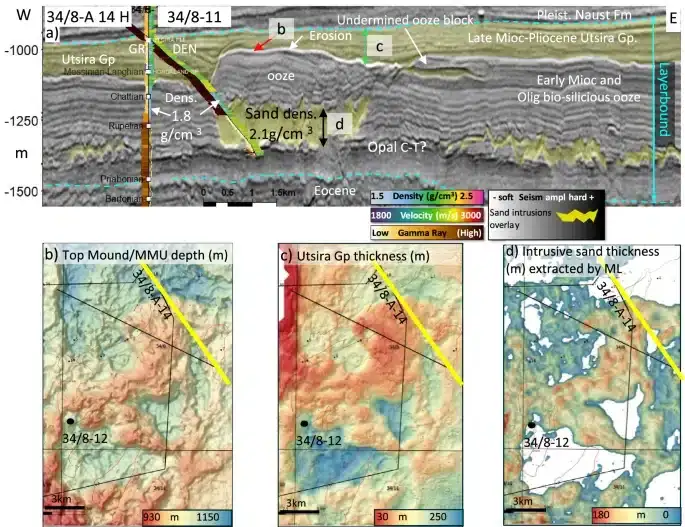
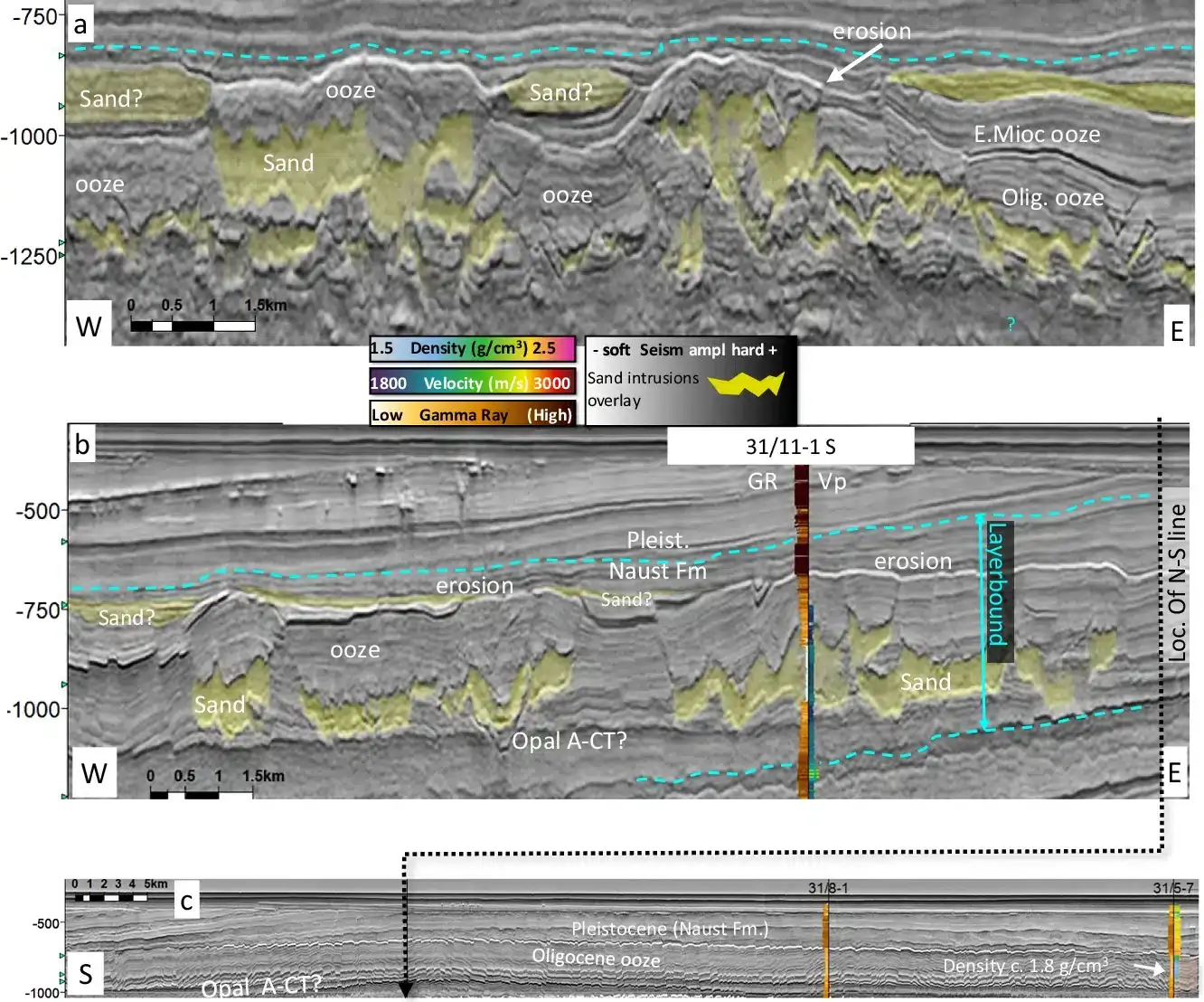
Normally, geological sequences arrange younger strata atop older formations. However, these unusual structures, dating from the Late Miocene to Pliocene epochs, demonstrate an exceptional process where heavier sand has forced its way downward, displacing the lighter, older materials above.

Professor Mads Huuse, a geophysicist from the University of Manchester, explains, “Our findings reveal dense sand sinking through lighter deposits, which effectively inverts the typical stratification and creates substantial underwater mounds beneath the sea floor.”
These formations, termed sinkites, are not only uncommon but also represent the largest documented cases of this geological inversion so far.
Advanced Seismic Imaging Unlocks New Insights
This discovery was made possible through cutting-edge 3D seismic imaging technology, which produces detailed maps of underwater geological formations by interpreting reflected sound waves. The technique uncovered numerous inverted sand deposits hidden beneath the ocean bed, some extending over several kilometers.
Previously, such inverted layers were often dismissed as minor features. The sheer scale of these new findings, however, urges a reconsideration of sediment dynamics beneath the Earth’s crust.
Implications for Energy Resources and Carbon Storage
The implications stretch beyond academic understanding. A clearer grasp of sinkite development could transform carbon sequestration methods and the search for fossil fuels. The downward movement of dense materials through layers may influence how experts evaluate the potential of underground reservoirs and fluid flow between rock formations.
Huuse notes, “This work demonstrates how sediments and fluids can migrate in unexpected ways within the Earth’s crust. Improving our knowledge on these mechanisms will refine our ability to identify hydrocarbon traps and optimize strategies for carbon capture and storage.”
Scientific Debate Erupts Over New Findings
The discovery has sparked both enthusiasm and doubt within the scientific world. While many welcome the new perspective, some remain cautious. “Like many major discoveries, there’s a mixture of skepticism and support,” admits Huuse.
Further research is needed to determine if these sinkites are isolated to the region or indicative of a wider geological phenomenon yet to be understood. For now, these extraordinary sand mounds beneath the North Sea provide fresh insight into the planet’s subsurface dynamics.
- Categories:
- News




0 comments
Sign in to Comment