
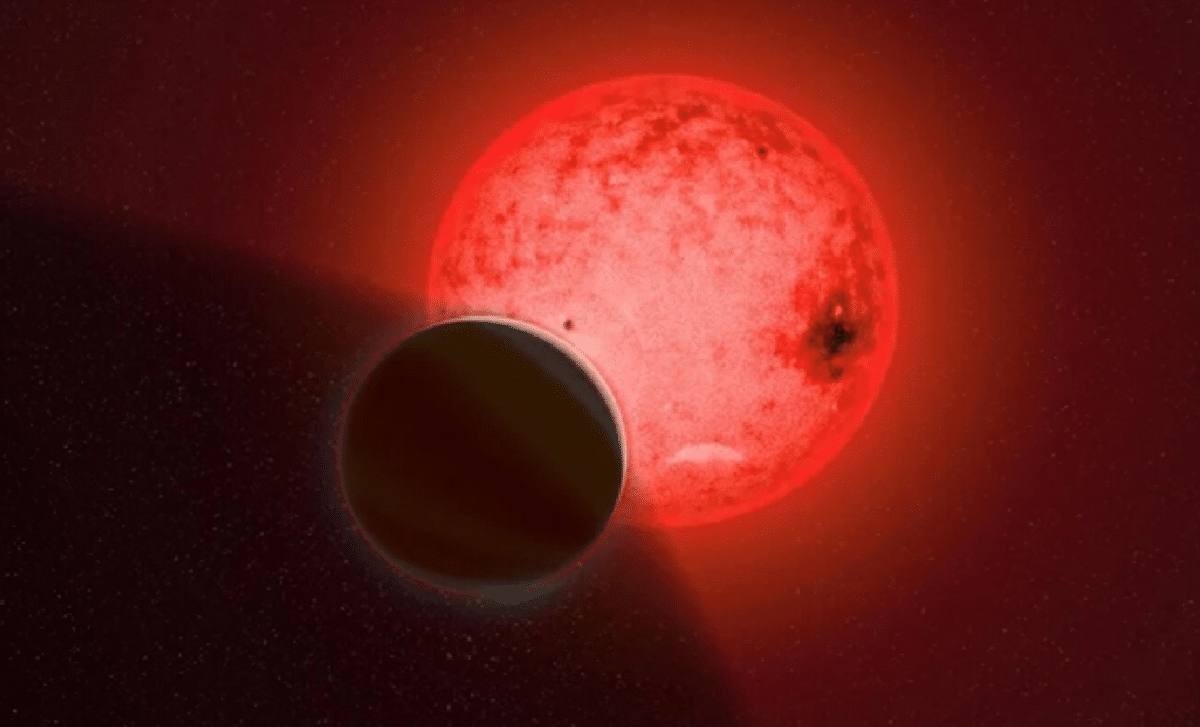
A colossal exoplanet orbiting a diminutive red dwarf has revealed an atmospheric makeup that disrupts traditional notions of how planets form, according to recent findings published in The Astronomical Journal.
An Unexpected Giant Orbiting a Small Star
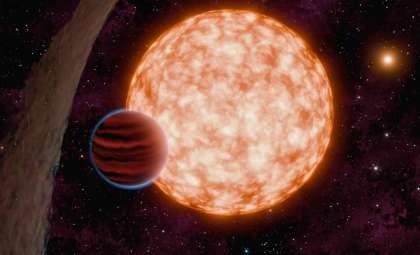
The newly identified TOI-5205 b stands out from the start. This enormous, Jupiter-sized planet circles a cool red dwarf star weighing about 40% of the Sun’s mass. Prevailing theories suggest such small stars shouldn't support the creation or retention of such massive planets, earning TOI-5205 b the label of a “forbidden planet.”
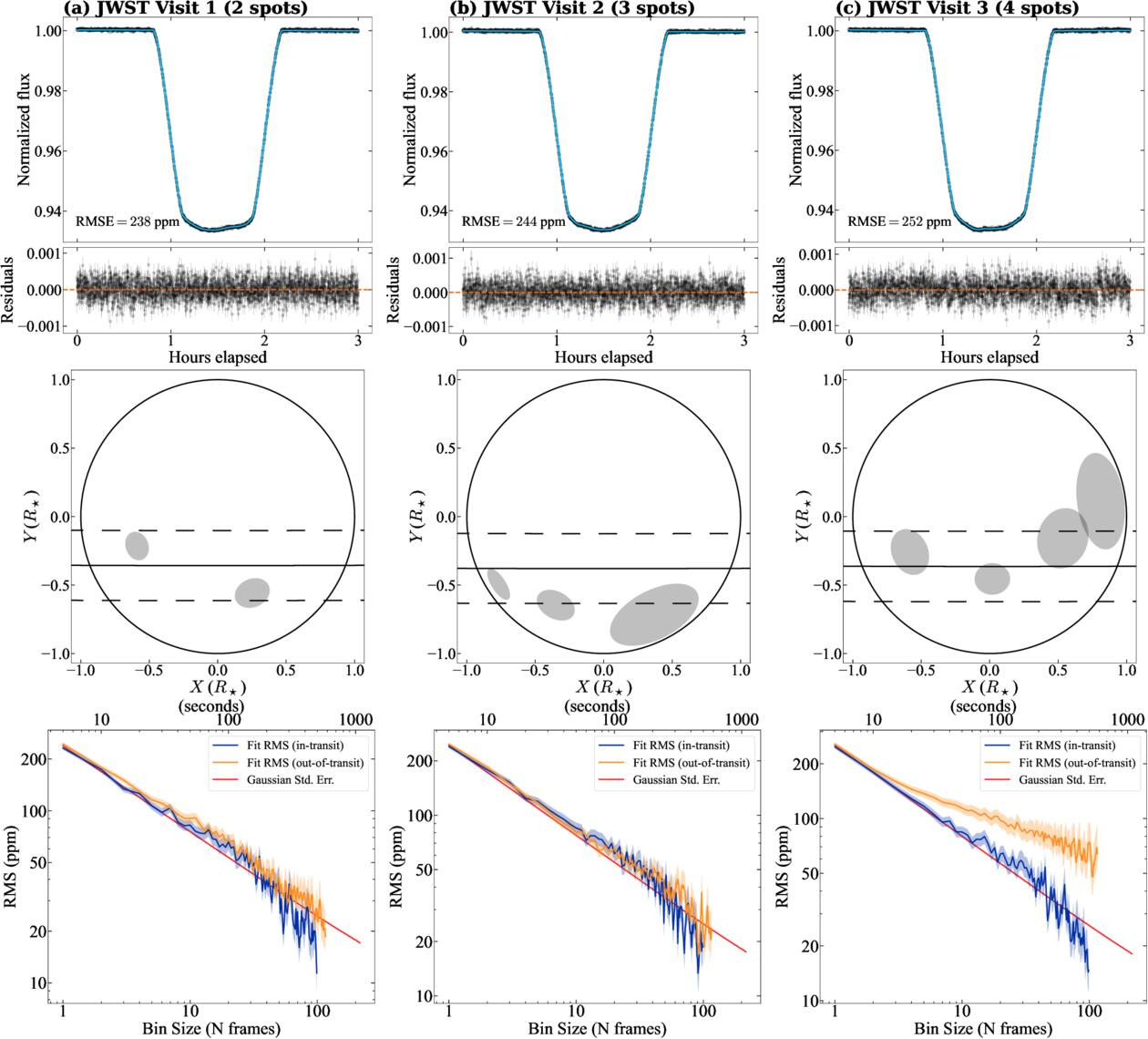
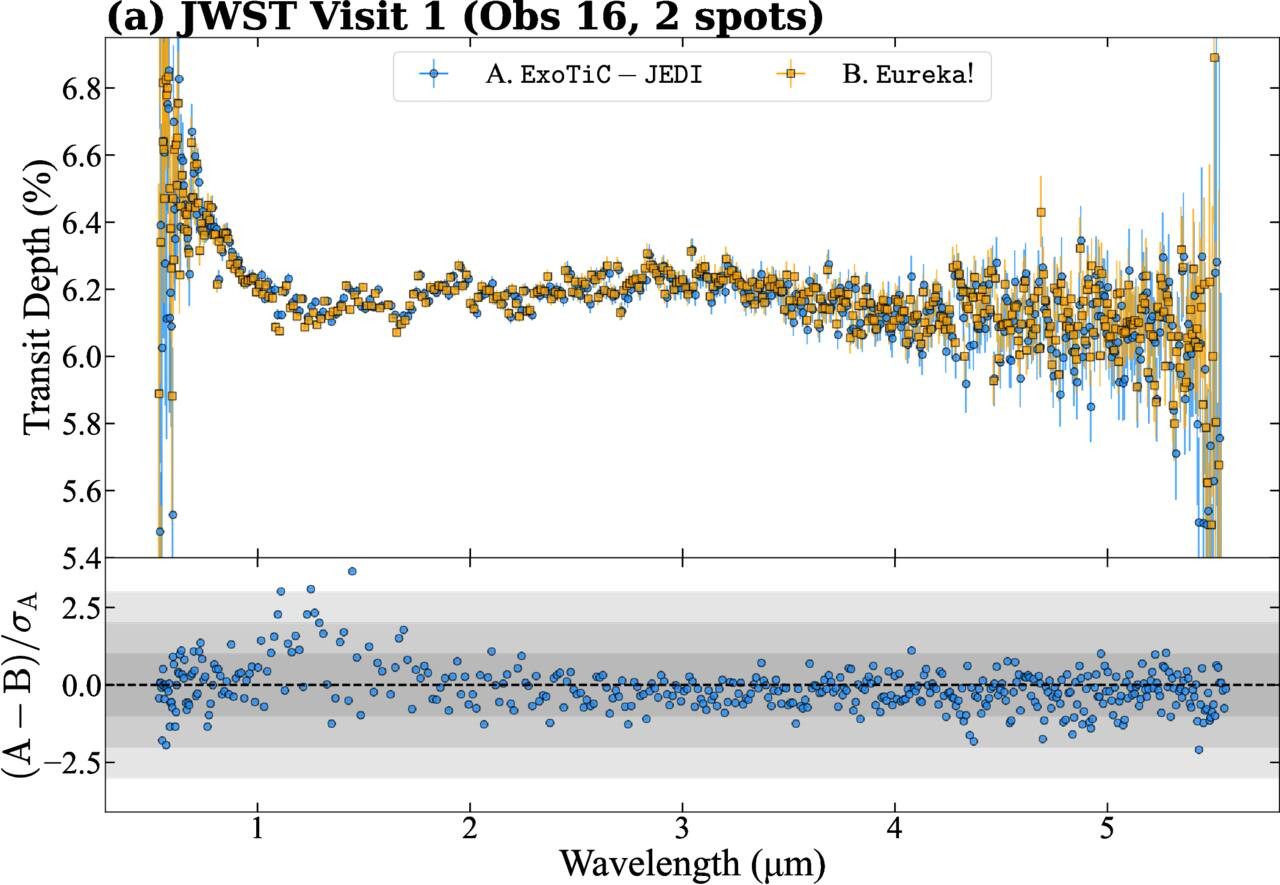
What draws further attention is the planet’s transit signature. When TOI-5205 b crosses its host star, it dims the star’s light by nearly 6% — a significant dip that enabled astronomers to analyze its atmosphere in exceptional detail. The James Webb Space Telescope (JWST) captured multiple transits, breaking down the starlight into spectra that revealed the planet’s atmospheric composition.

Detection of methane (CH₄) and hydrogen sulfide (H₂S) gives insight into the atmospheric chemistry. However, the real surprise is the absence of heavier elements, which appear far less abundant than anticipated — even compared to the planet's parent star.
This stark difference between theory and observation implies an unusual planet formation history, prompting astronomers to rethink existing evolutionary models for such planetary systems.
Unexpected Atmospheric Composition Challenges Formation Theories
The study, available in The Astronomical Journal and conducted by researchers from NASA Goddard Space Flight Center and Carnegie Science, reports a striking anomaly: TOI-5205 b’s atmosphere exhibits far lower metallicity than expected. Metallicity, the abundance of elements heavier than helium, is vital for understanding planetary origins.
Dr. Anjali Piette of the University of Birmingham notes:
“This discovery fundamentally advances our grasp of how gas giants form early around stars. The planet’s lower metallicity compared to its star distinguishes it uniquely among known giants.”
Typically, gas giants contain atmospheres enriched with heavy elements relative to their stars. For instance, Jupiter showcases a higher metallicity than the Sun. In contrast, TOI-5205 b reveals an unexpectedly metal-poor atmosphere, even when compared to its less massive red dwarf host.
This suggests the planet’s formation and evolution followed a distinct path. While the atmosphere shows depletion, the planet’s deep interior might harbor substantial amounts of heavy elements, hinting at a chemically layered structure.
This observation questions the assumption that giant planets maintain thorough mixing between interiors and atmospheres and raises new questions about the internal dynamics of such worlds.
Hidden Riches Beneath the Atmosphere
To explain the peculiarity, scientists integrated observations with sophisticated interior models. These models propose that TOI-5205 b could contain up to 100 times more heavy elements internally than its atmosphere reveals.
One possible scenario is that during formation, heavier materials sank inward, becoming locked deep in the planet’s core or lower layers, leaving the upper atmosphere dominated by lighter gases like hydrogen. This creates the low metallicity detected by the JWST.
Dr. Shubham Kanodia of Carnegie Science explains this stratification implies minimal mixing between the internal heavy elements and the planet’s atmosphere, suggesting a stable internal structure formed soon after the planet’s birth.
These findings have widespread implications. If other gas giants also hide large reservoirs of heavy elements beneath metal-poor atmospheres, relying solely on atmospheric analysis may not suffice to understand their true compositions.
Moreover, the atmosphere’s carbon-rich and oxygen-poor makeup could impact cloud formation and heat distribution, making TOI-5205 b a vital subject for studying atmospheric physics on extreme exoplanets.
Studying Planets Around Active Stars: Challenges and Advances
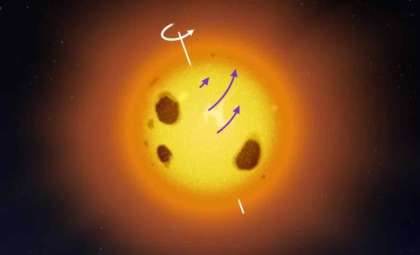
The host red dwarf star adds another challenge. It is heavily marked with starspots, cooler, darker regions that can interfere with precise measurements by mimicking or hiding atmospheric signatures.
The research team devised correction techniques to account for these stellar activities, validating that the observed atmospheric features come from the planet itself. This methodology is now being applied in ongoing JWST projects, advancing the study of planets around magnetically active stars.
This investigation is part of the GEMS Survey, targeting giant planets orbiting M-dwarf stars, which comprise the majority of stars in the Milky Way. Gaining insight into these systems is crucial to a comprehensive understanding of planet formation in the galaxy.
As data accumulates, TOI-5205 b may represent a previously unrecognized group of worlds exhibiting surprising characteristics. Each new discovery holds the potential to refine or overturn prevailing planet formation models.
The planet’s unusual atmospheric chemistry and unexpected existence serve as a reminder that the cosmos continually surprises us, challenging astronomers to rethink the fundamental principles behind planetary birth and evolution.
- Categories:
- Astronomy





0 comments
Sign in to Comment