
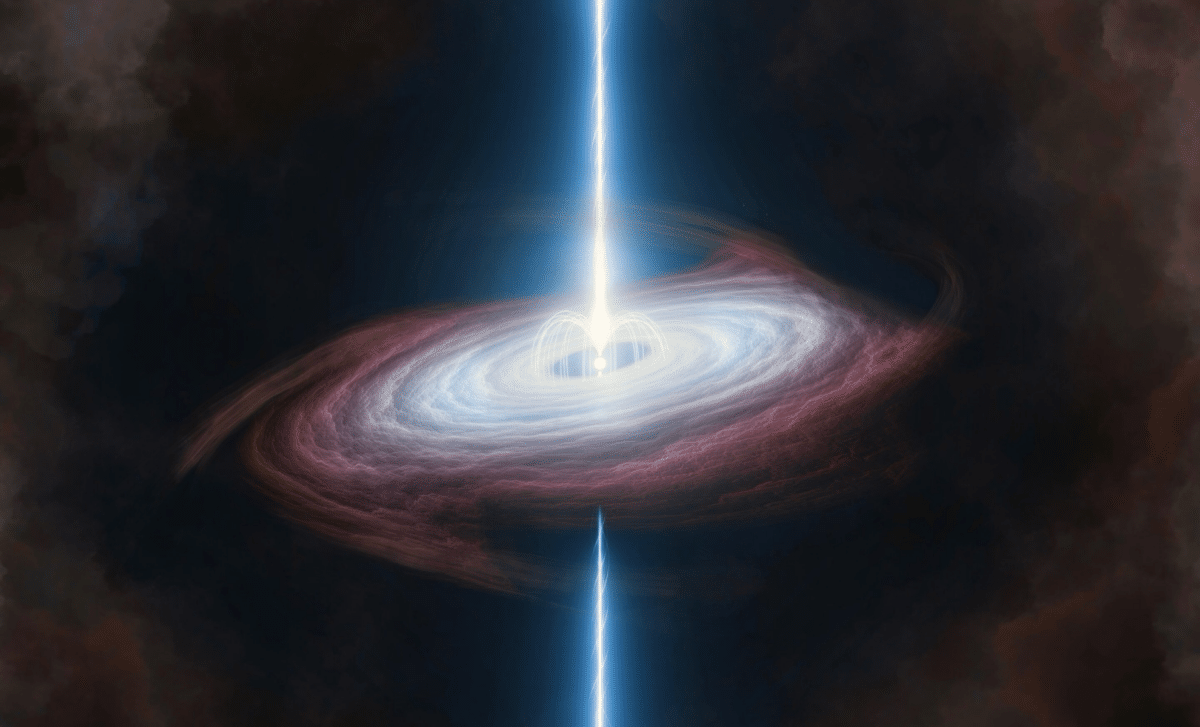
For the first time ever, researchers have directly witnessed the formation of a magnetar—a neutron star with intense magnetic fields and rapid rotation—linked with some of the universe’s most luminous stellar explosions. This groundbreaking observation, documented in Nature, validates longstanding hypotheses and provides fresh insights into the enigmatic origins of superluminous supernovae (SLSNe-I). Spearheaded by UC Santa Barbara graduate student Joseph Farah, the research offers strong proof that these extraordinarily bright supernovae are energized by newly formed magnetars. Additionally, the study uncovers a novel astrophysical phenomenon: oscillations in the light curve driven by general relativity, illuminating the physical processes at work during these cosmic events.
Decoding the Origins of Superluminous Supernovae
Superluminous supernovae have captivated astronomers with their remarkable brightness and extended illumination periods. These stellar cataclysms, shining up to ten times brighter than normal supernovae, arise from the collapse of massive stars—potentially as massive as 25 times the Sun. Despite being discovered in the early 2000s, the source of their sustained brilliance has remained elusive. Initial theories attributed their glow to the explosive dispersal of a star’s iron core and outer layers.
In 2010, astrophysicist Dan Kasen from UC Berkeley proposed a transformative idea: the intense energy output might stem from the birth of a magnetar. According to Kasen’s theory, when a massive star collapses, the resulting neutron star possesses a strong magnetic field capable of accelerating charged particles, amplifying the supernova’s luminosity. Prior to this new work, however, direct confirmation of magnetar formation within these supernovae was lacking. Joseph Farah’s study now fills that critical gap.

Detecting a Magnetar in Supernova SN 2024afav
The discovery was made through observations of the supernova SN 2024afav, which was first detected in December 2024. Using the global array of telescopes at Las Cumbres Observatory, Farah’s team monitored the event for over 200 days. Rather than the expected smooth fading after peaking roughly 50 days post-explosion, the brightness exhibited four distinct oscillations. These luminous fluctuations, likened to a bird’s chirp, had never been observed in supernova light curves before.
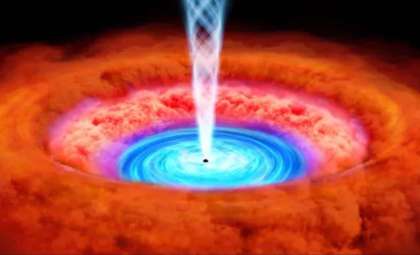
Such oscillatory behavior contrasted sharply with previous superluminous supernovae, which displayed only a few irregular bumps. Collaborating with UCSB astronomer Andy Howell, Farah explained that these variations resulted from a newly formed accretion disk around the magnetar. As debris from the explosion spiraled back, the uneven disk prompted the magnetar to wobble, producing periodic shifts in the observed brightness. This finding definitively connects magnetar formation with the extraordinary light display of the supernova.
Relativity Explains the Chirp-Like Brightness Changes
Perhaps the most thrilling aspect of this research is how Einstein’s general relativity clarifies the unusual brightness oscillations in SN 2024afav’s light curve. Farah’s team identified that the misalignment between the magnetar’s spin and its accretion disk induced a wobble—called Lense-Thirring precession—predicted by relativity. This wobble caused the magnetar’s light to be periodically obstructed and reflected by the spinning disk, creating the observed oscillations.
“We explored numerous explanations, including Newtonian physics and magnetically driven precession, but only Lense-Thirring precession matched the timing perfectly,” Farah remarked. “This marks the first instance of general relativity being essential to explain supernova mechanics.” This discovery is a landmark for astrophysics, demonstrating how relativistic effects govern the dynamics of such explosive phenomena.
Broader Significance for Astrophysical Research
Beyond clarifying superluminous supernova mechanics, this study confirms the pivotal role magnetars play in powering these brilliant explosions. UC Berkeley’s Alex Filippenko, co-author of the paper, highlights, “This is conclusive proof that a magnetar forms during the core collapse of a superluminous supernova.” The findings substantiate the model proposed by Kasen and colleagues, which attributes the prolonged luminosity to energy released by the magnetar’s formation. “What hadn’t been demonstrated before was direct evidence of magnetar creation inside the supernova. Joseph’s work provides that critical proof.”
The research holds substantial promise for future supernova investigations. Filippenko points out, “While some Type I superluminous supernovae might be powered by surrounding material, this discovery significantly reduces that fraction by explaining some via magnetar formation.” With new observatories like the Vera C. Rubin Observatory starting operations, many more ‘chirping’ supernovae are expected to be detected, deepening astronomers’ understanding of the universe’s most powerful star deaths.
- Categories:
- Astronomy



0 comments
Sign in to Comment