
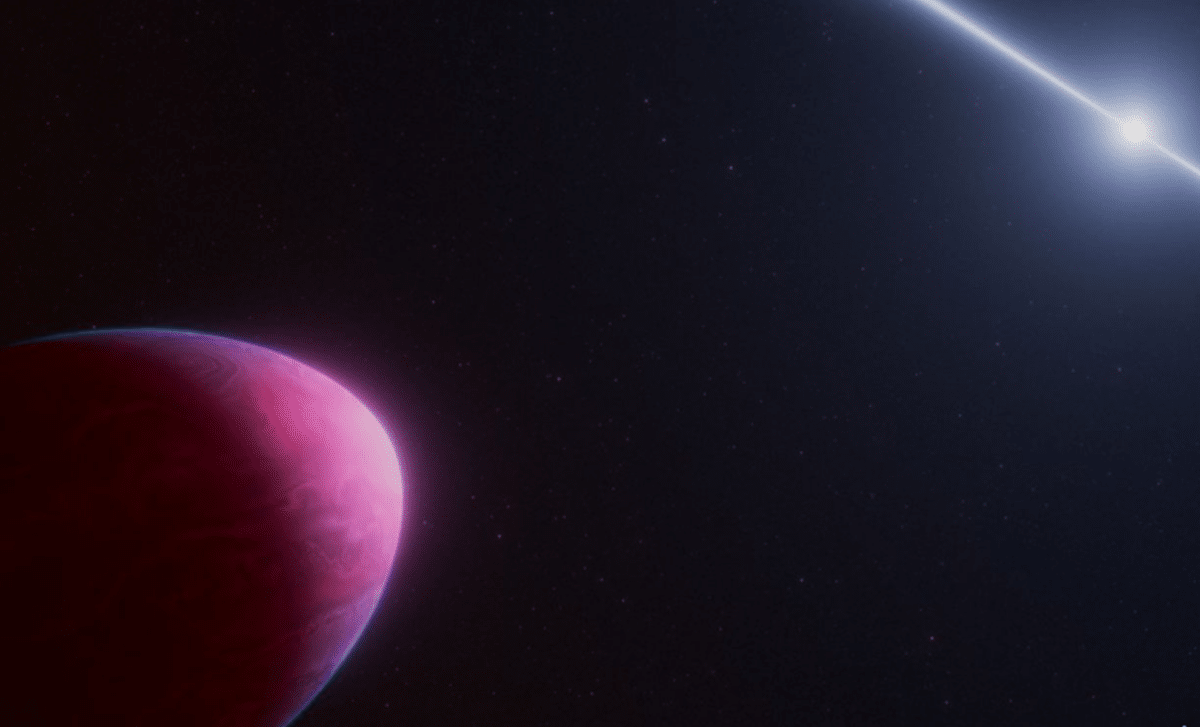
Recently, the James Webb Space Telescope (JWST) made a remarkable observation, identifying an exoplanet with an extraordinary atmosphere and shape that breaks traditional planetary models. NASA’s latest research highlights the planet PSR J2322-2650b, which orbits a pulsar and exhibits a unique lemon-like form due to intense gravitational distortion. This astonishing discovery has spurred scientists to rethink how such a world could develop and maintain an atmosphere so unlike any previously recorded.
NASA’s Insight into the Oddities of PSR J2322-2650b
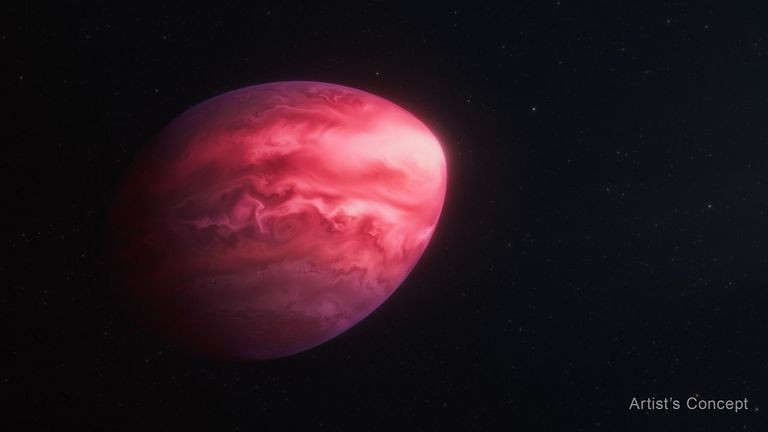
NASA’s recent report details the exceptional characteristics of PSR J2322-2650b, an exoplanet that circles a highly magnetized, rapidly spinning neutron star known as a pulsar. The enormous tidal forces exerted by the pulsar distort the planet, stretching it into a lemon-shaped figure as it completes an orbit approximately every eight hours. This exotic world flaunts an atmosphere rich in carbon compounds, distinguishing it from the usual suspects like water or methane found in other planets.
What makes this discovery even more notable is the rarity of the observing conditions. Telescope operators benefit from the absence of overwhelming stellar brightness, a common issue in exoplanet observation, because the pulsar’s radiation doesn’t overshadow the planet. This unique glare-free view grants scientists access to a sharp, uncontaminated spectrum revealing an unusual chemical signature. Maya Beleznay, a doctoral researcher at Stanford University, who assisted in modeling the planet’s orbit and form, explained: “This system is unique because we are able to view the planet illuminated by its host star, but not see the host star at all.”

Unlike most known exoplanet atmospheres, PSR J2322-2650b’s atmosphere is dominated by molecules of carbon in the forms of C3 and C2 rather than common compounds such as methane or carbon dioxide. This discovery challenges conventional ideas about planetary atmospheres and their origins. Lead scientist Michael Zhang commented, “This is a new type of planet atmosphere that nobody has ever seen before.”
Unraveling the Origins of PSR J2322-2650b’s Carbon-Rich Atmosphere
One of the greatest puzzles is understanding how this peculiar world developed its carbon-heavy atmosphere. PSR J2322-2650b’s makeup differs significantly from more typical planets, which usually emerge from star debris or planetary disks. According to Michael Zhang, “Did this thing form like a normal planet? No, because the composition is entirely different.” The extraordinary presence of molecular carbon suggests alternative birth scenarios, dismissing common formation theories such as mass stripping in binary “black widow” systems.
A theory proposed by researchers suggests crystallization within the planet’s interior plays a key role. As the planet cools, oxygen and carbon inside may begin to crystallize, causing pure carbon crystals to ascend and combine with helium near its surface.
“As the companion cools down, the mixture of carbon and oxygen in the interior starts to crystallize,” explains Roger Romani, a researcher at Stanford University. “Pure carbon crystals float to the top and get mixed into the helium, and that’s what we see.”
Still, Romani admits that the puzzle remains incomplete because the processes that prevent oxygen and nitrogen from entering the atmosphere are not yet understood.
These unknowns continue to captivate astronomers intrigued by the planet’s oddities. As Romani notes, “But it’s nice to not know everything. I’m looking forward to learning more about the weirdness of this atmosphere. It’s great to have a puzzle to go after.”
Exploring New Frontiers: The Impact of PSR J2322-2650b’s Discovery
The identification of PSR J2322-2650b pushes the boundaries of current planetary science, revealing a class of exoplanets with structures and atmospheres unlike any previously studied. Its distinctive traits open fresh paths for research, allowing astronomers to probe planetary formation and atmospheric chemistry under extreme conditions.
Future studies using the James Webb Space Telescope promise deeper insights into the origins and nature of such strange worlds, potentially broadening our understanding of the diversity and complexity of planets throughout the cosmos. As investigations continue, discoveries like PSR J2322-2650b highlight the endless surprises awaiting in the vast expanse beyond our solar system.
- Categories:
- Astronomy











0 comments
Sign in to Comment