
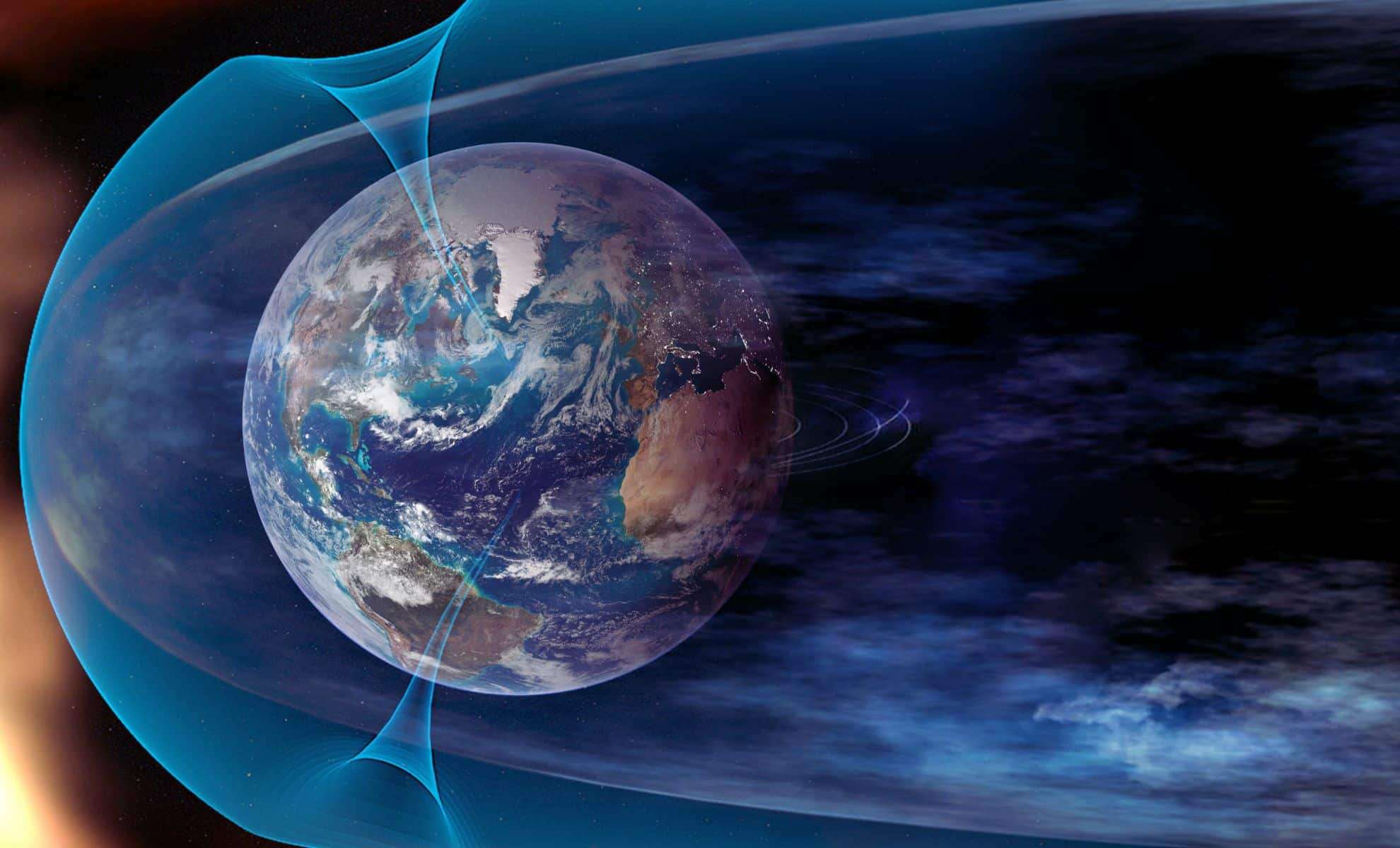
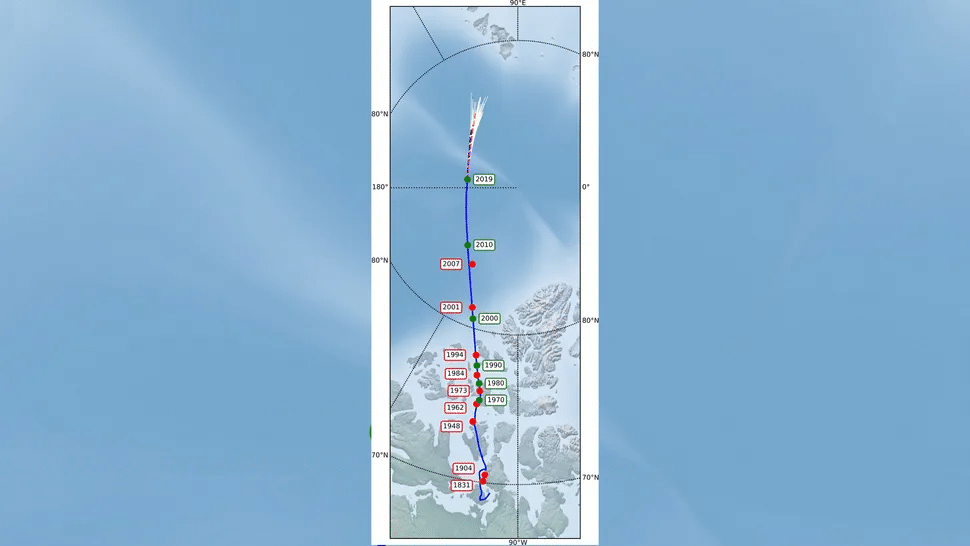
Scientists have been intrigued by the accelerated shift of Earth’s magnetic north pole, which has recently moved from its traditional spot in the Canadian Arctic towards Siberia. This swift migration, notably intensifying since the late 1990s, is mainly linked to changes in the liquid metal dynamics deep within Earth’s outer core. A recent study published in Nature Geoscience sheds light on two enormous molten iron formations inside Earth’s core that are influencing this rapid pole movement. The magnetic pole is now migrating at speeds up to 37 miles annually, a pace far quicker than any previously documented, prompting careful observation due to its effects on navigation worldwide.
What Causes the Magnetic North Pole to Shift?
Earth’s magnetic field originates from fluid motions of molten iron and other metals swirling within the outer core. These currents generate magnetic patterns that determine the location of the planet’s magnetic poles. The recent rapid movement of the north pole is mainly caused by two concentrated “blobs” of molten iron situated near the outer core’s boundary with the mantle. These formations exert opposing magnetic forces, with the Siberian blob strengthening and pulling the pole eastward.
Researchers analyzed more than two decades of satellite observations from the European Space Agency’s Swarm expedition to uncover the cause. Between 1970 and 1999, the molten iron beneath Canada stretched and weakened the surface magnetic field. Meanwhile, the Siberian iron mass gained dominance, drawing the magnetic north pole in its direction. This dynamic is ongoing, driving the pole’s gradual journey toward Siberia.

Consequences for Navigation Systems Across the Globe
The magnetic north pole's rapid alterations have practical implications, not only capturing scientific interest but also impacting navigation tools. As it continues drifting, systems relying on traditional compasses—and some technologies integrated into modern aircraft, ships, and portable devices—require continual recalibration. Although GPS satellites operate independently of Earth's magnetic field, compass-dependent navigation remains vulnerable. Maintaining accurate positioning depends on frequent updates to resources like the World Magnetic Model to prevent critical errors in navigation charts.
In 2017, an essential revision of the World Magnetic Model was undertaken as the pole’s position approached within 240 miles of the geographic North Pole. This was vital for both military and civilian applications. Agencies such as NOAA and the British Geological Survey continue to work tirelessly to refine the model amidst the pole’s ongoing shift at roughly 28 miles per year, highlighting the need for continuous observation and data updates.
Forecasting the Magnetic Pole's Path Forward
Predicting the future location of the magnetic north pole remains complex. Current evidence points toward a continued migration toward Siberia, but the unpredictable nature of Earth's deep interior cautions against certainty. Phil Livermore, the geophysicist heading the research from the University of Leeds, notes: “Our predictions are that the pole will continue to move towards Siberia, but forecasting the future is challenging and we cannot be sure.” Given the intricate behavior of molten metals deep below, ongoing monitoring and model refinement are essential for understanding future trends.
This unpredictability also raises larger questions about potential long-term shifts in Earth's magnetic field, including whether this movement is a prelude to a magnetic reversal where north and south poles switch places, an event regarded as rare yet remains under active investigation by scientists.
Techniques Scientists Use to Monitor Earth’s Magnetism
Tracking the magnetic north pole’s shifts demands sophisticated approaches. Researchers rely on a blend of satellite observations, terrestrial magnetometers, and advanced simulations to decode changes in Earth’s magnetosphere. Launched in 2013, the European Space Agency’s Swarm mission plays a crucial role by providing precise, continuous measurements of the magnetic field’s strength and direction using three coordinated satellites.
Analyzing Swarm’s data enables scientists to create highly accurate maps of magnetic pole positions and to model the field’s future behavior. These predictive tools are fundamental for maintaining and updating navigational models like the World Magnetic Model, ensuring that global navigation remains dependable despite the ever-changing magnetic landscape beneath our feet.
- Categories:
- News








0 comments
Sign in to Comment