
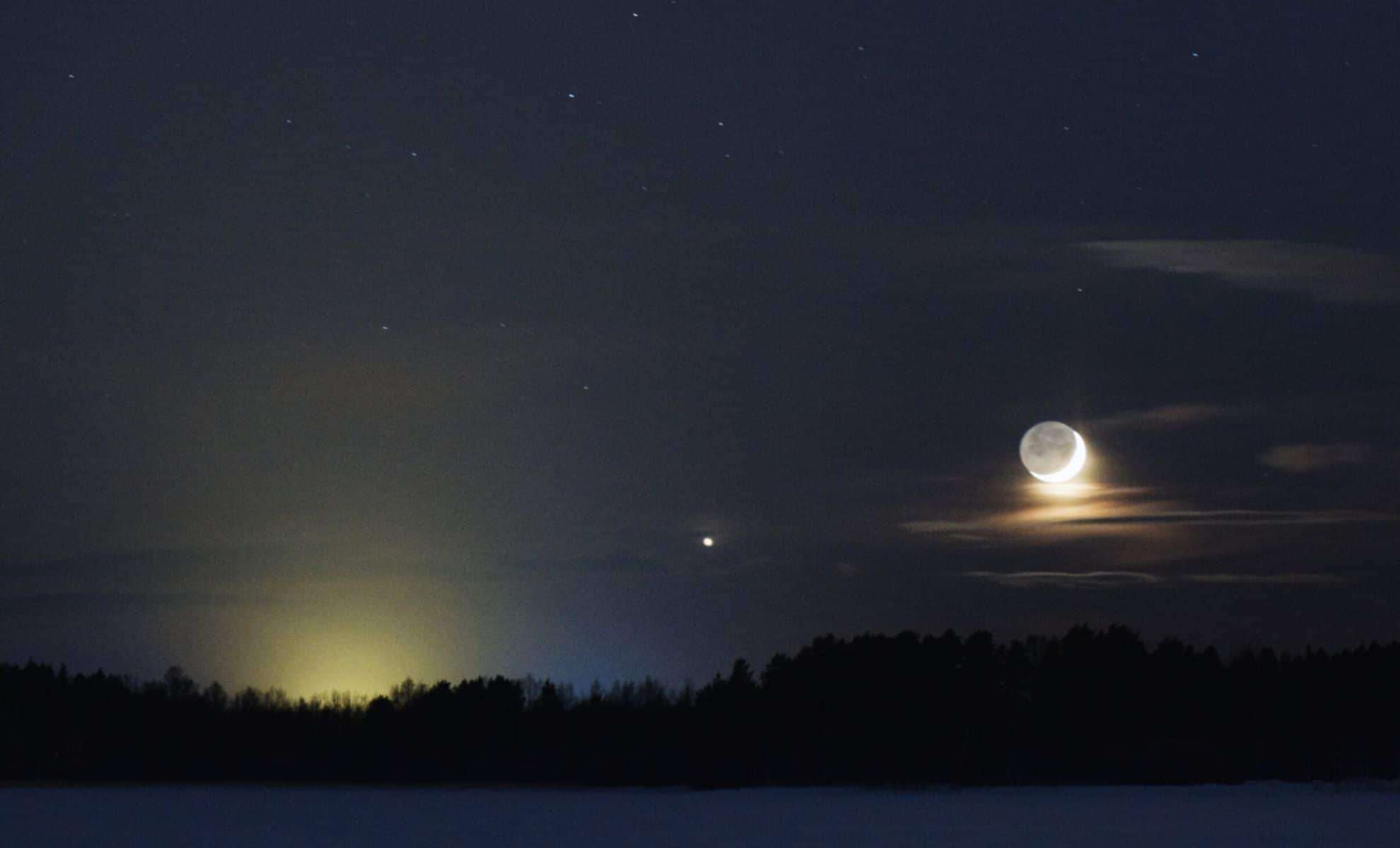
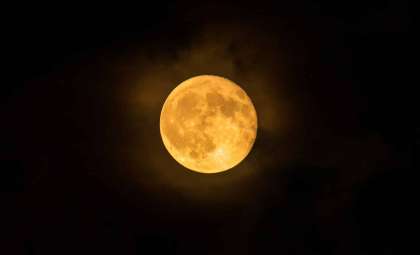
On the evening of July 15, sky watchers across the United States will be treated to a captivating astronomical event featuring the moon, Saturn, and Neptune clustered closely together in the eastern sky. As highlighted by Space.com, this rare celestial alignment places all three bodies within a few degrees of each other, creating an exceptional viewing opportunity using binoculars or a telescope. Saturn’s luminous presence will stand out, while the faint glow of Neptune adds a subtle element to the scene as the waning gibbous moon showcases detailed surface features.
Close Encounter: Moon Meets Saturn in the Night Sky
Approaching midnight on July 15, the waning gibbous moon will appear roughly three degrees above and to the right of Saturn—a separation small enough to cover with a fingertip at arm’s length. Saturn will be visible above the eastern horizon beneath the stars of the Pisces constellation, making it relatively easy to locate for those with clear skies. Amateur astronomers equipped with telescopes as small as six inches in aperture can admire Saturn’s iconic rings in this prime viewing moment.
Using higher magnification, observers might even discern delicate color differences within Saturn’s cloud bands. What makes this pairing distinctive is not its rarity—since the moon often nears planets—but the excellent visibility and proximity of Saturn during this lunar phase. This combination paints a striking tableau: a prominent, textured moon alongside the softly glowing, pale-yellow gas giant.

Neptune’s Subtle Presence Challenges Observers
Just about one degree to the upper left of Saturn, Neptune will make a faint appearance. With a magnitude of +7.8, this distant ice giant remains beyond the reach of naked-eye observation in most conditions. Identifying Neptune will test the patience and precision of amateur astronomers, as 10×50 binoculars might only reveal it as a dim, blue-tinted dot, easily overshadowed by the brightness of the 75%-illuminated moon.
A telescope with stronger magnification can help pick out Neptune, but it will stay a mere pinpoint of light lacking visible surface details. Despite its modest look, spotting Neptune—the solar system’s farthest planet—is a notable accomplishment, underscoring the multifaceted nature of such celestial gatherings.
Discovering Lunar Features Amid the Planetary Lineup
While sharing the scene with two planets, the moon itself offers plenty for observers to explore during July 15's event. The Mare Frigoris, or Sea of Cold, stands out as a narrow, darker plain stretching across the moon's northern edge. Formed from ancient volcanic basalt flows, this feature appears as a long, dark scar and provides striking contrast under the angled lighting of the gibbous phase.
Telescopes or high-powered camera lenses allow for detailed study of the moon’s surface texture. Paired with the close positioning of Saturn and Neptune, the moon’s rugged landscape adds depth to this captivating night sky display. Those interested in astrophotography can aim to capture all three celestial bodies within a single, wide-field frame.
Optimal Viewing Strategies for the Celestial Trio
To fully enjoy this spectacular conjunction, observers should seek locations with minimal light pollution and a clear view toward the east. Saturn will rise just before the moon, with Neptune trailing slightly to Saturn’s upper left. Since the viewing window spans from midnight until dawn, observers have flexibility, though the clearest views will occur in the early morning as the planets climb higher.
Conditions such as urban lighting, cloud cover, and atmospheric haze can significantly diminish the visibility of Neptune. Utilizing binoculars or telescopes and consulting detailed sky charts ahead of time will maximize success in spotting the trio. This rare conjunction offers an excellent chance for beginners to practice celestial tracking and familiarize themselves with their astronomical gear.
- Categories:
- News





0 comments
Sign in to Comment