
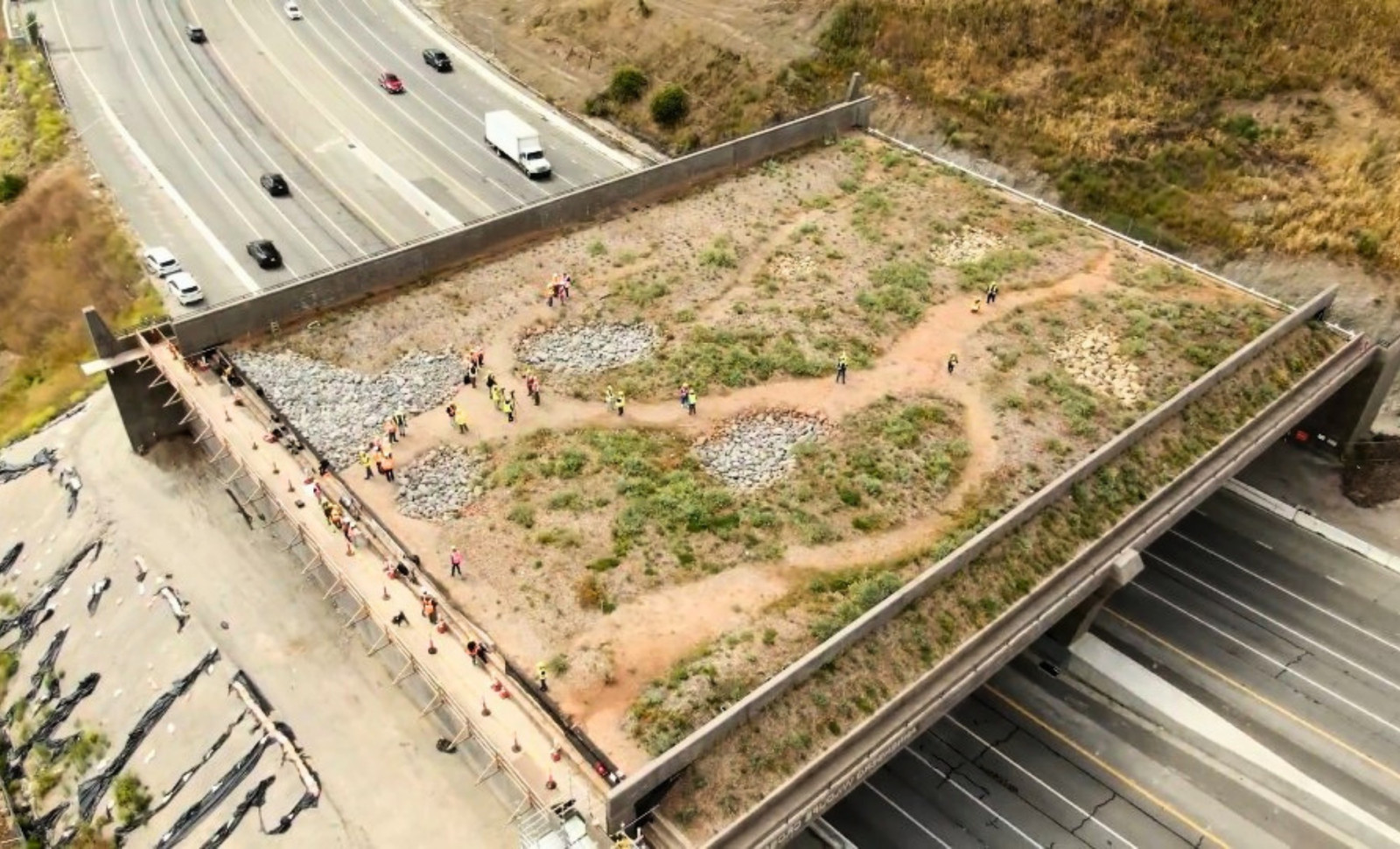
Hovering above the bustling 101 Freeway in Agoura Hills, a new natural sanctuary is emerging. Teams are layering specially formulated soils and planting indigenous flora across a stretch spanning over ten lanes of traffic. The Wallis Annenberg Wildlife Crossing, designed to repair fragmented habitats, now has an official opening date after enduring cost hikes and scheduling delays.
At an Earth Day press event, organizers revealed the crossing will welcome wildlife starting December 2, 2026. This milestone comes roughly four and a half years after construction kicked off on what’s billed as the largest wildlife overpass worldwide.
The project addresses a critical environmental challenge: Mountain lions in the Santa Monica Mountains are genetically isolated by the freeway barrier. Restoring gene flow within this population remains a top priority. Additionally, animals like bears, bobcats, foxes, coyotes, and deer, often victims of vehicle collisions on the 101, are expected to benefit significantly.

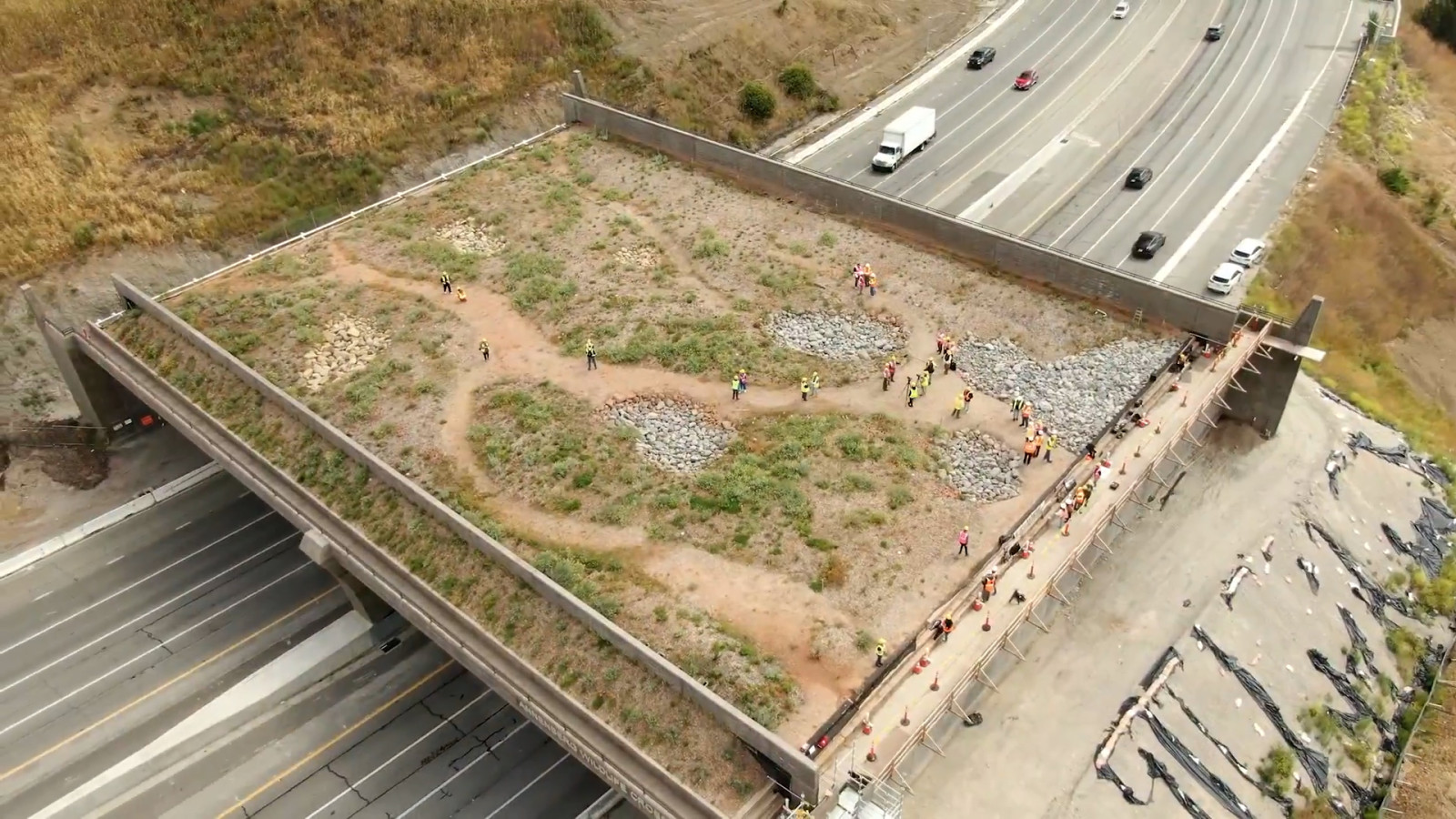
Beth Pratt, National Wildlife Federation’s California regional executive director, shared that wildlife has begun interacting with the structure even before its full integration into the landscape. Speaking to KNX News Radio, Pratt said, “I’ve spotted several butterfly species up here. We’ve recorded about eight bird species too, including red-tailed hawks and American kestrels flying by, so animals are already responding despite it not being physically connected.”
Beyond a Typical Overpass: Crafting a Thriving Ecosystem
The primary bridge segment appears mostly complete and landscaped, yet Robert Rock of Rock Design Associates notes the project is only about 60 percent finished. A vital ecological link remains; a separate crossing over nearby Agoura Road still needs construction before both ends can be connected to open habitats, allowing safe passage for terrestrial wildlife.
This endeavor surpasses conventional road building. In a detailed blog post addressing critiques from April, project leads emphasize that engineers are assembling a living habitat. Features include specialized soils tailored to support native, localized plants, noise-reducing sound barriers to lessen freeway disturbances, and guiding infrastructure designed to usher animals onto the crossing. These elements are essential, not ornamental. Without them, the bridge risks becoming an ineffective, costly monument rather than a functional wildlife link.
Weather issues have introduced further challenges. Record rainfall in 2023 and 2024 flooded the Agoura Hills worksite, pausing operations until soil conditions improved. Constructing inside a canyon constrained by rugged hills and heavy traffic magnifies logistical complexity. The official project website offers live camera streams of construction progress and profiles of the collaborative team of designers, engineers, and botanists sustaining this ambitious transformation.
Budget Increases Spark Debate
The vast scope has attracted scrutiny, particularly over finances. Initial projections in 2022 placed the cost at $90 million with a planned completion in 2025. Costs have now risen to $114 million. Officials attribute increases to inflation, workforce shortages, severe weather, and engineering complexities.
Funding comes from a blend of private donors and public sources, fueling some criticism from those concerned about government spending. The project’s blog post directly confronts these issues, emphasizing the multifaceted nature of the budget rises. While acknowledging the importance of transparency and fiscal responsibility, leaders argue that the investment is justified when considering the critical ecological restoration goals.
The public has a chance to engage by participating in an online poll hosted by the #SaveLACougars campaign, inviting people to guess which species will be the first to cross. The voting form includes options like cougars, mule deer, coyotes, gray foxes, black bears, and bobcats, plus a write-in choice. The campaign, inspired by mountain lion P-22’s fame, now supports the P-22 Legacy initiative, raising funds for ongoing studies and future wildlife crossings in Southern California.
The Wallis Annenberg Wildlife Crossing’s December 2, 2026 debut will mark the conclusion of a more than four-year construction effort aimed at healing a landscape long fractured by a major transport artery.
- Categories:
- News




0 comments
Sign in to Comment