
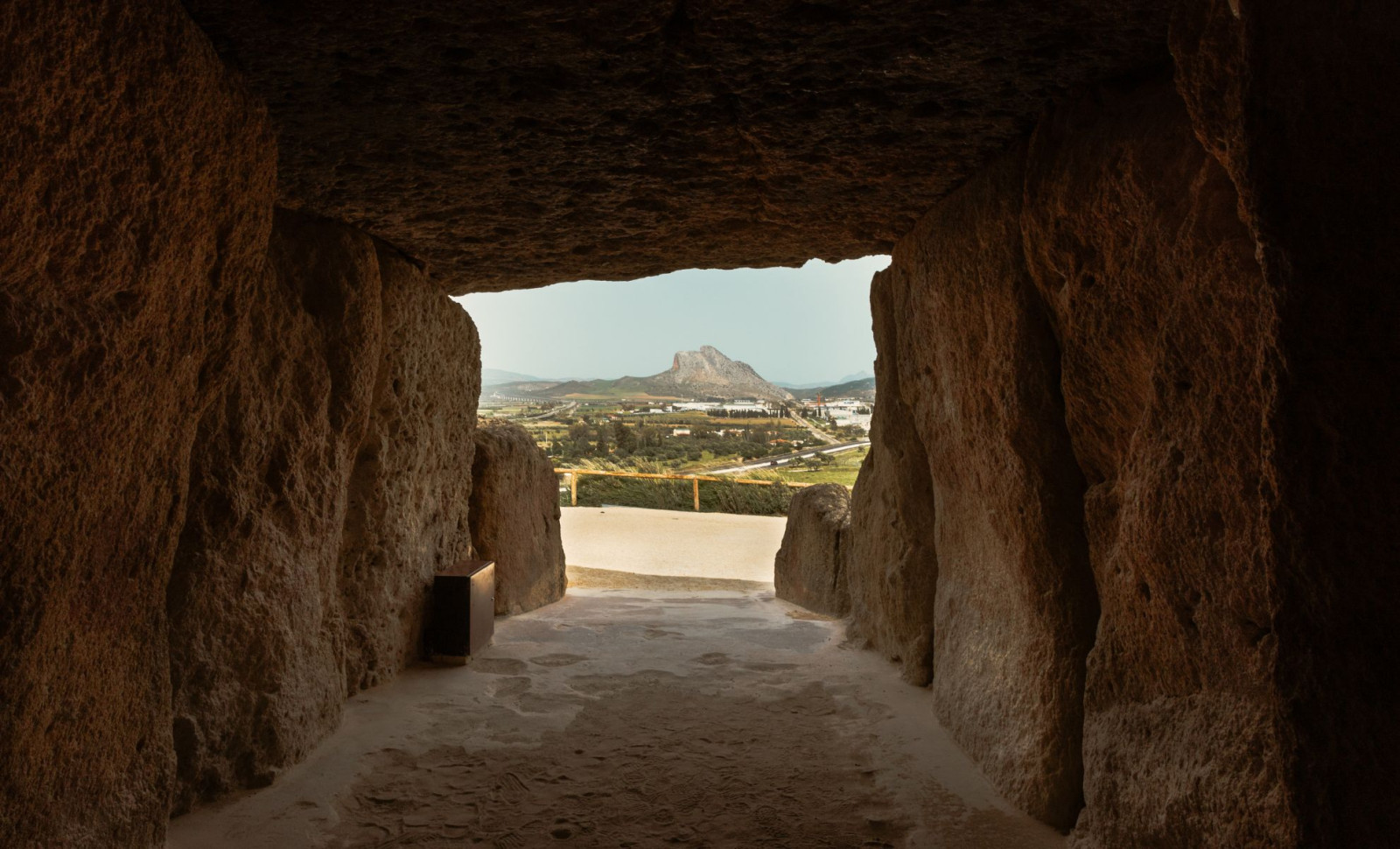
Excavations at the Menga dolmen in southern Spain uncovered two medieval burials that demonstrate unexpected genetic diversity extending beyond Europe. These discoveries highlight the enduring significance of the site and shed light on the movement and mixture of medieval communities.
The Menga dolmen, located in Antequera, Malaga, was constructed around 3800-3600 BC and is recognized as part of a UNESCO World Heritage site. It stands as one of the most prominent Neolithic monuments in the Iberian Peninsula, historically studied for its monumental scale and design.
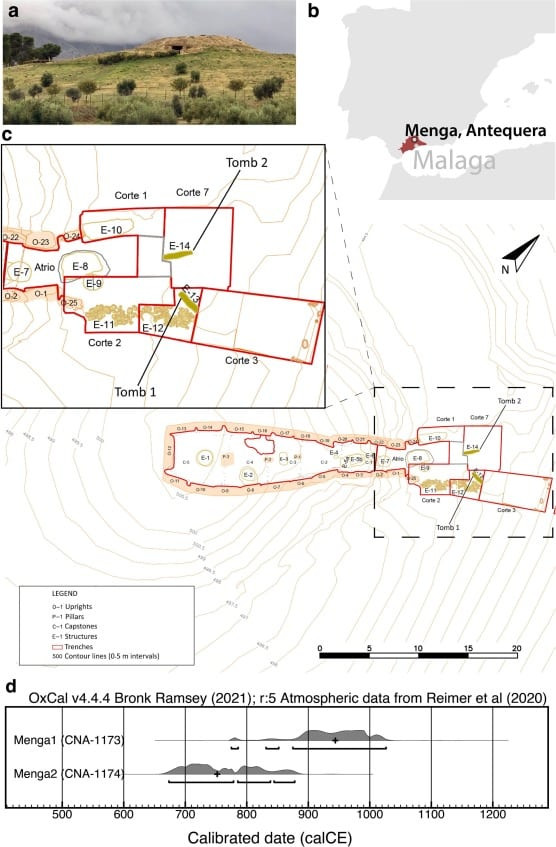
Current research has shifted focus to its later utilization. Collaborators from the University of Huddersfield, the Francis Crick Institute, Harvard University, and the University of Seville conducted genetic analyses on two male individuals buried near the entrance between the 8th and 11th centuries AD. Published in the Journal of Archaeological Science Reports, the bodies were deliberately interred in alignment with the dolmen’s main axis, indicating intentional placement.

Genetic Material Challenged but Recoverable
Extracting ancient DNA from Mediterranean sites presents difficulties due to poor preservation, as was the case here. The researchers noted:
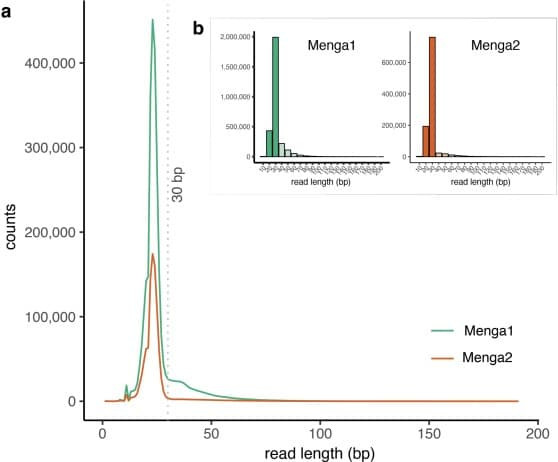
“We analysed DNA from two individuals, radiocarbon dated to the 8th–11th centuries CE, who were buried in the atrium, aligned with the dolmen’s axis of symmetry.” They added, “DNA content was very low and highly degraded, in line with previous observations from (pre)historic Mediterranean Iberia.”
Despite these limitations, the team succeeded in retrieving partial genomic data from one individual through SNP enrichment. The genetic profile reveals a combination of European ancestries alongside distinct connections to North Africa and the Levant. His mitochondrial DNA carries mutations also identified in contemporary individuals from the Mozabite community in Algeria.
This genetic diversity aligns with historical documentation of Al-Andalus, a region known for its cultural intermingling and coexistence of various groups.
Intentional Medieval Use of an Ancient Monument
The burial method and placement of the two men carry significant importance. Positioned in the atrium along the dolmen’s axis with heads turned inward, the arrangement indicates a deliberate ritualistic burial custom.
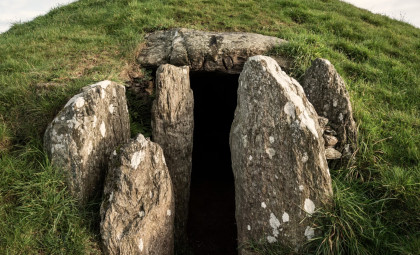
This pattern corresponds with broader Iberian practices where ancient megalithic sites were repurposed during the medieval era. The dolmen may have served as a hermitage or shrine, often referred to as a marabout. Therefore, it retained cultural or spiritual relevance rather than being a mere relic.
Enduring Significance Across Millennia
The Menga dolmen has persisted for nearly five thousand years, with evidence suggesting it was never fully abandoned or forgotten. Throughout successive eras, the structure seemingly sustained its role not just as an architectural feature, but as a meaningful site for surrounding societies. According to the researchers, it likely preserved a sacred or funerary purpose that adapted through changing cultural contexts.
The careful reuse of the monument in medieval burials, aligned with its design, reflects an ongoing cultural memory. This long-standing acknowledgment ensured that ancient places like the Menga dolmen remained integral to living traditions rather than fading into obscurity.
As detailed in the Journal of Archaeological Science Reports, such continuous use exemplifies how prehistoric structures can resonate through time, connecting past and present civilizations.
- Categories:
- Science




0 comments
Sign in to Comment