
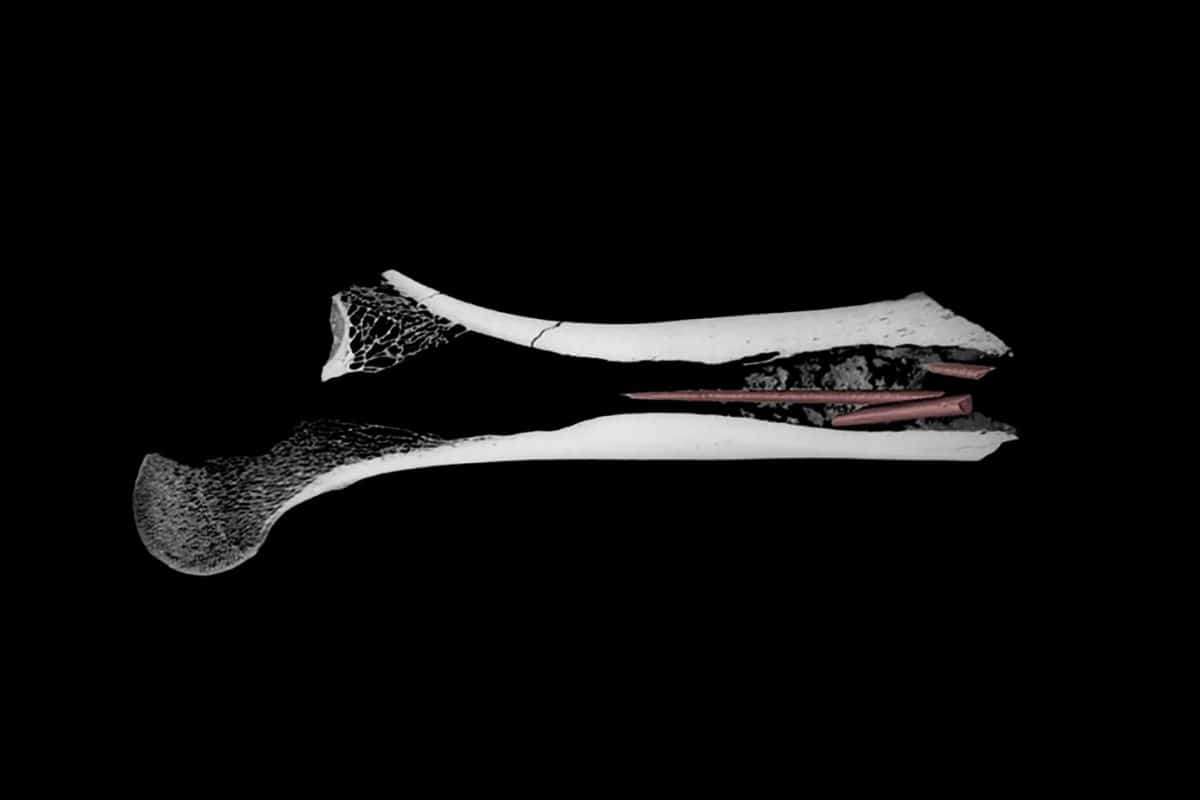
Archaeologists have uncovered what is now the oldest evidence of poisoned arrows, providing a fascinating insight into the inventive skills of prehistoric peoples. This artifact, over 7,000 years old, reveals an advanced understanding of chemical substances and hunting tactics during the Mesolithic age.
Discovered lodged in the bone of a large bovid, an ancestor of today’s cattle, the arrowhead stands as one of the earliest known instances of hunting weaponry enhanced with complex poison mixtures.
A Chemical Innovation from the Distant Past
The story behind the arrow involves an ancient individual—likely an early toxicologist—who skillfully combined natural toxins to boost the potency of their weapon. Drawing from plants, insects, or other natural elements, this person crafted a deadly compound that was carefully applied to the arrow tip.

The poisoned arrow was stored within a quiver fashioned from a femur bone, illustrating the resourceful use of available materials by early humans. Such evidence emphasizes the critical role hunting played and the lengths to which prehistoric people went to enhance their survival tools.
Deciphering the Poison’s Composition
While the exact formula used remains a mystery, experts believe the poison likely consisted of alkaloid-rich plants, renowned for their toxic effects. Substances such as extracts from the aconite or curare plants, both capable of inducing paralysis or fatality, are strong candidates.
The preparation likely demanded deep knowledge of local ecosystems and considerable experimentation to find the right concentration. An insufficient dose would be ineffective, whereas excessive poison risked harming the hunter. This precision attests to the sophisticated cognitive abilities of these ancient humans.
Poison’s Role in Early Hunting Strategies
For Mesolithic hunter-gatherers, pursuing large prey like bovids was essential yet risky. Without modern weapons, they depended on bows and arrows, sometimes supplemented by spears. Poisoned tips gave them a critical edge, enabling more effective kills with less direct danger.
Such chemical augmentation reduced the necessity of long chases and close encounters with potentially aggressive animals. Additionally, toxins made tracking injured prey easier by hastening their incapacitation. In an era where survival was uncertain, these advancements were crucial.
The Significance of This Ancient Poisoned Arrow
Although prior evidence suggested early humans used poisons in hunting, this particular find is exceptional due to its age and preservation. The arrow, the carrier bone, and the embedded animal bone remain well-preserved, granting researchers a vivid glimpse into Mesolithic hunting technology.
As detailed in a scientific report, this artifact represents the earliest known example of a multi-ingredient poison, indicating that early humans experimented with and refined their toxic mixtures through shared communal knowledge and observational learning.
Linking Ancient Practices to Modern Science
The revelation of this 7,000-year-old toxic arrow invites fresh perspectives on the development of human intellect and innovative problem-solving. This find reinforces the notion that prehistoric communities were not merely subsistence hunters but capable scientists adapting ingeniously to their world.
Currently, this artifact offers chemists and archaeologists avenues to analyze ancient poisons. Through residue analysis on the arrowhead, scientists aim to reconstruct the original toxic formula and deepen understanding of early humans’ use of natural compounds.
Insight Into Mesolithic Culture and Survival
The discovered poisoned arrow stands as more than a relic; it opens a window into the lifestyle of early Mesolithic people. It tells a tale of adaptability, creativity, and endurance during a time still cloaked in mystery.
From the thoughtful selection of raw components to the careful crafting and poisoning process, every aspect of this weapon illustrates the remarkable inventiveness of its creator. This artifact underscores how early humans achieved extraordinary feats even in their distant past.
- Categories:
- Science










0 comments
Sign in to Comment