

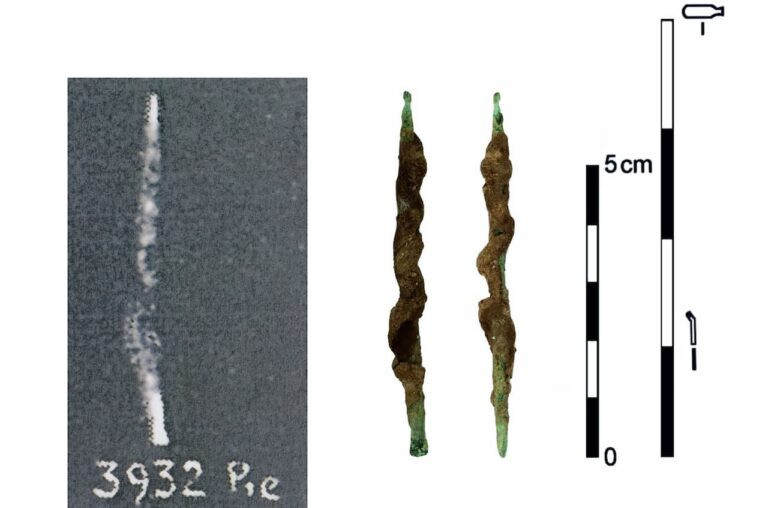
Almost a century ago, a modest artifact found in Upper Egypt has transformed the narrative about ancient mechanical craftsmanship. Initially classified as a basic copper awl, this small object has now been reinterpreted as an advanced rotary tool, dating back over 5,000 years.
A recent study published in Egypt and the Levant reveals that this finding shifts the timeline of early mechanical technology in Egypt by an extraordinary 2,000 years. Scientists from Newcastle University and the Academy of Fine Arts, Vienna, have taken a fresh look at this forgotten relic.
Reassessment Leads to Remarkable Insight
Discovered in 1922 at Badari, Egypt, the tool was long thought to be a simple copper awl and languished in obscurity. The true identity of the artifact was only unveiled through research spearheaded by Martin Odler of Newcastle University.

The study detailed in Egypt and the Levant used magnification methods to detect wear patterns indicating rotational activity, identifying the object as a drilling device dating back roughly 5,300 years. This makes it the oldest known rotary mechanical tool in that ancient region.
The small size of the tool—about two inches in length and weighing only 1.5 grams—belies its significance. Initially misclassified as a puncturing instrument, its tip and abrasion evidence now strongly suggest it was employed as a rotary drill.
“The re-examination of this object has revealed something far more advanced than initially thought,” Odler said.
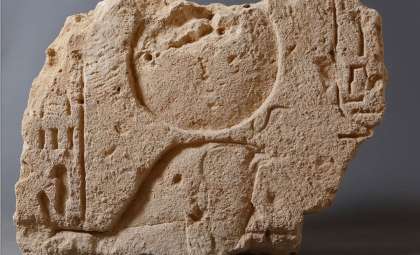
Functionality of the Bow Drill: Enhancing Precision
This rotary device featured a leather grip allowing for faster and more efficient spinning compared to manual drilling. Such an innovation was vital for crafting detailed jewelry, furniture, and other everyday objects.
“This suggests that Egyptian craftspeople mastered reliable rotary drilling more than two millennia before similar tools were used elsewhere,” Odler explained.
Metallurgical Craftsmanship: Materials and Composition
The drill's copper alloy contained uncommon elements such as arsenic, nickel, lead, and silver, as detailed in a release from Newcastle University. This suggests that Egyptians were experimenting with metal mixtures long before they constructed their renowned monuments.
The use of lead and silver hints that the ancients intentionally developed harder, more robust alloys than pure copper. As Jiri Kmosek, co-author of the paper, stated:
“The presence of silver and lead may hint at deliberate alloying choices and, potentially, broader connections with other ancient civilizations.”
Over nearly 2,000 years, the bow drill remained indispensable in Egyptian daily life, employed for bead making and woodworking. Its straightforward yet effective design stood the test of time.
- Categories:
- Science











0 comments
Sign in to Comment