
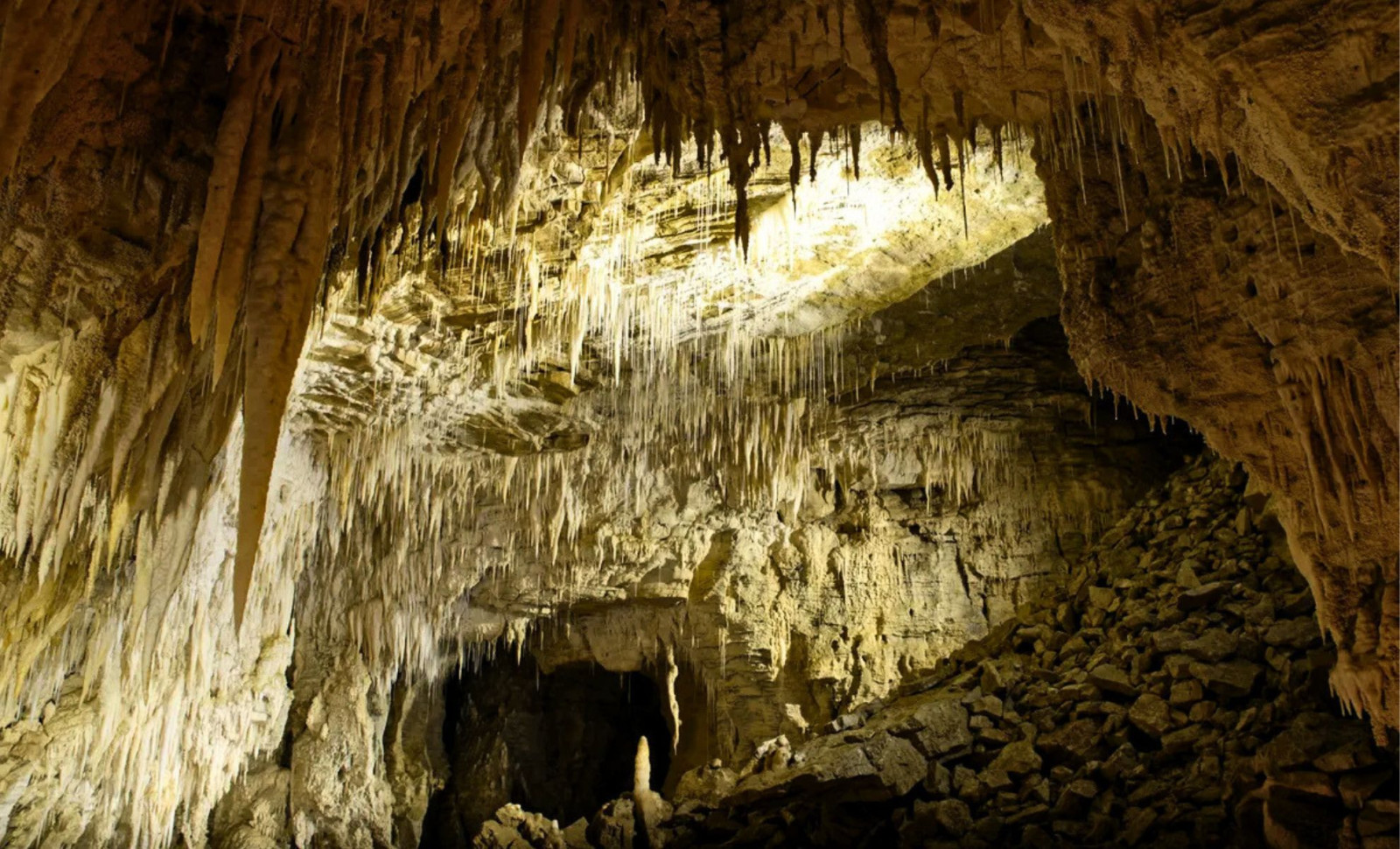
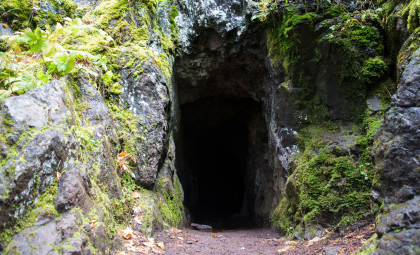
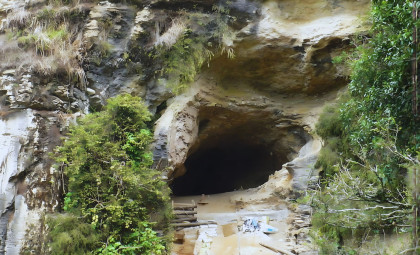
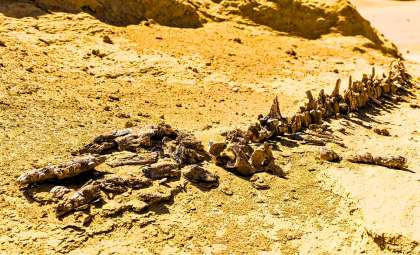
Close to Waitomo on New Zealand’s North Island, scientists uncovered fossilized bones trapped between two layers of volcanic ash—one dating back 1.55 million years, and another from a massive eruption around one million years ago. This rare geological setting preserved evidence of bird and frog species that existed long before humans arrived in the region.
The extensive fossil collection, highlighted by the Canterbury Museum as the first large assemblage of million-year-old fossils in New Zealand, features remains from 12 ancient avian species and four types of frogs. Among these is an ancestral form of the modern kākāpō, New Zealand’s iconic flightless parrot.
Volcanic Ash Layers Date the Cave’s Fossils
The significance of the Waitomo cave fossils lies in their preservation between two distinct volcanic ash deposits. The older ash originated from an eruption roughly 1.55 million years ago, while the younger corresponds to a notably larger volcanic event about 1 million years ago, as detailed here. This timeframe anchors the fossils within an early chapter of New Zealand’s natural history, much older than most fossil finds from caves.

According to Canterbury Museum, the presence of the older ash layer identifies this location as the oldest known cave on the North Island. The later eruption blanketed much of the area in thick volcanic ash, most of which was eventually eroded. However, this cave retained traces of that event alongside the preserved bones of animals that once roamed nearby.
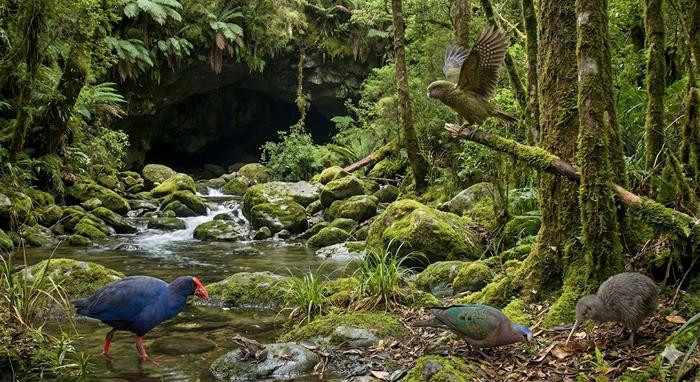
The cave serves not only as a site rich with fossils but also as a natural archive for a poorly understood era in New Zealand’s ecological past. Dr. Paul Scofield, Senior Curator of Natural History at Canterbury Museum, highlighted that prior research at St Bathans in Central Otago illuminated life from 20 to 16 million years ago, but the period bridging that to roughly one million years ago remained largely undocumented.
Discovery of an Ancient Kākāpō Ancestor
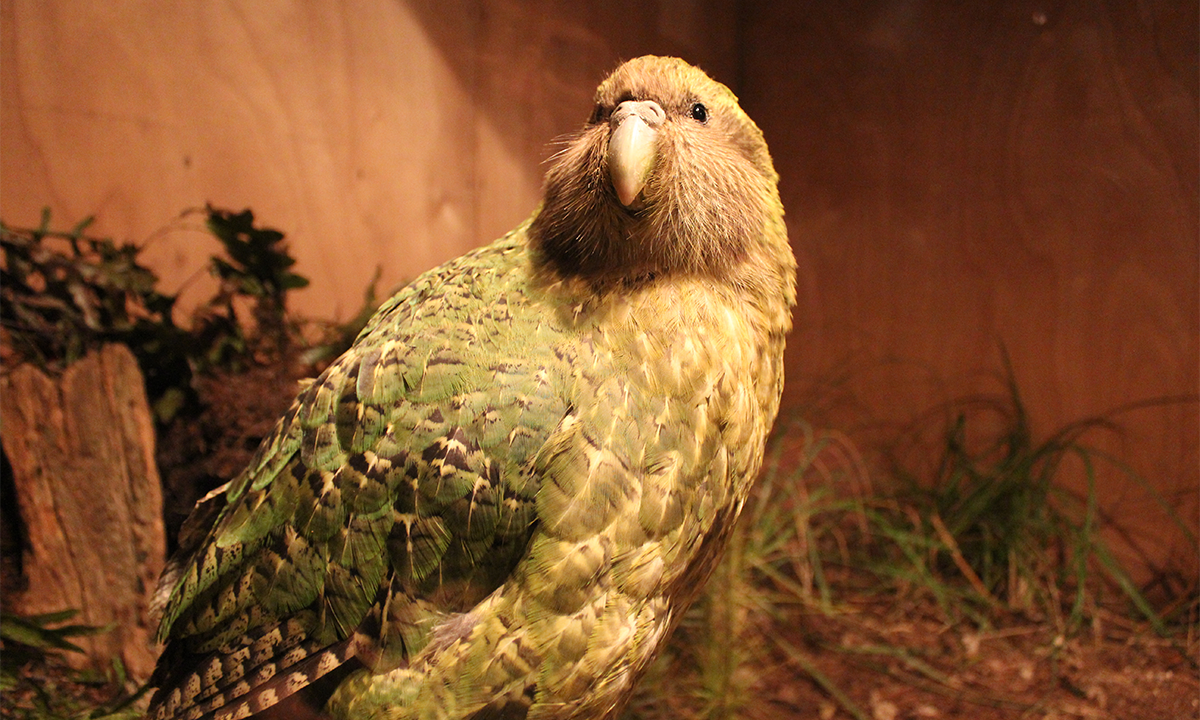
One of the standout discoveries is a newly identified parrot species dubbed Strigops insulaborealis. The research paper describes it as an ancestor of the kākāpō, a heavily built, flightless parrot renowned for its climbing skills rather than flying. Fossil evidence suggests this predecessor had less robust legs compared to the living kākāpō, possibly indicating it was not as adept at climbing.
This anatomical difference implies the ancient parrot might have had a lifestyle distinct from its modern descendant. While the research team does not confirm whether this ancestral bird could fly, they suggest it remains an open question requiring further investigation.
In addition to the kākāpō ancestor, fossils of an extinct relative of the current takahē were found, providing more data points to track changes in New Zealand’s distinctive bird species over time. The collection also revealed an extinct pigeon closely related to Australian bronzewing pigeons, displaying a bird community composition quite different from those of later periods.
A Pre-Human Bird Community Lost to Time
The assortment of fossils reveals significant extinctions of wildlife before humans arrived in New Zealand approximately 750 years ago. Researchers estimate that between one-third and half of the species vanished during the million years preceding human settlement. These declines are attributed to natural environmental pressures like rapid climate changes and intense volcanic activity.
This discovery adds depth to New Zealand’s history of species loss. While human colonization had severe consequences for native wildlife, this cave site demonstrates that considerable ecological shifts had already taken place much earlier, driven by natural forces reshaping the island's fauna over hundreds of thousands of years.
Trevor Worthy noted in a Flinders University announcement that the fossils represent evidence of a previously unknown ancient bird community in New Zealand. This lost bird community comprised both ancestors of present-day species and entirely extinct lineages that disappeared before human eyes could observe them.
Environmental Shifts Impacted Island Wildlife
The fossil record correlates with changes in forest and shrubland ecosystems. Dr. Scofield explained that fluctuations in these habitats caused a resetting of bird populations. The team suggests such environmental turnovers may have catalyzed later evolutionary diversification among birds and other animals on the North Island.
For the broader public, this discovery fills a critical knowledge gap, providing a baseline from a previously missing era. Having access to fossil data from roughly 1 million years ago enables scientists to compare ecological states across large spans of time and better understand how New Zealand’s wildlife developed prior to more recent records.
The Waitomo cave now offers a unique snapshot from this interval, capturing ancient birds, frogs, volcanic ash deposits, and ecological changes all in one location. The full study is published under the title “The first Early Pleistocene (ca 1 Ma) fossil terrestrial vertebrate fauna from a cave in New Zealand reveals substantial avifaunal turnover in the last million years.”
- Categories:
- Science


0 comments
Sign in to Comment