
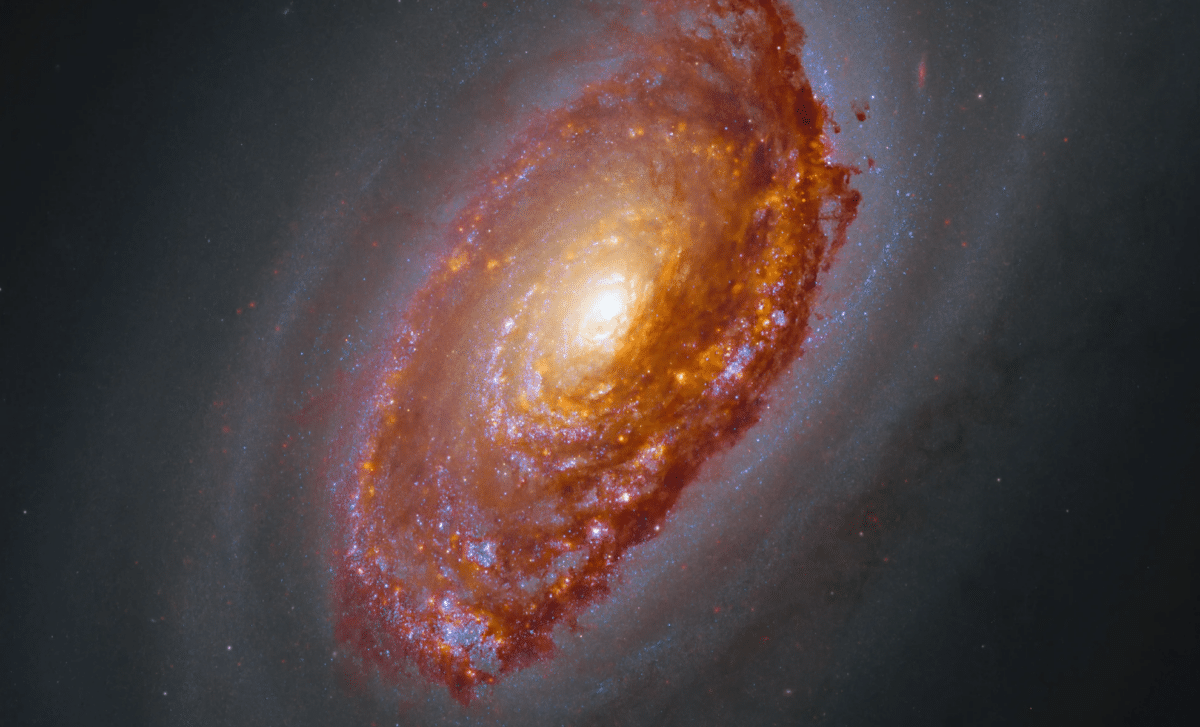
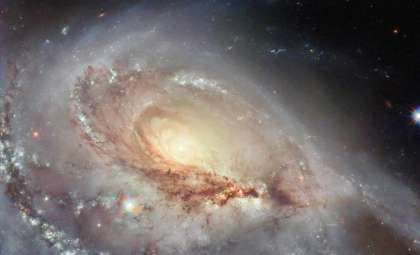
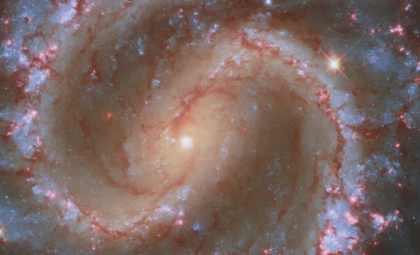
A breathtaking new image from NASA offers an unprecedented view of Messier 64, or the Black Eye Galaxy, a spiral galaxy renowned for its distinctive look and unusual internal motions. By merging observations captured by the James Webb Space Telescope and the Hubble Space Telescope, scientists have produced a detailed picture unveiling a rare cosmic characteristic: different parts of the galaxy rotate in opposing directions. This image sheds light on a system that might still retain evidence of a colossal galactic collision that happened over a billion years ago.
An Exceptional Galactic Phenomenon
Superficially, the Black Eye Galaxy appears as a typical spiral galaxy. Situated about 17 million light-years away in the constellation Coma Berenices, this galaxy has drawn scientific interest due to the striking dark dust band near its luminous center, giving it its iconic name. Yet beneath this visual intrigue lies a remarkable secret. Unlike most spiral galaxies, Messier 64 exhibits an extraordinary rotational pattern that has puzzled astronomers for decades.
The outer gas clouds spin in the reverse direction compared to the stars and gas near its core. This creates a rare and dynamic environment where parts of the galaxy orbit its center in conflicting paths. Such motion is highly unusual and provides important insights into the galaxy’s formative past. These new images reveal these traits with unprecedented clarity, enabling more detailed studies of this cosmic curiosity.

Synergy of Webb and Hubble Observations
The recent release highlights the advantage of combining data from two of the most sophisticated space observatories. The James Webb Space Telescope observes Messier 64 in near- and mid-infrared wavelengths, allowing astronomers to penetrate dust clouds and expose features unseen in visible light. Meanwhile, the Hubble Space Telescope offers complementary data in ultraviolet, visible, and near-infrared wavelengths, showcasing star populations and energetic areas within the galaxy.
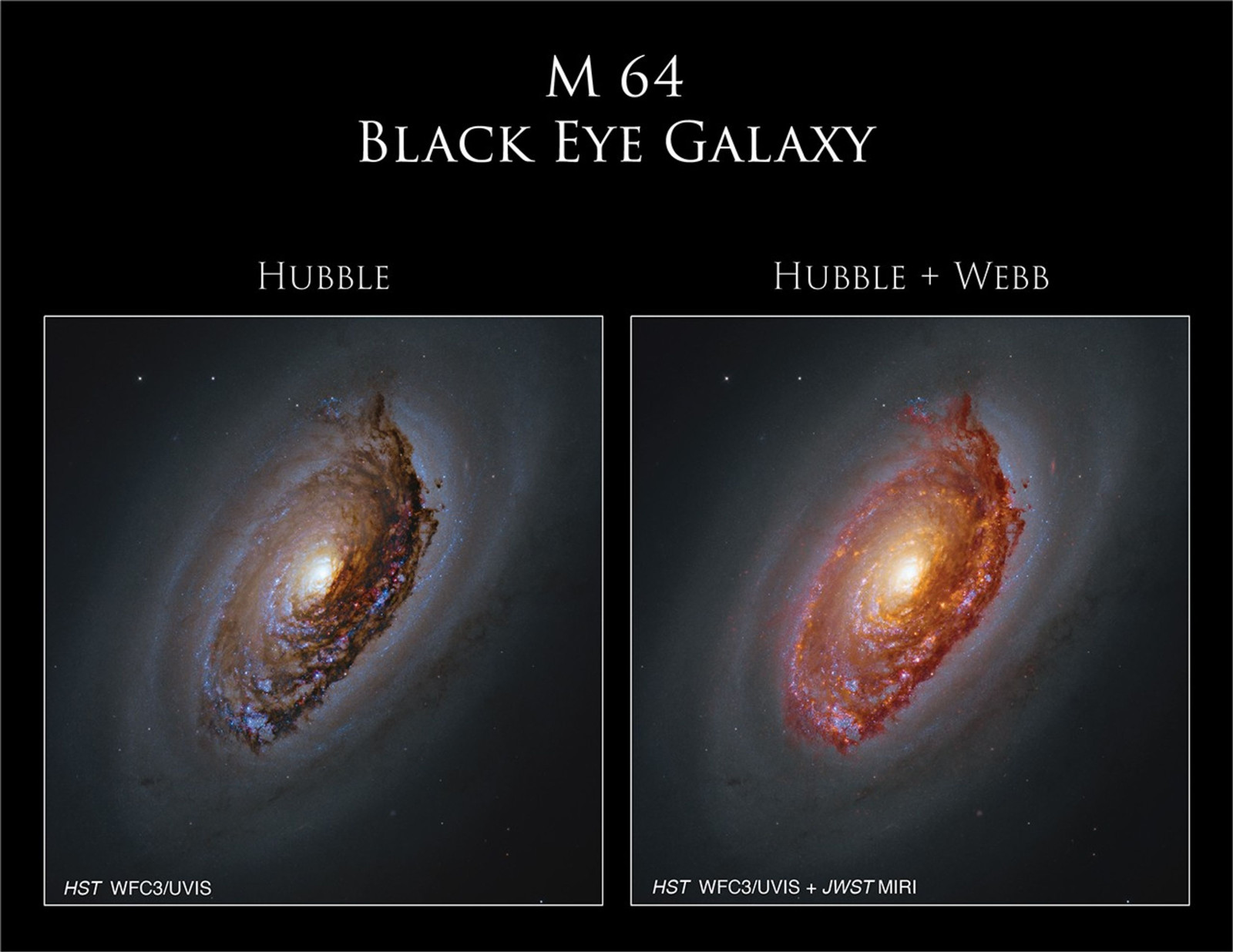
Together, these observatories form a more comprehensive representation of the Black Eye Galaxy than either could produce alone. The composite image captures intricate dust formations alongside star distribution, crafting a layered view of the galaxy’s makeup and evolutionary history. Multiwavelength analysis enables scientists to trace interactions among gas, dust, and stellar populations over time, reconstructing the sequence of events behind the galaxy’s unusual rotational behavior.
Ancient Galactic Collision Leaves Lasting Signature
As detailed by NASA, the leading theory explaining the Black Eye Galaxy’s counter-rotation points to a merger with a smaller companion galaxy long ago. Over a billion years in the past, Messier 64 is believed to have assimilated a satellite galaxy whose material was orbiting oppositely.
During this merger, some gas from the smaller galaxy was integrated into the outskirts of the larger system. Instead of aligning with the established spin, portions of this gas retained their original orbital direction, creating the observed counter-rotating regions.
Galactic mergers are widespread and significantly influence galaxy evolution. What makes Messier 64 invaluable is its apparent preservation of this ancient collision’s aftermath. It acts as a cosmic laboratory for scientists to explore how such interactions shape star formation, redistribute gas, and affect long-term galaxy dynamics.
Insights Into Cosmic Evolution From The Black Eye Galaxy
These findings hold implications far beyond a single galaxy. Understanding interactions like those in Messier 64 helps astronomers refine models describing galaxy growth throughout the cosmos. Counter-rotating segments provide direct proof that galaxies are active entities, constantly molded by external forces. Each collision or gravitational interaction leaves behind signatures that can be detected for billions of years.
The Black Eye Galaxy exemplifies how these enduring imprints survive across cosmic epochs. By examining galaxies with such internal motion complexities, researchers learn more about the fundamental processes driving galaxy growth and matter distribution on grand scales. With observatories like Webb continuing to deliver detailed views, more examples of these intricate cosmic dances are expected to emerge, painting a richer picture of galactic evolution over the universe’s lifespan.
A Unique Perspective On A Billion-Year-Old Cosmic Collision
This new composite image of Messier 64 is much more than a stunning visual; it records a monumental event that transformed this galaxy over a billion years ago. Thanks to the combined power of Webb and Hubble, astronomers are now able to examine the persistent effects of that encounter with unmatched detail.
The Black Eye Galaxy remains a prime example of how ancient mergers continue to affect galaxies long after their initial impact. Every fresh observation unlocks a new layer of cosmic history, revealing a universe where even seemingly steady galaxies harbor complex pasts marked by interaction, transformation, and profound intricacy.
- Categories:
- Space


0 comments
Sign in to Comment