
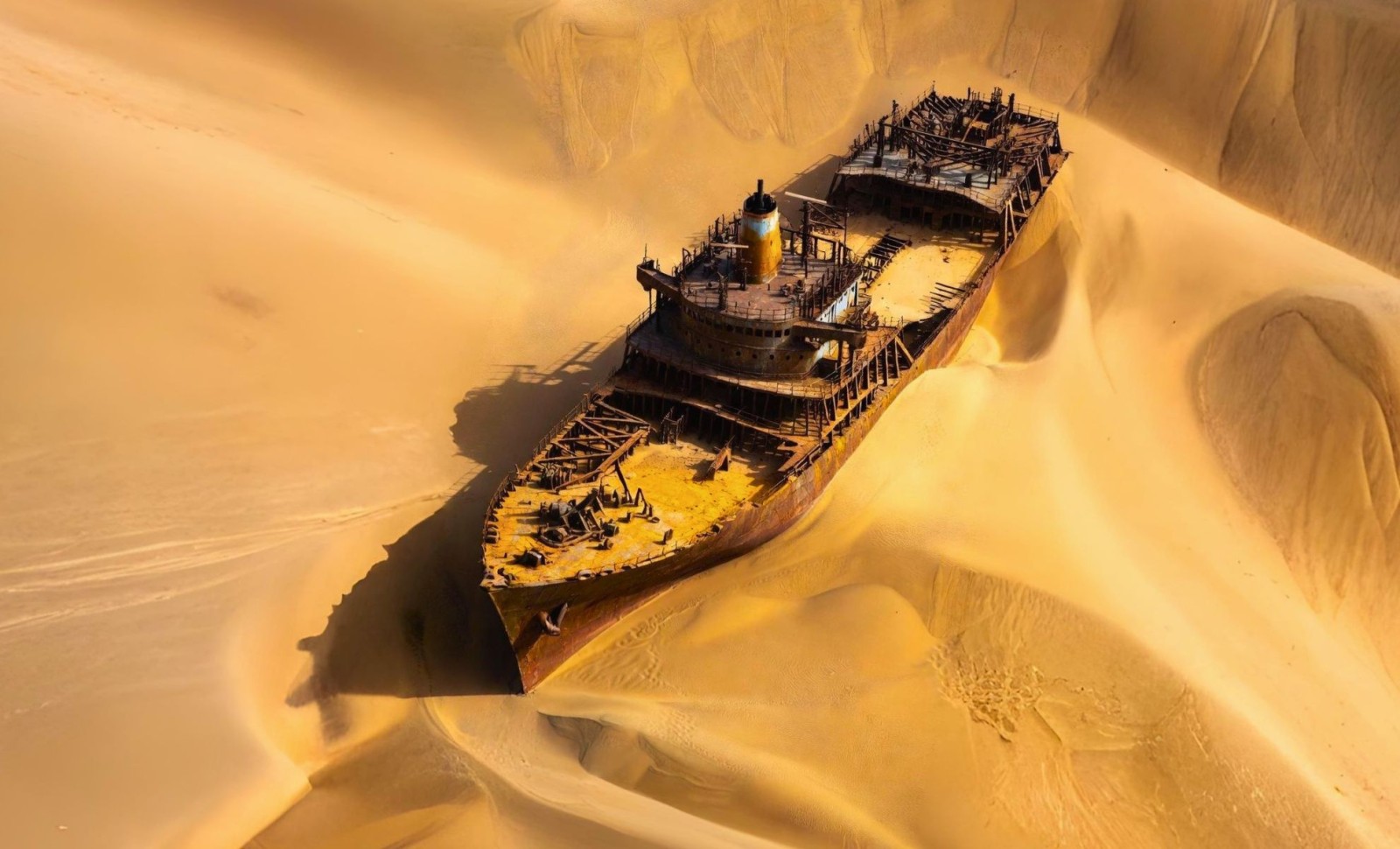
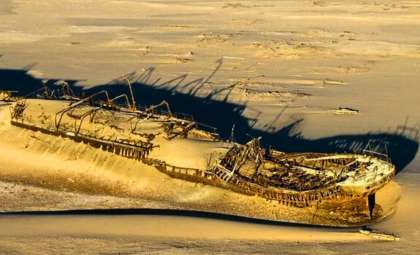
Deep within Namibia’s isolated Sperrgebiet—a German term meaning “forbidden zone”—diamond prospectors uncovered an extraordinary find: a 16th-century Portuguese carrack buried beneath the desert sands, filled with gold, ivory, and copper.
Encased under the dry terrain of the Namib Desert, this vessel, identified as the Bom Jesus, vanished in 1533 while sailing toward India. Discovered in 2008 inside a secured mining area near Oranjemund, the wreck captivated marine archaeologists, climatologists, and historians worldwide.
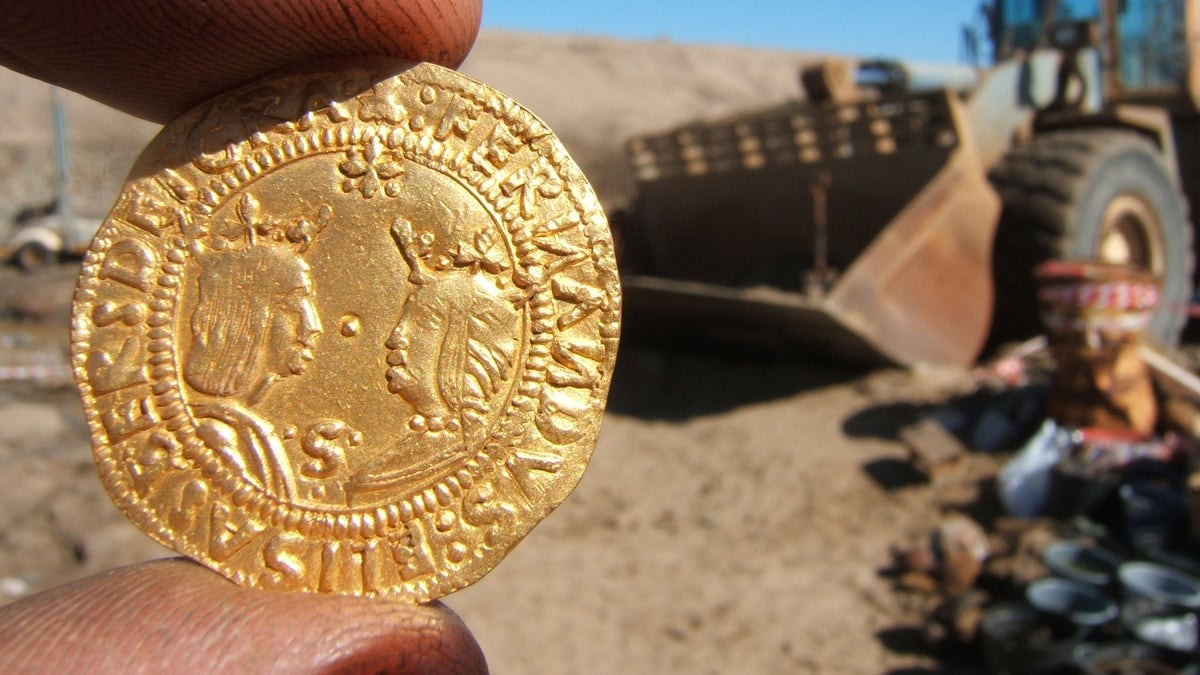
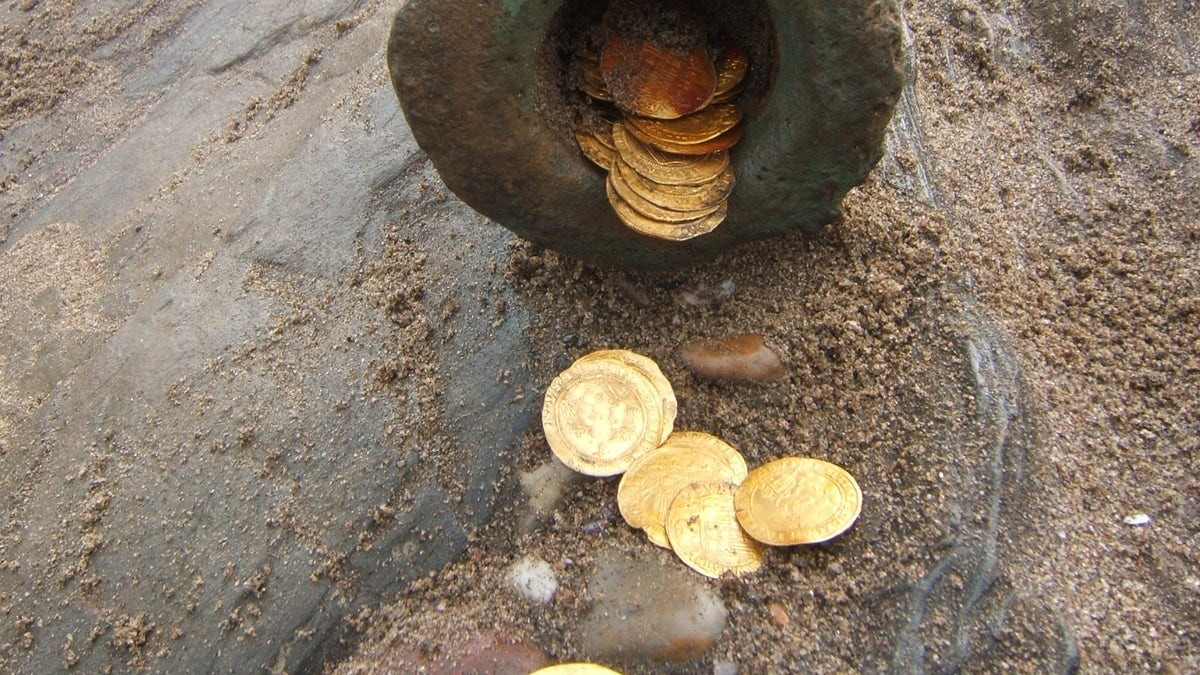
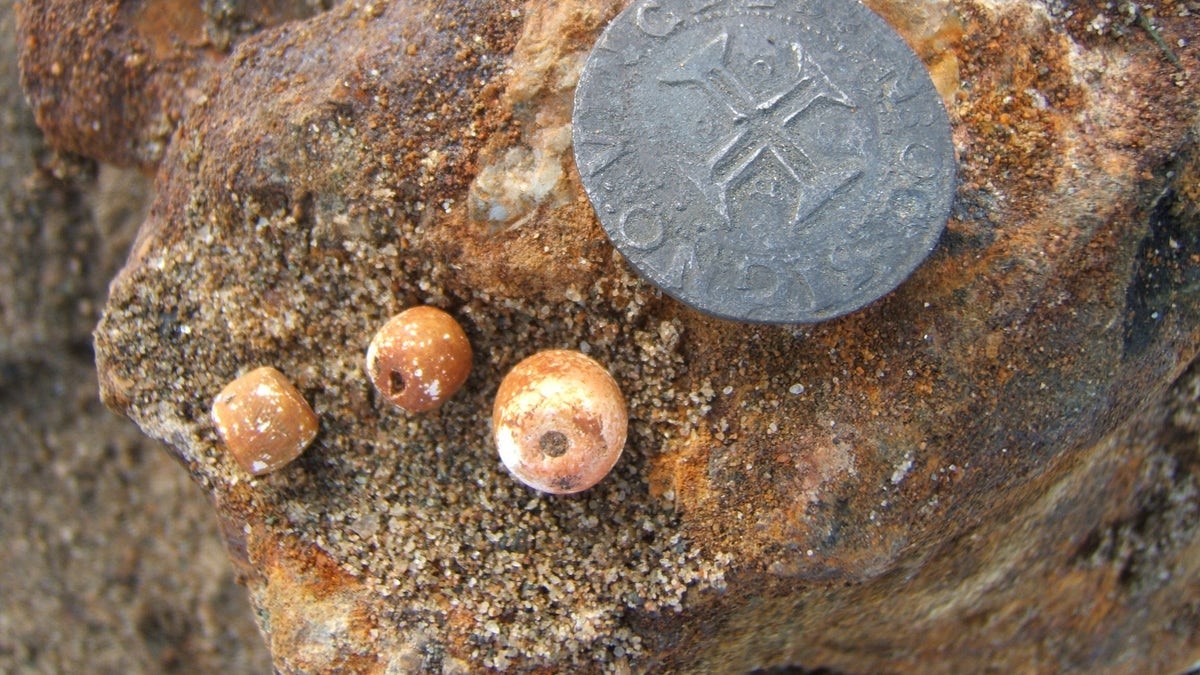
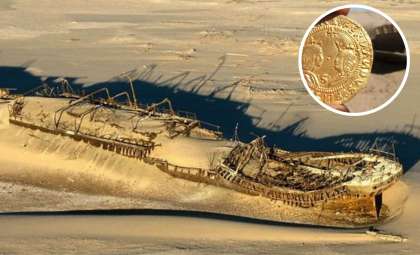
The Bom Jesus was carrying an impressive cargo including over 2,000 gold coins, 22 tons of copper bars, and numerous West African ivory tusks, illustrating a comprehensive trade network linking Europe, Africa, and Asia. Believed to have been forced off course by a severe storm near the Cape of Good Hope, the ship was completely covered by sand over centuries, protecting it from both nature’s elements and human interference.

Desert Burial, Exceptional Preservation
Unlike typical shipwrecks found in oceans or coastal waters, the Bom Jesus lies hundreds of feet inland, shielded by the hyper-arid conditions and stable sediments of the Namib Desert. A 2014 peer-reviewed paper in Quaternary International established that this unique environment created a natural vault, preserving the ship’s wooden structure, cargo, and fragile fabric remnants.
“This site presents more than archaeology; it offers a time capsule of economic exchange from the Age of Discovery,” explained Dr. Bruno Werz, director of the African Institute for Marine and Underwater Research, Exploration and Education (AIMURE). “We see not just fragments, but an entire global trade network preserved in one place.”
The cargo features copper ingots bearing the distinctive trident insignia of the Fugger banking family, indicating German financiers’ involvement in Portuguese expeditions to the Indian Ocean—an aspect rarely documented in colonial trade studies. The discovery of numerous Spanish excelentes—coins uncommon on Portuguese vessels—implies significant Spanish investment as well, supported by archival letters from Lisbon referenced by maritime expert Alexandre Monteiro on ResearchGate.
Clear Claims, Collaborative Heritage
Ownership of the Bom Jesus was undisputed, as the wreck was found within a diamond mining area controlled by the Namdeb partnership between Namibia’s government and De Beers Group. After the find, mining ceased rapidly and an archaeological team was convened. Remarkably, no ownership conflicts arose despite the site’s valuable contents.
Under the 2001 UNESCO Convention on the Protection of Underwater Cultural Heritage, the wreck legally belongs to Namibia. Portugal, the ship’s country of origin and a convention signatory, chose not to pursue ownership, widely applauded as an example of ethical maritime heritage stewardship.
“This represents an exemplary international partnership,” Monteiro told National Geographic in 2022. “It’s indisputably Namibian territory, and the nation has managed it responsibly and insightfully.”
Lives Behind the Maritime Trade
The Bom Jesus formed part of a fleet that left Lisbon in March 1533. Naval records and the illustrated Memória das Armadas identify the ship as “perdido” (lost) near the Cape. Monteiro’s archival research uncovered investor correspondence indicating over 20,000 Portuguese cruzados in gold transferred to Seville just before departure, hinting at intricate financial ties within the Iberian Peninsula.
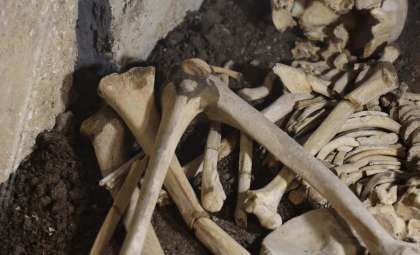
Although the fleet likely carried over 300 crew members, clergy, and soldiers, only a single human bone fragment—a toe inside a worn shoe—was discovered. This suggests that many might have survived the wreck and reached shore. Dr. Dieter Noli, lead archaeologist and head of AIMURE’s project, told Namibiana that nearby the Orange River, located about 25 km south, could have been a vital resource for survivors.
“While the desert seems barren, those stranded in 1533 may have found food, water, and contact with indigenous San peoples,” Noli observed.
Rewriting Early Modern Maritime History
The Bom Jesus discovery rewrites narratives about early European exploration by showing how 16th-century empires were connected through complex multinational trade networks, diverse capital investments, and maritime expertise—predating widespread corporate colonization.
Namibia is now preparing a dedicated maritime museum in Oranjemund to exhibit these artifacts, emphasizing the country’s role not only in preserving European maritime heritage but also in telling Africa’s underwater history. This aligns with Namdeb’s sustainability goals, blending cultural preservation with economic progress.
Many mysteries remain: Why did the ship drift so far inland? What became of the crew? How many other wrecks lie hidden, not on ocean floors, but beneath the sands?
Explore further:
- Scientific study in Quaternary International (2014)
- Official AIMURE website
- UNESCO Underwater Cultural Heritage Convention
- Profile of Dr. Dieter Noli – Namibiana
- Categories:
- News






0 comments
Sign in to Comment