
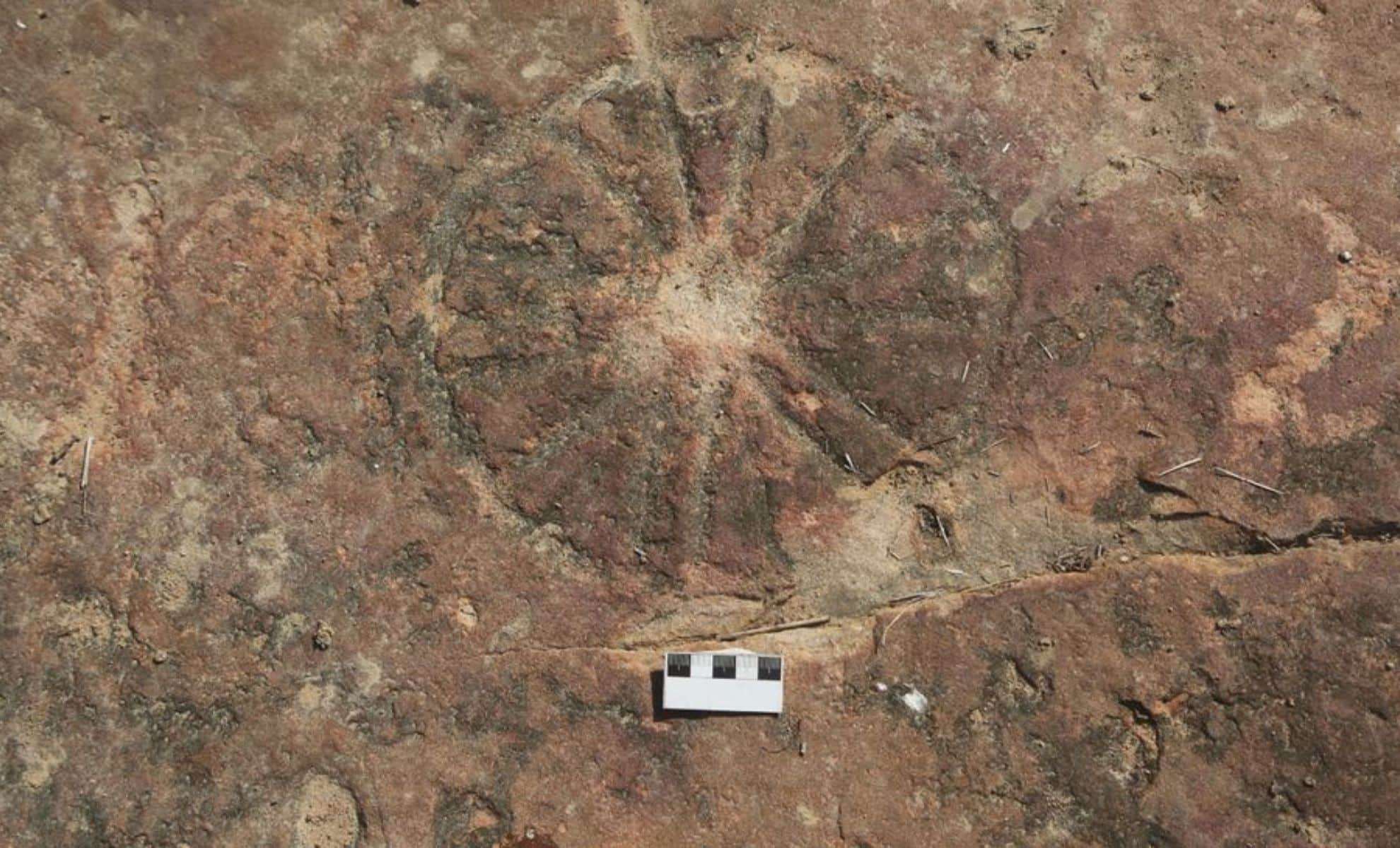
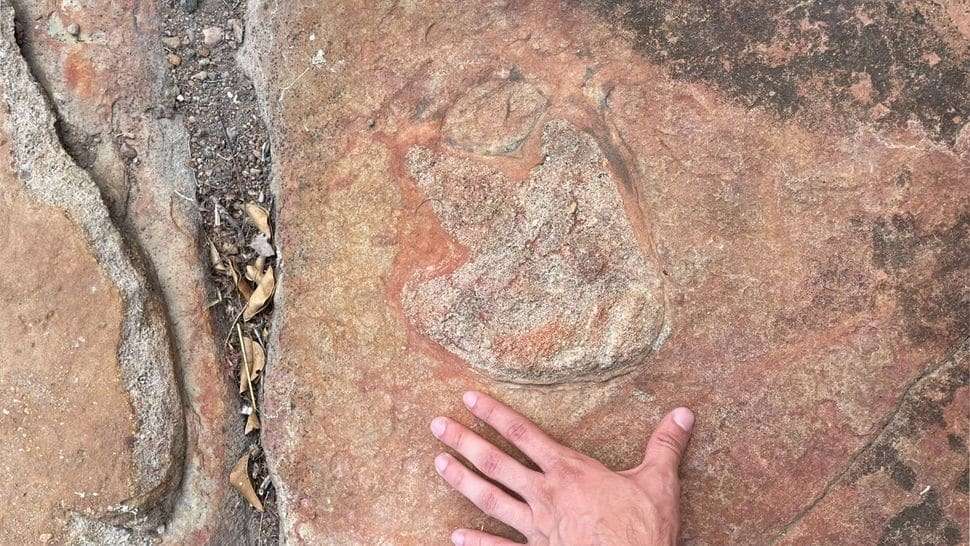
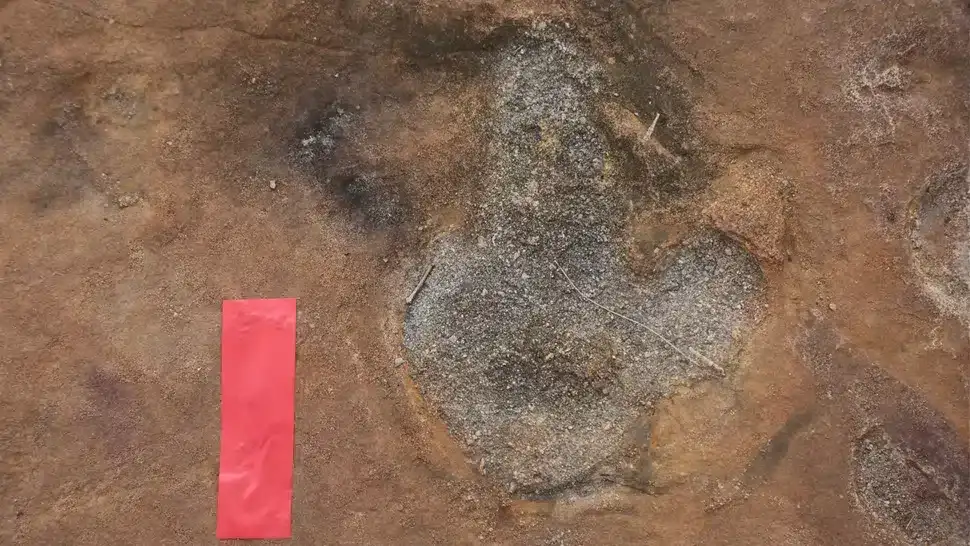
Scientists have made a remarkable find of 9,000-year-old petroglyphs located at Serrote do Letreiro, an archaeological site in Paraíba, Brazil. These ancient carvings were discovered close to dinosaur footprints originating from the Cretaceous Period, around 66 million years ago.
Unveiling a Remarkable Connection
Although first identified in 1975, these rock engravings were recently rediscovered during detailed drone surveys, which uncovered additional ancient illustrations. Scholars believe the petroglyphs are deliberately situated near the dinosaur footprints, with some only a few inches away, suggesting a purposeful spatial relationship.
This close placement of human-made imagery next to fossilized footprints hints that the artists—likely semi-nomadic hunter-gatherers from between 9,400 to 2,620 years ago—may have held the footprints in spiritual or cultural esteem. The discovery suggests early inhabitants linked their artful expression with these ancient natural relics.

The Fusion of Human Expression and Ancient Traces
The variety in style across the petroglyphs implies that multiple creators contributed to the site. Leonardo Troiano, Coordinator of Cooperation and Promotion at Brazil's National Historic and Artistic Heritage Institute, emphasized that the strategic alignment of petroglyphs with dinosaur footprints reflects "a profound respect for fossilized tracks within indigenous Brazilian cultures."
The artworks demonstrate early peoples’ awareness and engagement with their environment’s deep history, making Serrote do Letreiro a vital cultural and scientific landmark.
Modern Technology Illuminates Ancient Art
Although the carvings were initially identified decades ago, it was the application of drone technology that enabled researchers to analyze the site comprehensively, documenting previously unseen details. This advanced approach was key to expanding knowledge of how the petroglyphs relate to the nearby dinosaur tracks.
Troiano and his team, including paleontologists Aline Marcele Ghilardi and Tito Aureliano, along with archaeologist Heloisa Bitú, consider this discovery an important intersection between paleontology and archaeology. According to Troiano, it enhances our understanding of early human interaction with fossils dating back millions of years.
Linking Humanity with Prehistoric Heritage
The importance of the Serrote do Letreiro site extends beyond the petroglyphs and dinosaur prints; it provides insight into the lives of its ancient human inhabitants. Combining paleontological and archaeological expertise has revealed a cultural narrative that connects human symbolism with the fossilized legacy.
This site underscores the enduring bond between humans and their natural surroundings, revealing that Brazil’s indigenous groups possessed a sophisticated understanding of their environment long before modern paleontology revealed dinosaurs and their footprints.
- Categories:
- News









0 comments
Sign in to Comment