
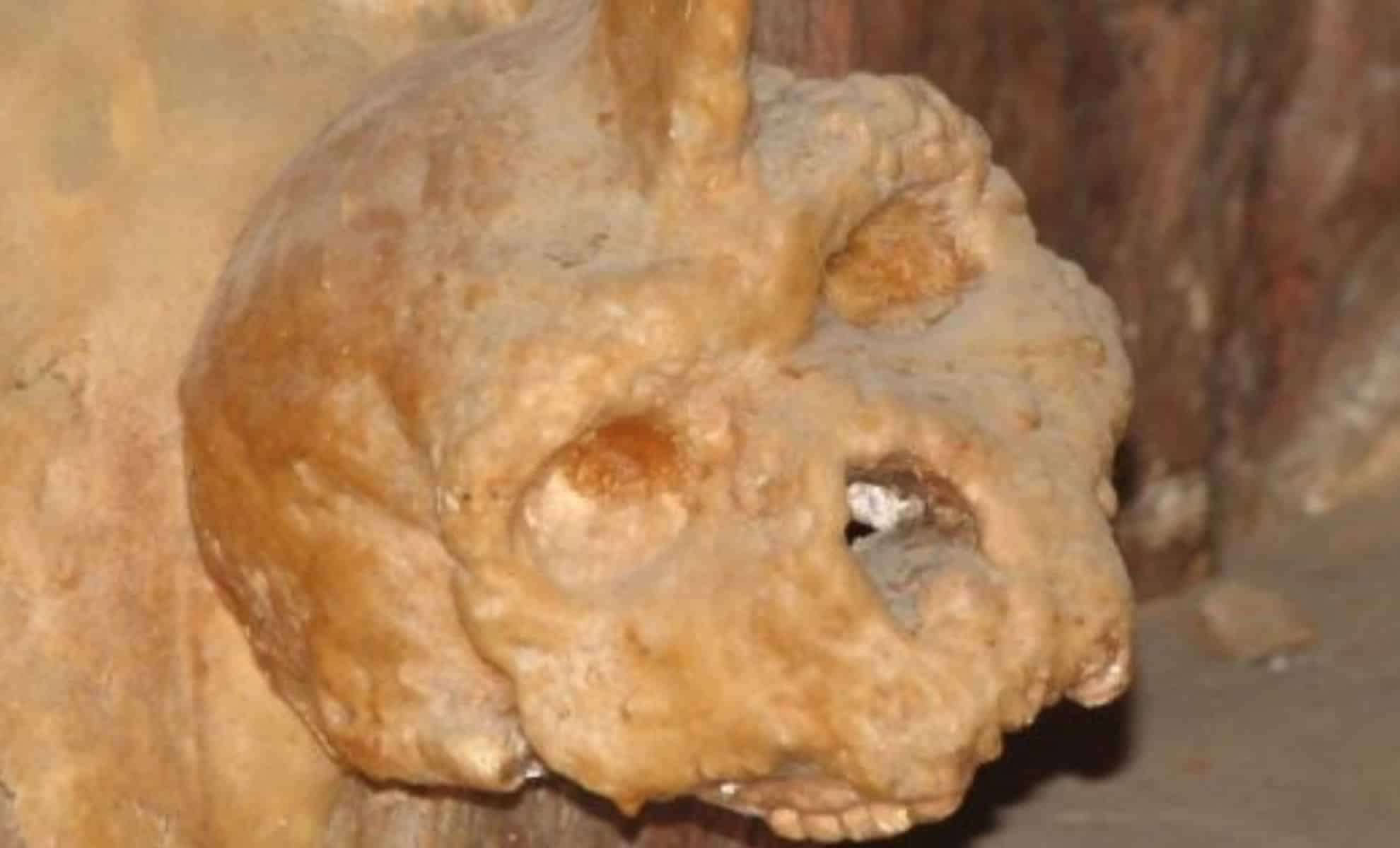
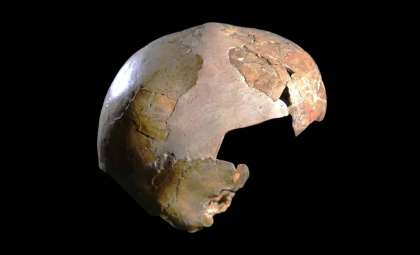
Unearthed over sixty years ago within a cavern in northern Greece, a fossilized skull is offering fresh perspectives on our ancient human ancestry. Newly published findings in the Journal of Human Evolution suggest this skull could represent a unique extinct human species that coexisted with Neanderthals in Europe during the Middle Pleistocene epoch.
Preserved Through Ages Beneath the Cave
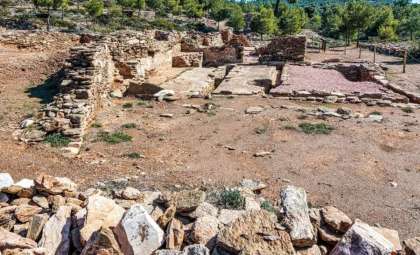
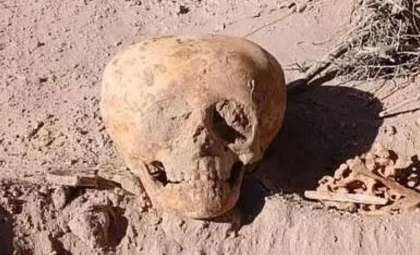
In 1960, explorers investigating Petralona Cave near Thessaloniki uncovered a remarkable specimen—an ancient human skull embedded in the rock face, enveloped by thick calcite layers formed from mineral-rich water dripping over millennia. This natural coating not only shielded the fossil but also allowed a stalagmite to sprout from its forehead, giving it an unusual appearance.
Known as “Petralona Man,” the skull immediately sparked intense scientific debate due to its ambiguous traits. Missing its jawbone, it has been variably classified as Homo sapiens, Neanderthal, or Homo heidelbergensis, with age estimates spanning an extensive range between 170,000 and 700,000 years.

Clarifying the Skull’s True Age
Seeking to pinpoint its timeframe, a research group headed by geochronologist Christophe Falguères utilized uranium-thorium dating, a precise approach measuring radioactive decay in mineral deposits to date cave formations.
Focusing on the first mineral layer attached to the skull, their findings indicate the fossil is at least 277,000 years old, while surrounding deposits date back up to 539,000 years. Calcite development rates suggest the skull likely settled in the cave about 300,000 years ago.
The team proposes that this individual lived contemporaneously with evolutionary Neanderthals but possesses features more archaic than Neanderthals and distinct from modern humans. Chris Stringer, paleoanthropologist at the Natural History Museum in London and co-author of the study, remarked that the skull represents a population separate from both H. sapiens and Neanderthals.
Connections to the Kabwe Fossil
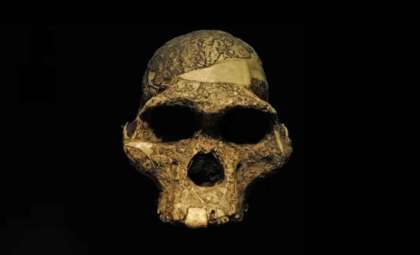
This ancient skull bears a striking resemblance to the Kabwe skull from Zambia, dated around 299,000 years old and commonly assigned to Homo heidelbergensis. This species is thought to be a shared ancestor of modern humans and Neanderthals.
According to Stringer, these fossils are “closely comparable,” potentially indicating they originate from the same archaic human group, hinting at a widespread and thriving species during that period.
Rewriting Europe’s Human Evolution Story
New data suggests human evolution across Europe was far more complex than a simple progression from primitive to modern forms. Instead, multiple hominin species likely cohabited the continent, some contributing little to modern human DNA yet influencing the prehistoric environment and possibly engaging in interspecies interactions that remain largely unknown.
The Petralona skull, characterized by its thick bones and moderately worn teeth, probably belonged to a young adult male. The rapid calcite crystallization in the cave played a vital part in its exceptional state of preservation, making this fossil among the most intact Middle Pleistocene human remains ever found.
- Categories:
- News


0 comments
Sign in to Comment