
Hidden deep within Europe’s limestone terrain, scientists have revealed a groundbreaking find that reshapes our view of prehistoric societies. Four enormous stone hunting enclosures located on the Karst Plateau straddling Slovenia and Italy were identified as part of an intricate, large-scale game hunting system, marking Europe's earliest known example of such constructions.
These stone formations are remarkable not only for their vast size but also for the sophisticated planning they reflect, pointing to a community with expert knowledge of wildlife behavior and the landscape—long before the Bronze Age commenced.
Unearthing Europe’s Forgotten Megastructures
On the ground, these structures are subtle, with walls now standing less than half a meter tall, made from loose limestone that blends seamlessly into the harsh terrain. However, aerial views tell a vastly different tale.

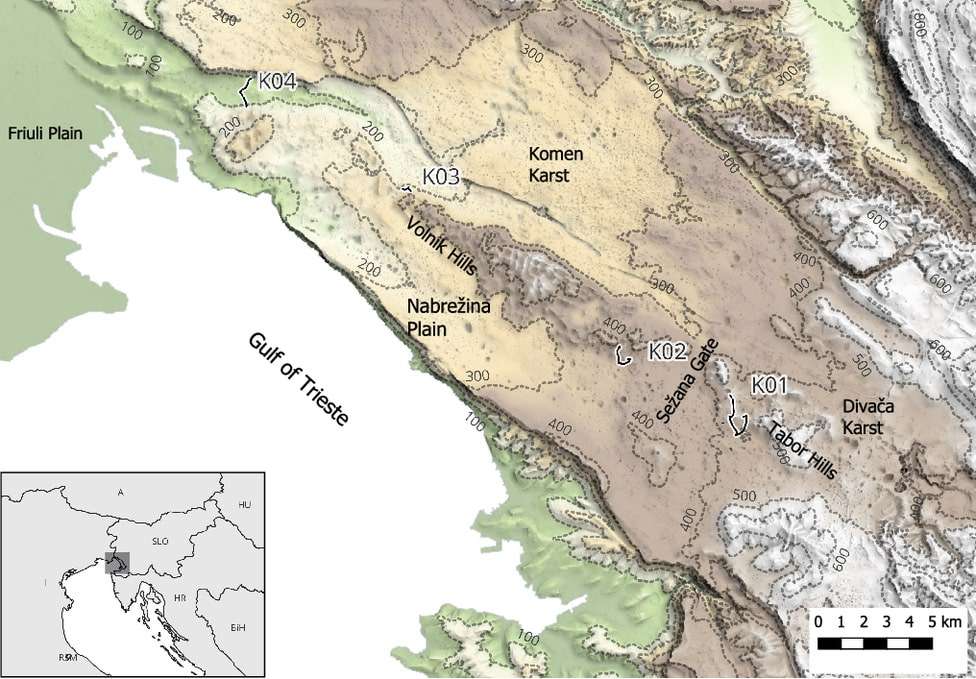
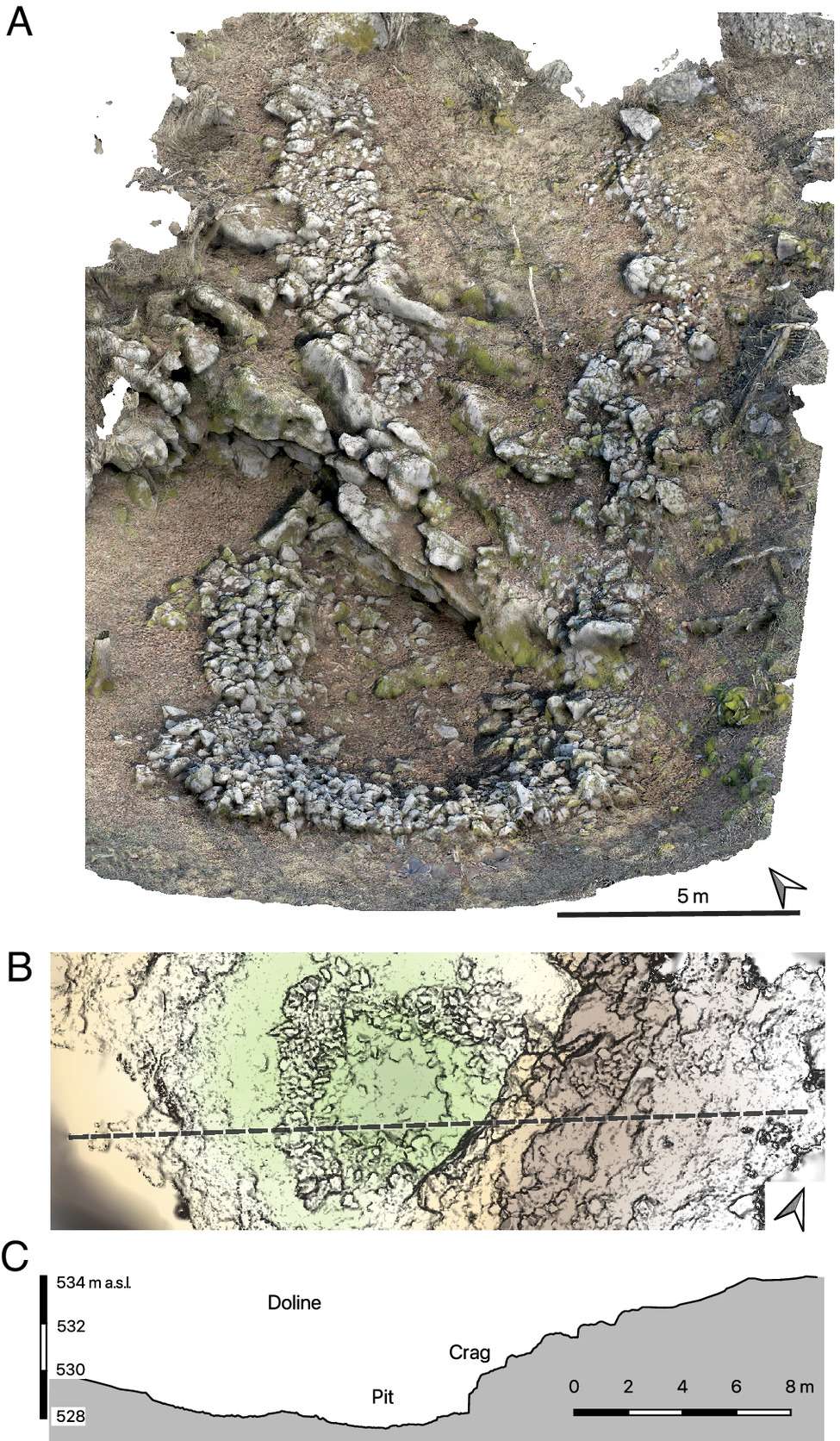
The team from the University of Ljubljana and the Institute for the Protection of Cultural Heritage of Slovenia utilized airborne laser scanning (ALS) technology to survey over 870 square kilometers across the Karst Plateau. This revealed four monumental V-shaped stone alignments ranging between 530 meters and 3.5 kilometers in length. Each formation featured a concealed pit-like enclosure strategically positioned at the edge of adjacent cliffs or steep drops.
The intentional design created wide funnels meant to channel wild herds, especially red deer, into these enclosures. The low stone walls likely went unnoticed by the animals, guiding them unsuspectingly toward a trap.
Complex Construction Required Significant Effort
These massive structures could not have been built quickly. The biggest alone demanded more than 5,000 person-hours to complete, a workload far beyond that of a single family or small band. This underscores the presence of organized communities working collectively toward long-term objectives.
The researchers highlight how these ancient earthworks demonstrate “the coordination of communal labor beyond the domestic sphere, the transformation of landscapes into infrastructural systems, and the coupling of animal ecology with architectural foresight.”
Put simply, these early peoples had a profound understanding of their environment, their prey’s habits, and architectural strategy.
Laser Scanning Revives Ancient Schemes
The remarkable stone traps might have remained concealed if not for high-resolution ALS technology. From above, their full intricate patterns emerge clearly despite centuries of overgrowth and erosion.
The scans revealed walls between 1 and 1.5 meters wide that acted as guiding corridors. The placement of the pit enclosures at natural topographical edges shows deliberate planning. Each element was engineered with close attention to the surrounding landscape, showcasing the builders’ expertise.
Radiocarbon dating of artifacts discovered within these structures suggests they were deserted well before the Late Bronze Age. This positions them as some of the most ancient known examples of large-scale hunting architecture in Europe.
- Categories:
- News










0 comments
Sign in to Comment