
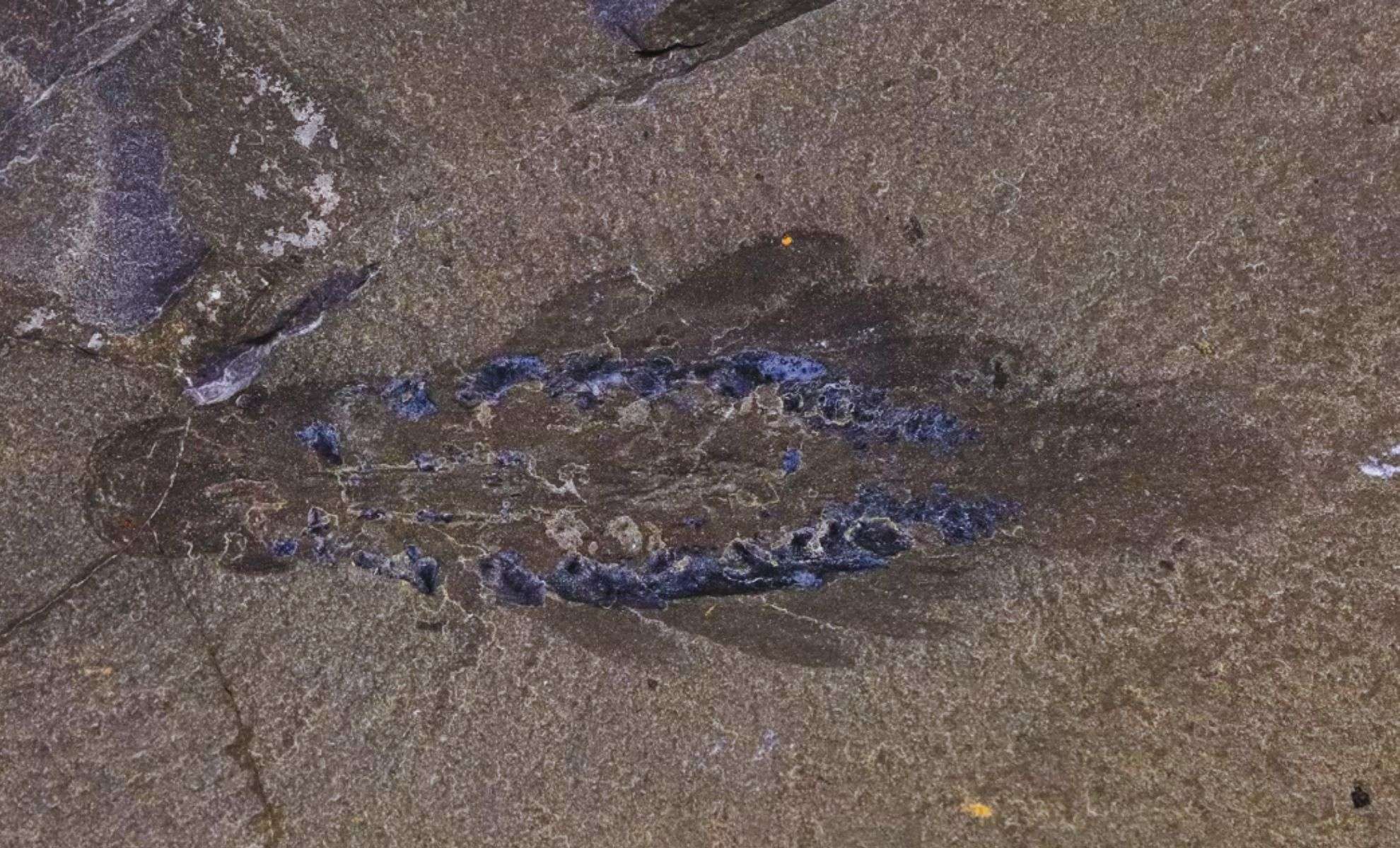
Paleontologists have uncovered an extraordinary ancient arthropod, Mosura fentoni, whose unusual features are providing a fresh perspective on the Cambrian Explosion. Published in Royal Society Open Science, this marine organism, dating back over 500 million years and discovered in Canada’s Burgess Shale, resembles a sea moth but with distinct alien-like traits. Its three-eyed head, clawed appendages, and gill-lined tail segments offer a rare glimpse into the diverse marine ecosystems of the Cambrian seas.
A Unique Cambrian Predator with Three Eyes and Flapping Limbs
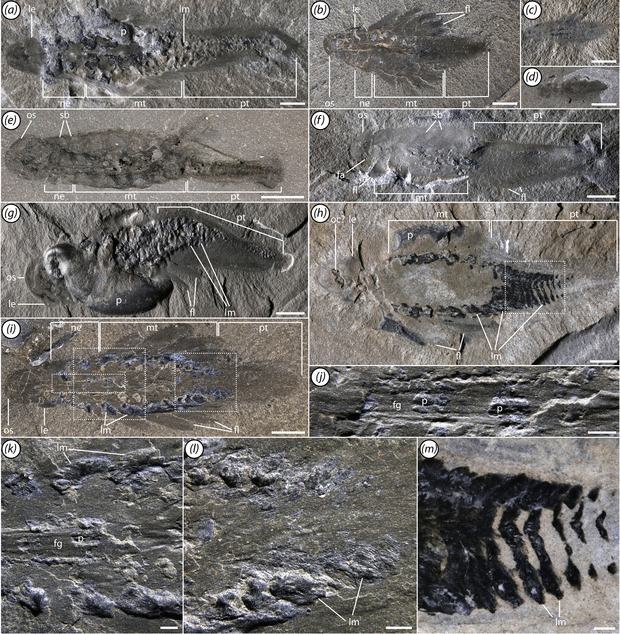
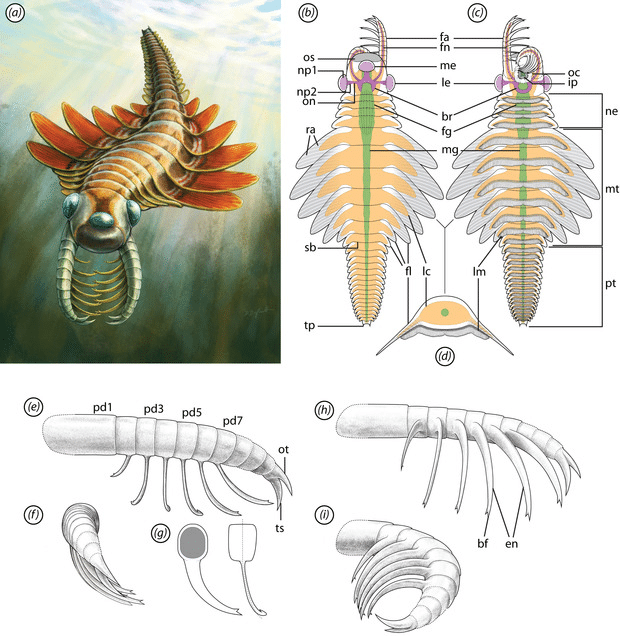
Mosura fentoni is part of a now-extinct arthropod family called radiodonts, famed Cambrian predators that include the infamous Anomalocaris. What distinguishes Mosura are its compact size, three-eyed structure, and claws adapted for hunting. Its body combined features for swimming and capturing prey, including paddle-like limbs and a specialized feeding disc resembling those of its radiodont relatives.
Distinctively, Mosura sported a segmented tail consisting of 16 parts lined with gills, diverging from the longer tails seen in related species. Scientists are investigating the tail’s role, with theories proposing it aided respiration in oxygen-poor waters or assisted in underwater movement through propulsion or stabilization.

The Origin of the Name “Mosura”: Inspired by a Legendary Monster
The designation Mosura fentoni is a tribute to Mothra, the iconic kaiju from the Godzilla universe. While not zoologically related to moths, the arthropod’s wide, flapping limbs and slender shape recall the fictional creature’s form. Researchers selected the name as a whimsical nod to this prehistoric organism’s strikingly unusual, almost extraterrestrial, appearance.
Despite its evocative name, Mosura predates modern insects by hundreds of millions of years. As a member of the ancient radiodont group, it inhabits a pivotal position in arthropod evolution, shedding light on the early diversification of marine species long before the rise of current-day arthropods.
Exceptional Fossil Preservation Offers Insight into Early Animal Physiology
The fossil record of Mosura fentoni reveals astonishing detail, enabling scientists to examine its internal anatomy with rare accuracy. Well-preserved remains expose structures such as nerve cells, eyes, and the digestive system, allowing researchers to piece together its biological functions and lifestyle.
A remarkable discovery is the presence of reflective fossilized patches, interpreted as evidence of a primitive open circulatory system. These patches suggest that Mosura possessed a simple heart pumping blood through internal body cavities, an evolutionary step not often seen in creatures of its era.
Led by Joe Moysiuk from the Manitoba Museum, the team underscores that such soft-tissue preservation is a groundbreaking window into the biology of some of Earth's earliest animals. Fossils like those from the Burgess Shale continue to transform our understanding of the complex inner workings of Cambrian life.
- Categories:
- News





0 comments
Sign in to Comment