
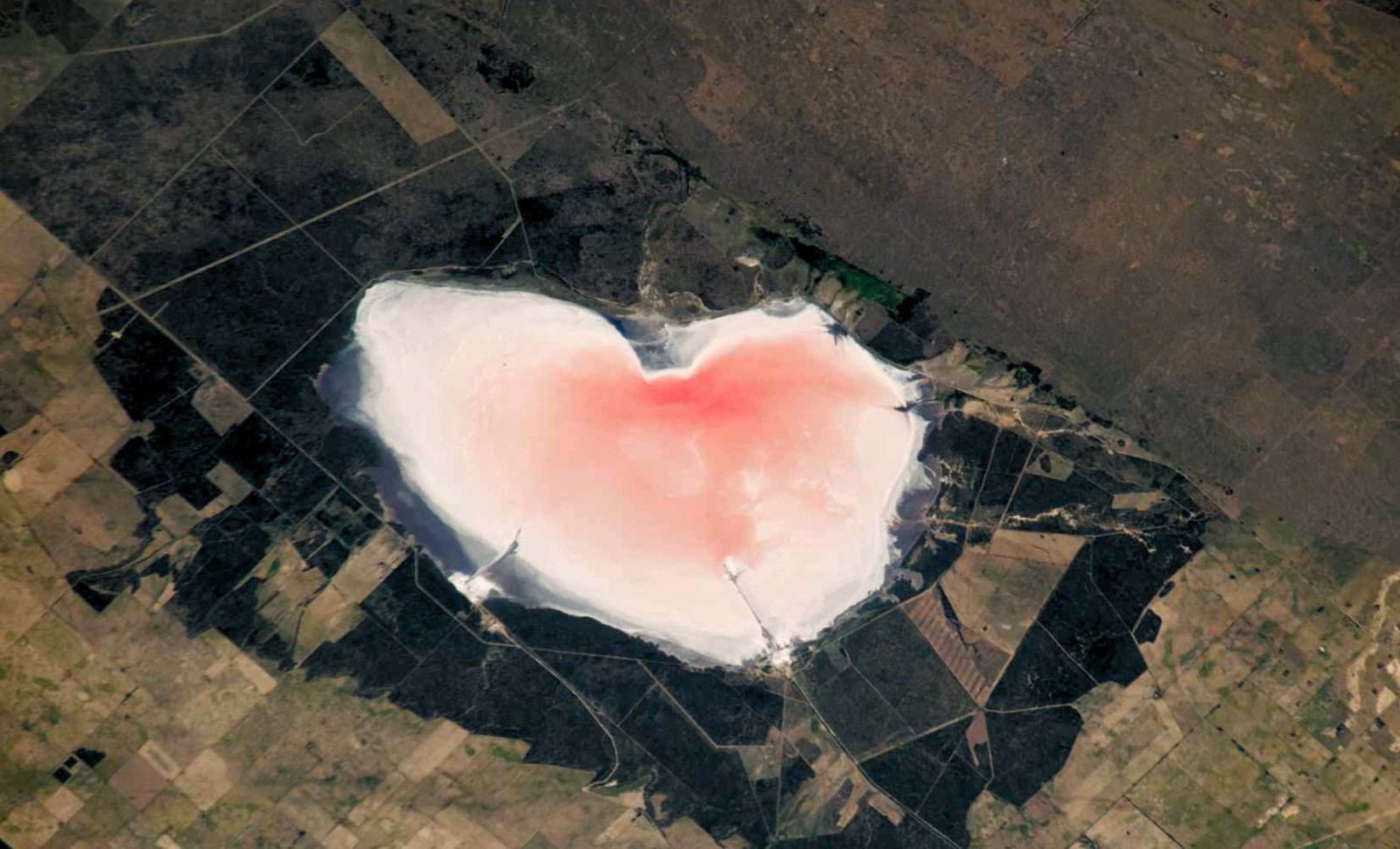
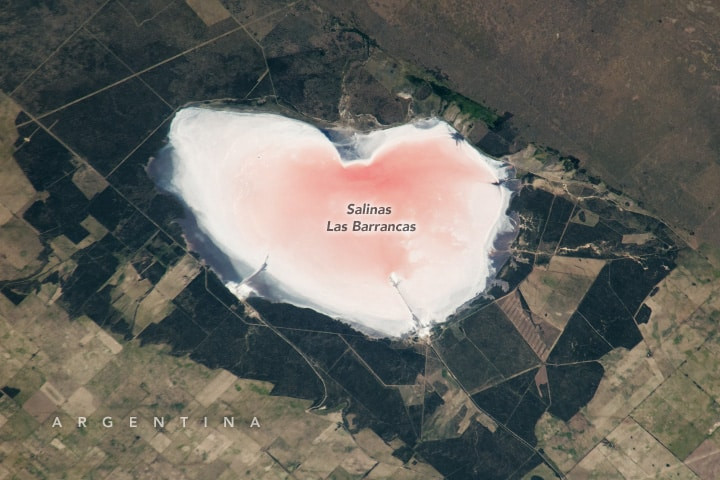
From the vantage point of the International Space Station, an astronaut documented a nearly flawless pink heart shape sprawling across the flatlands of Argentina. This unique formation is Salinas Las Barrancas, a shallow salt basin spanning about 10 kilometers. The rosy hue isn’t an optical illusion but a biological phenomenon produced by microorganisms intensely illuminated by sunlight.
Captured on January 16, 2024, by a crew member of Expedition 70 using a Nikon D5 paired with a 500mm lens, NASA featured this remarkable photo in an Earth Observatory article focusing on heart-shaped lakes. Located roughly 40 meters below sea level in Buenos Aires Province and 53 kilometers west of Bahía Blanca, the basin fills with rainfall. When precipitation ceases, the trapped water evaporates, leaving behind concentrated saltwater brine.
Microbial Pigments Give the Basin Its Pink Glow
The striking pink color originates from Dunaliella salina, a single-celled alga known for its vivid pigmentation. Research published in the Saudi Journal of Biological Sciences (2019) studied a Colombian variant of this species, revealing that when salinity reaches 4.0 molar sodium chloride and sunlight intensity hits 390 micromoles per square meter per second, the algae produces carotenoids, turning from green to red. Under these stressed conditions, carotenoid levels peaked at 9.67 micrograms per milliliter—six times higher than under regular salinity.

These carotenoid pigments serve as protective shields. Under normal light levels, Dunaliella conducts photosynthesis like other green algae. But when exposed to intense sunlight and thickening saltwater, the cells endure oxidative stress. To defend themselves, the algae accumulate beta-carotene, the pigment responsible for carrots’ orange color, which absorbs harmful excess light before the chloroplasts are damaged. This survival mechanism creates a conspicuous red pigment noticeable from hundreds of kilometers in space.
Archaea Take Over as Conditions Become Extreme
NASA’s report describes a secondary color transformation. As evaporation continues and salinity rises further, Dunaliella populations decline sharply. The dead and dying algae release organic matter, triggering the proliferation of halophilic archaea and bacteria that thrive in these salty environments. These microorganisms produce their own reddish pigments, intensifying the basin’s pink color.
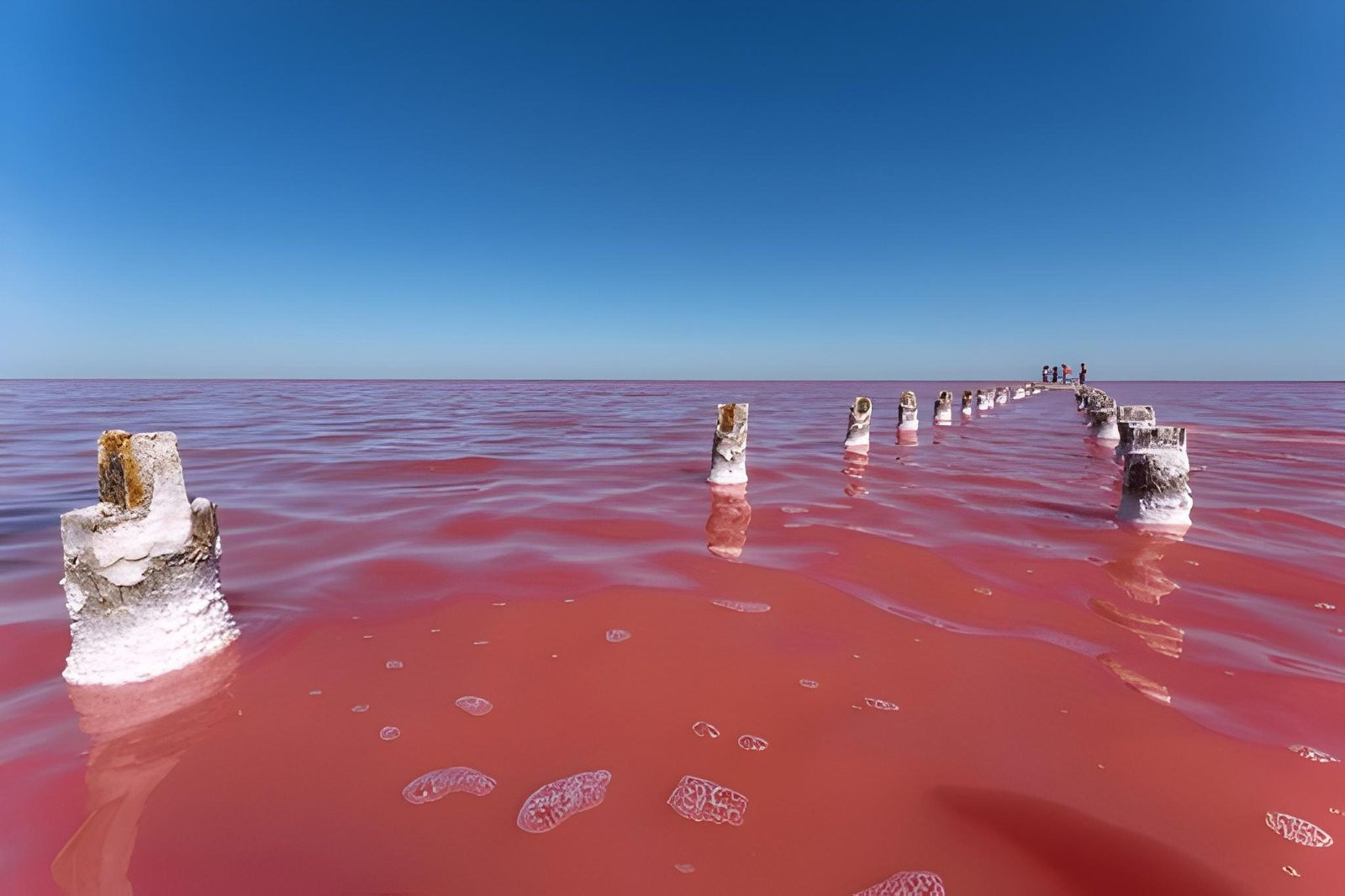
Microbiologist Lilliam Casillas Martinez explained to Smithsonian Magazine, “During the dry season, the salinity increases dramatically. When this happens, Dunaliella can diminish, allowing archaea and bacteria to flourish, which brings out the pink coloration.” The heart’s shape is purely geological, while the color represents a microbial shift driven by extreme conditions.
Salt Extraction Coexists with Nature's Resilience
Salinas Las Barrancas functions as an active salt harvesting location rather than a protected reserve. As reported by Argentina’s La Nación, the site produces up to 300,000 metric tons of salt annually, supporting various chemical industries. Workers at the flats contend with intense sunlight reflected off the bright salt crust, requiring continuous eye and skin protection.
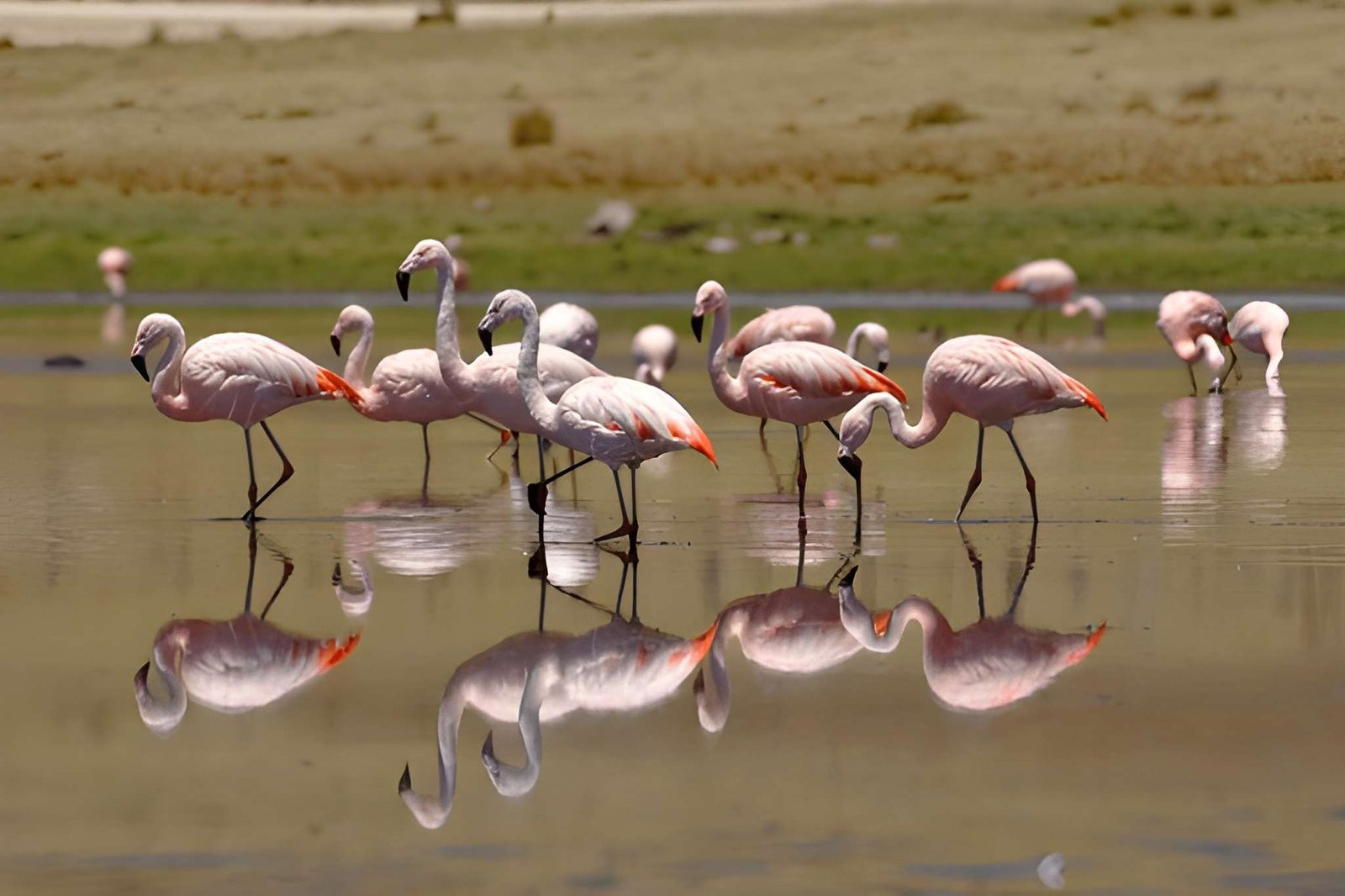
Despite these harsh conditions, life flourishes at the basin's fringes. Salt-resistant vegetation lines the shores, and Chilean flamingos feed on the carotenoid-rich microbes coloring the water. These pigments accumulate in the birds’ feathers, giving them their iconic pink coloration—a direct connection between diet and appearance.
Additionally, the yellow cardinal (Gubernatrix cristata) inhabits the region but faces greater threats. According to the BirdLife International DataZone, only about 1,000 to 2,000 mature individuals remain, and the species is classified as Endangered. Trapping for the pet trade and habitat loss due to eucalyptus plantations and cattle grazing continue to imperil this bird.
While the cardinal doesn’t rely on the salt flats as flamingos do, ongoing environmental changes threaten both species’ survival.
Insight Beyond an Enchanting Image
This image captures more than just a captivating shape. Since Salinas Las Barrancas is shallow and seasonally fed by rainfall, its salinity fluctuates. Heavy rains can quickly replenish the basin, diluting salts and allowing microbes to shift back toward green pigments.
Over time, evaporation intensifies again, cycling the basin through color shifts. Satellite and space station imagery help scientists monitor these transformations, offering valuable insights into water movement and ecosystem dynamics in an arid landscape marked by episodic storms.
- Categories:
- News










0 comments
Sign in to Comment