
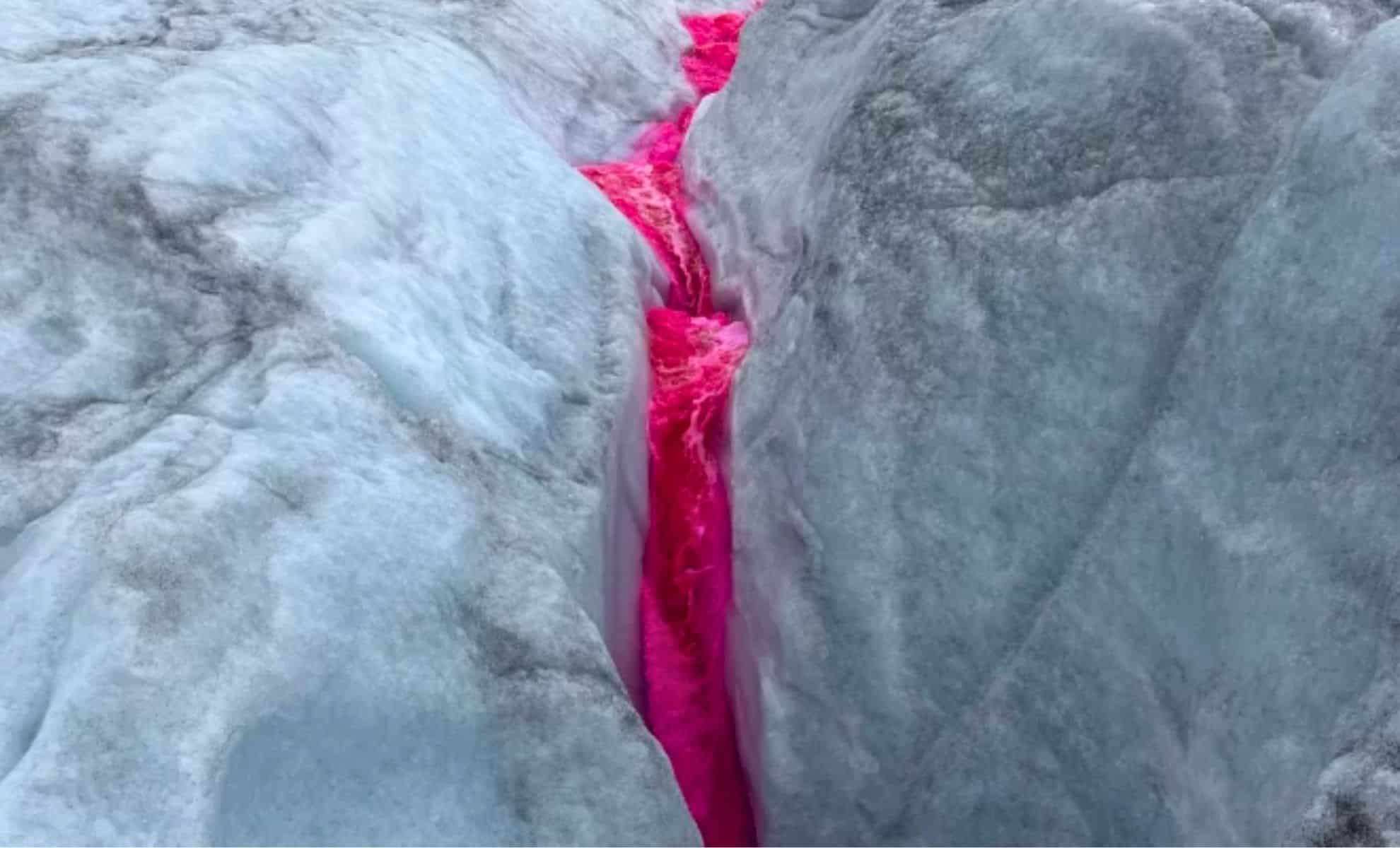
Researchers in Switzerland have colored the meltwater of the Rhône Glacier a vivid pink to visualize its flow. Led by experts at the Swiss Federal Institute of Technology Zurich (ETH Zurich), this innovative approach aims to deepen understanding of how swiftly European glaciers are shrinking amidst climate change. The eye-catching findings were initially highlighted by New Scientist.
Situated in the Swiss Alps, the glacier has diminished by approximately 60 percent since 1850. The pink dye serves as a hydrological marker, enabling scientists to observe meltwater pathways and flow rates in real time, providing insight into how melting interacts with Europe’s major waterways.
Europe Experiences Accelerated Warming
Climate reports indicate that Europe is warming nearly twice as fast as the global average, according to NPR. This rapid temperature increase is dramatically transforming alpine environments and putting glaciers like the Rhône under significant strain. Once a dependable freshwater source, the Rhône Glacier now acts as a stark symbol of environmental change.

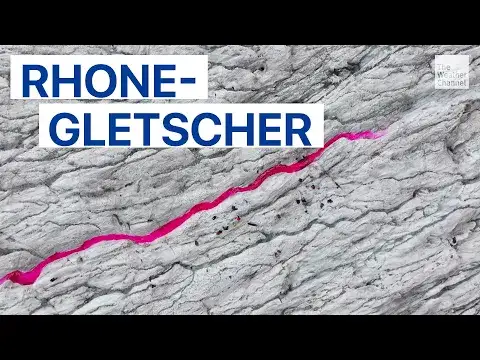
Though unconventional, the pink dye experiment fulfills a critical research role. “This stream of meltwater on the Rhône glacier in Switzerland has been dyed pink… to create a visual aid that helps them better monitor the water’s rate of flow,” New Scientist highlighted. Tracking glacier melt now involves more than just data—it’s about visibly witnessing climate impacts before irreversible loss occurs.
Melting Glaciers Impact River Systems
The implications extend well beyond ice melt. The Rhône Glacier feeds the Rhône River, which flows through Lake Geneva, across France, and empties into the Mediterranean Sea. This river sustains agriculture, commerce, and hydropower generation for millions.
As the glacier shrinks, the river’s flow patterns become less predictable. Seasonal water availability is disrupted, which could eventually compromise navigation, reduce reservoir storage, and hinder irrigation systems. The consistent flow of meltwater during spring and summer may give way to erratic bursts and prolonged dry intervals.
Fieldwork Enhances Climate Studies
ETH Zurich integrates student participation in this research, transforming it into an educational experience. Working directly with glaciers and monitoring tools, students gain firsthand insight into one of Earth’s most vulnerable and rapidly evolving environments.
The bright pink trails across the ice, though visually striking, deliver crucial data. This application of tracer hydrology uncovers the speed and route of meltwater beneath the glacier surface before it enters rivers, offering a clear metric to assess glacier retreat rates.
The colored water will eventually be diluted by the glacier’s ongoing melting, carrying it away downstream. Yet, the patterns it reveals illuminate a growing loss of ice. As NPR reports, Europe’s glaciers are “melting fast,” and their disappearance threatens to “permanently alter” the continent’s vital river ecosystems.







0 comments
Sign in to Comment