
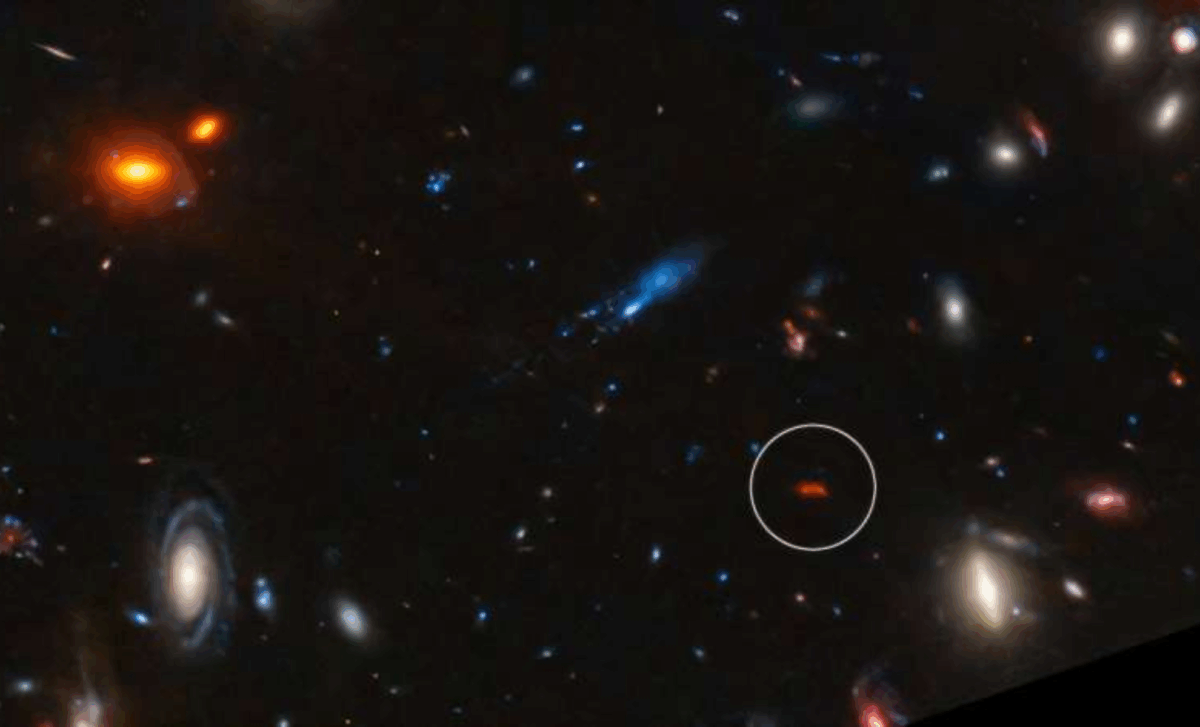
A revolutionary finding has provided fresh insights into star creation during the universe’s earliest epochs, spotlighting a galaxy with an exceptional pace of stellar birth. This galaxy, named Y1, shines with intensely heated cosmic dust, setting it apart from any previously documented astronomical object. Investigated by an international team of scientists, Y1 could unlock answers to longstanding questions about rapid galactic growth in the young universe. Their research, featured in Monthly Notices of the Royal Astronomical Society, represents a major advancement in our understanding of star formation on a grand scale.
Galaxy Y1: An Extraordinary Powerhouse of Star Production
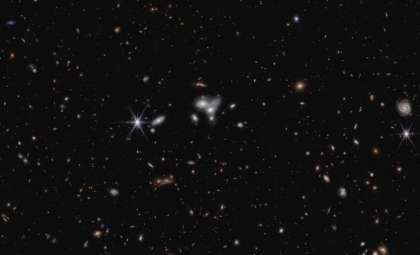
Located more than 13 billion light-years away, Galaxy Y1 has emerged as a captivating object in astrophysical research. Star formation in Y1 occurs at an astonishing rate, far outpacing that of the Milky Way. Scientists calculated that Y1 generates stars at 180 times the speed of our own galaxy. This rapid pace disrupts prevailing theories about the rate of cosmic evolution.
The galaxy’s intense star-forming activity hints at alternative processes operating in the universe’s early days. “This is a glimpse into an era when stars were forming much more vigorously than we observe today,” said Tom Bakx, a postdoctoral fellow at Chalmers University of Technology and lead author of the study. Y1’s extreme stellar birth rate offers an unprecedented look at a far more energetic cosmos than present times.

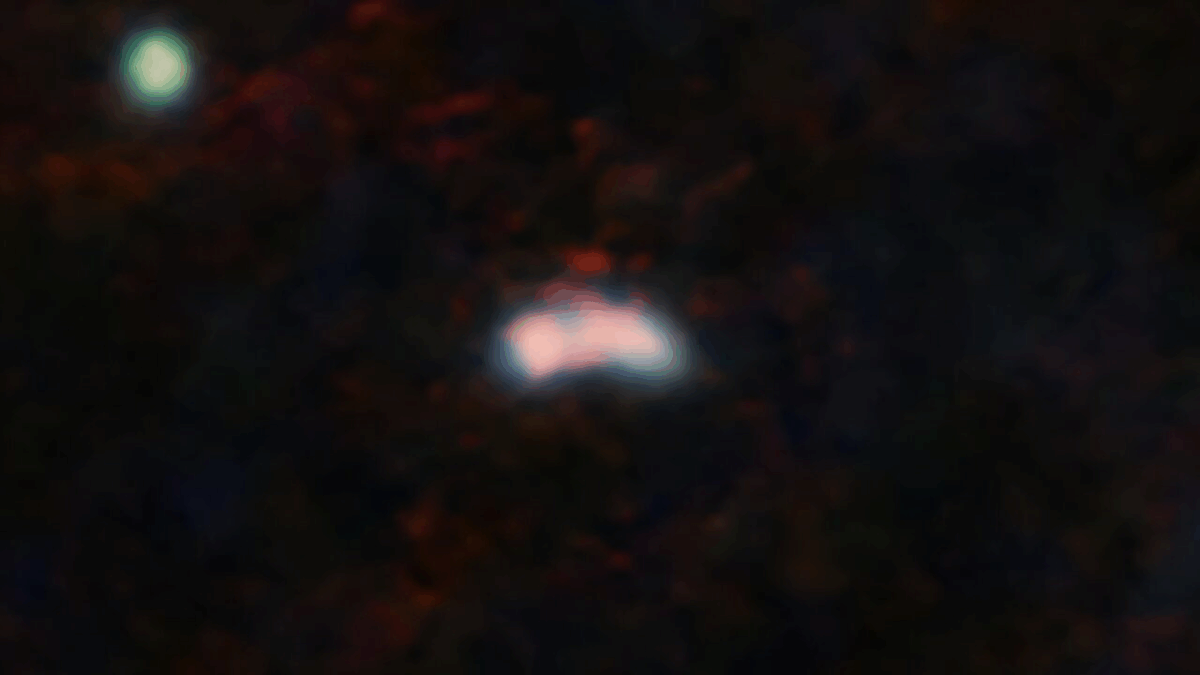
The Revelation of Scorching Cosmic Dust in Y1
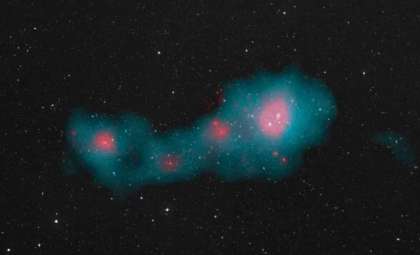
What makes Y1 even more intriguing is the intense warmth of its surrounding space dust. Early observations indicated this dust was radiating brilliantly, leading astronomers to conduct deeper investigations. Utilizing the ALMA telescope, the research group confirmed that dust temperatures soared to approximately 90 Kelvin (close to -180°C), unusually warm compared to dust in other remote galaxies.
This finding supports the idea that Y1 hosts a superheated stellar nursery, operating under conditions unlike those in nearby galaxies.
“That made us suspect that this galaxy might be running a different, superheated kind of star factory. To be sure, we set out to measure its temperature,” Bakx explained.
The Significance of Elevated Dust Temperatures in Galaxy Y1
The presence of warm cosmic dust in Y1 challenges prevailing star-formation models. Dust in distant galaxies typically maintains much lower temperatures than here on Earth. Yet, Y1’s dust is significantly hotter, giving crucial insights into star-generation processes in such remote galaxies.
“The temperature is certainly chilly compared to household dust on Earth, but it’s much warmer than any other comparable galaxy we’ve seen,” said Yoichi Tamura, a co-investigator from Nagoya University.
Usually, dust in star-forming regions forms from older stars, which synthesize heavier elements enabling dust grain creation. Y1’s youth suggests this heat arises from vigorous activity within a newborn stellar environment rather than older stars, implying that early galaxies might have been more efficient dust and star producers than previously thought. This opens new avenues for understanding galaxy development during the universe's formative epochs.
Insights into Early Universe Star Formation Unveiled
The ramifications of this work go well beyond Y1 itself. The team posits that galaxies akin to Y1, featuring heated dust and formidable star formation, might have been relatively common during the universe’s dawn, though how widespread these objects were remains uncertain.
“Even though it’s the first time we’ve seen a galaxy like this, we think that there could be many more out there. Star factories like Y1 could have been common in the early universe,” said Bakx.
Ongoing and future observations with cutting-edge telescopes will examine other galaxies from similar early cosmic intervals to determine whether Y1 represents a rarified case or a typical example. These studies could transform our comprehension of how stars and galaxies evolved in the universe's infancy.
Unraveling the Dust Mystery in Infant Galaxies: Emerging Hypotheses
One of the most puzzling aspects of early galaxy formation is the presence of abundant dust despite a lack of old stars capable of producing it. Laura Sommovigo of the Flatiron Institute and Columbia University highlighted this dilemma:
“Galaxies in the early universe seem to be too young for the amount of dust they contain. That’s strange, because they don’t have enough old stars, around which most dust grains are created.”
However, the findings from Y1 indicate this mystery might be less puzzling when considering that even small amounts of warm dust can emit as brightly as large amounts of colder dust.
“But a small amount of warm dust can be just as bright as large amounts of cool dust, and that’s exactly what we’re seeing in Y1,” Sommovigo added.
This knowledge could spark fresh theories about the interplay between dust production and star formation in the universe’s earliest galaxies, reshaping models of cosmic evolution.
Future Directions in Studying Ancient Galaxies
The identification of Y1 signals the beginning of deeper explorations into the early universe’s secrets. The research team intends to harness advanced instruments like ALMA to probe galaxies resembling Y1 with enhanced resolution. “We don’t know how common such phases might be in the early universe, so in the future we want to look for more examples of star factories like this,” Bakx noted. Discovering additional galaxies exhibiting similar traits will provide further clarity on star and galaxy formation processes amid the universe’s turbulent beginnings.
Originally published in the Monthly Notices of the Royal Astronomical Society, this work represents a potential breakthrough in resolving enduring astrophysical enigmas. As observational techniques progress, astronomers will be able to examine distant galaxies like Y1 in greater detail, unlocking deeper understanding of our cosmos’s origin and history.*
- Categories:
- Space



0 comments
Sign in to Comment