
Galaxies in the observable universe typically shine as vibrant clusters of stars and gas, held together by unseen dark matter frameworks. Conventional cosmological theory posits that once these dark matter halos gather sufficient mass, gas condenses, cools, and initiates star formation. This long-standing assumption is now challenged by the discovery of an extraordinary new object.
Near the outskirts of a neighboring galaxy, scientists have detected a cold, dense gas cloud completely devoid of stars. Although it holds substantial gas and exhibits gravitational influence, the cloud remains visually dark. Previously spotted in radio wave surveys, fresh data has now confirmed its unusual properties.
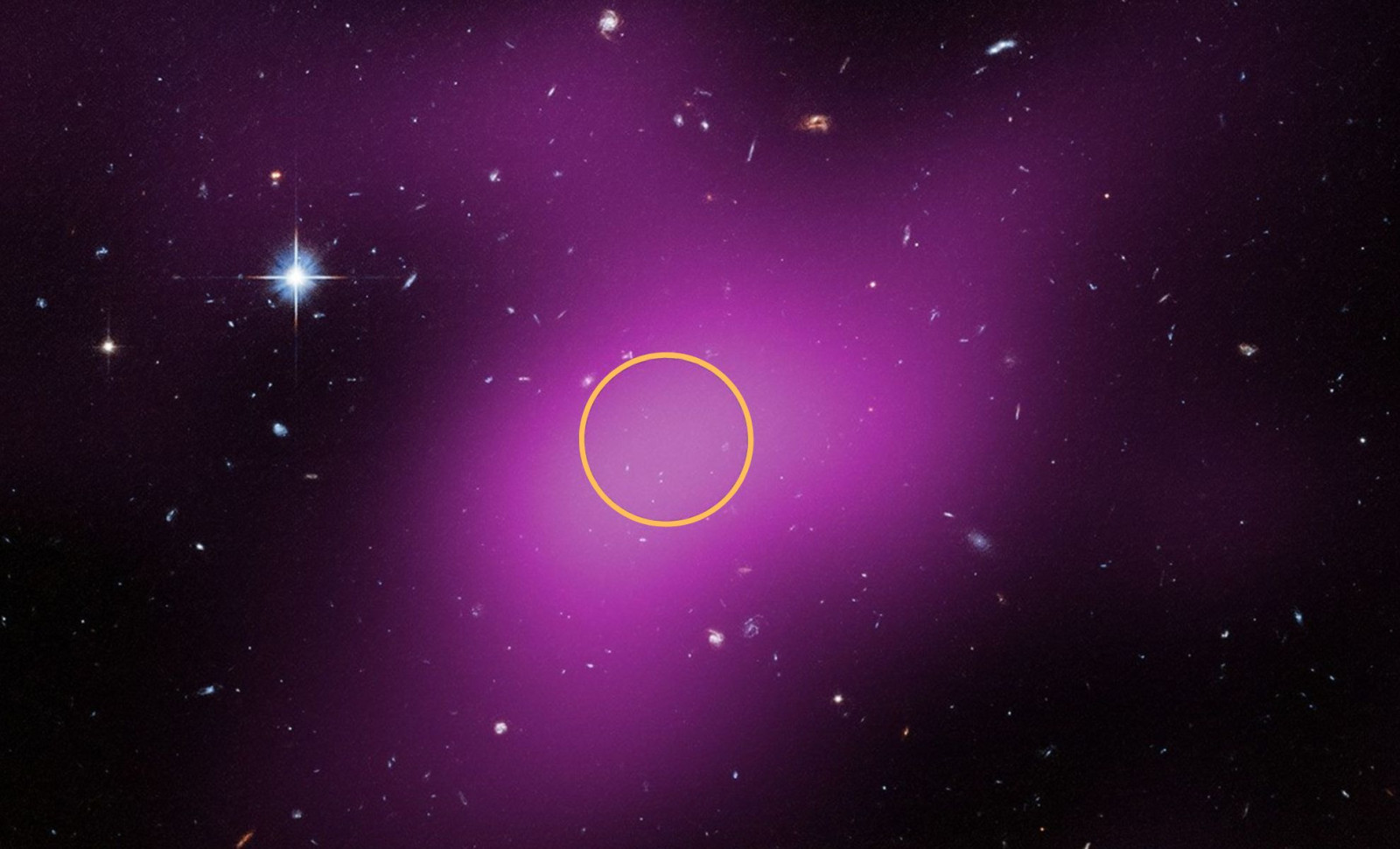
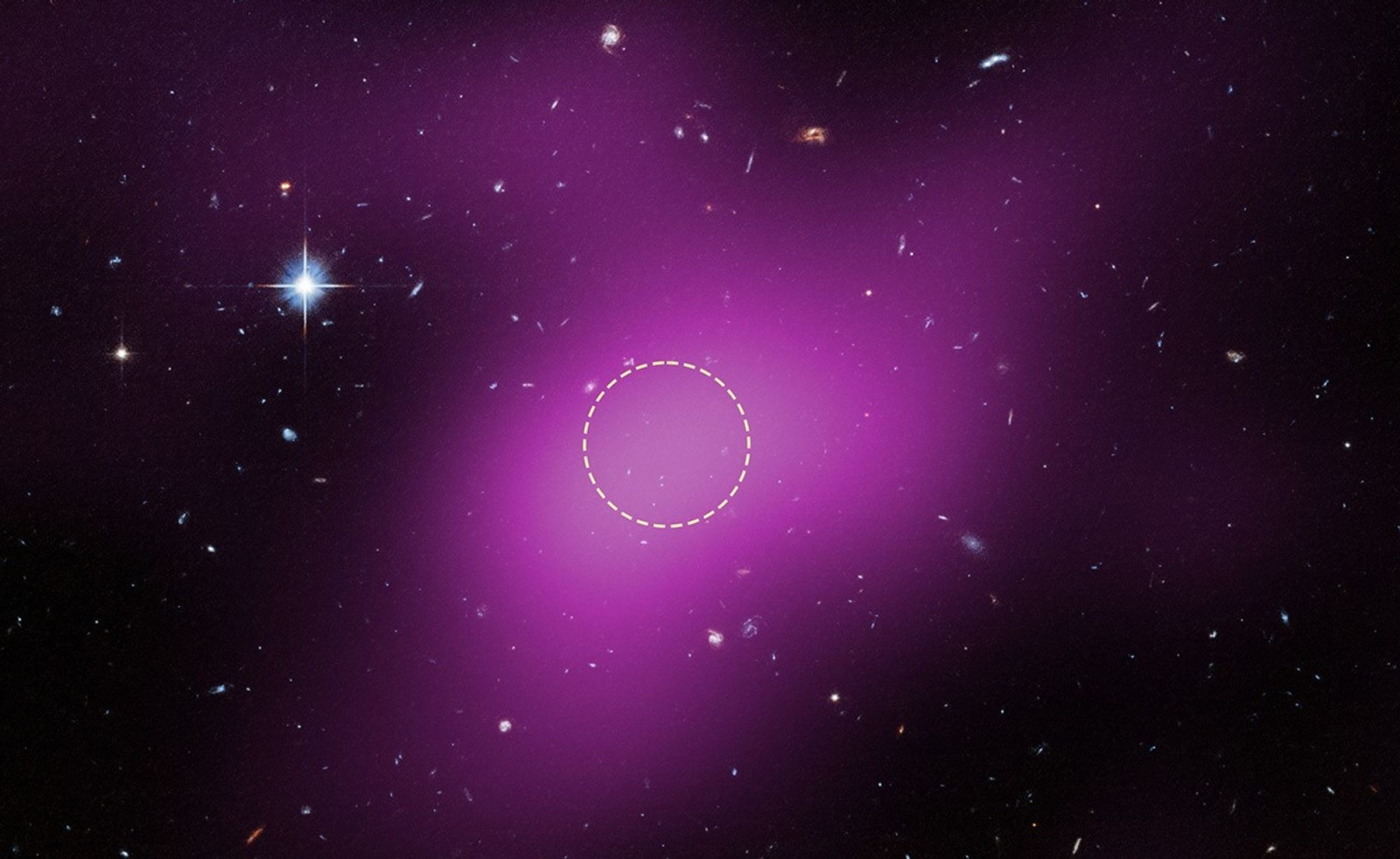
Designated Cloud-9, this body was imaged by the Hubble Space Telescope. It consists predominantly of hydrogen gas enshrouded by a large halo of dark matter but intriguingly has not undergone any star formation processes.

Identifying a Reionization-Limited Hydrogen Cloud
Research conducted by NASA and collaborating teams verified that Cloud-9 is a prime example of a reionization-limited H I cloud (RELHIC). Such entities are hydrogen-rich, dense clouds thought to be remnants from the universe's formative years. Despite possessing enough mass to hold onto gas, conditions prevented these clouds from birthing stars.
Situated roughly 14 million light-years away near the spiral galaxy Messier 94, Cloud-9 is spherical and compact, stretching about 4,900 light-years in diameter. These characteristics were determined using data from the Very Large Array (VLA) radio telescope and Hubble’s Advanced Camera for Surveys.
This cloud harbors an estimated one million solar masses of neutral hydrogen, typical in cold cosmic environments. To maintain this gas against dispersion, the cloud requires an encompassing dark matter mass of about five billion solar masses, as supported by observations.
“Cloud-9 represents a galaxy that never quite formed,” explained Alejandro Benitez-Llambay from the University of Milano-Bicocca, the lead scientist on the Hubble project. “Often, the most insightful scientific lessons come from cases where expected outcomes fail, and here, the absence of stars validates our theoretical models.”
Confirmed as Starless, Not Simply Hidden
Prior to Hubble’s detailed imaging, China’s Five-hundred-metre Aperture Spherical Telescope (FAST) initially detected the cloud in radio frequencies, with subsequent confirmation from the Green Bank Telescope and VLA. While these instruments verified hydrogen gas presence, they couldn’t confirm whether stars lurked inside.
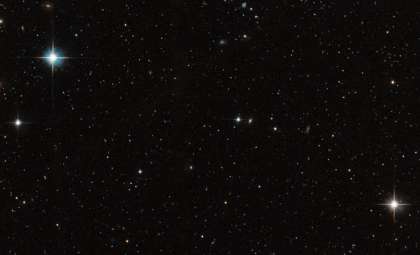
Earlier theories posited Cloud-9 might be a faint dwarf galaxy with stars too dim for ground-based telescopes to detect. However, deep optical images from Hubble revealed that only distant background galaxies emit light in that area, completely ruling out stars within Cloud-9.
“Thanks to the High sensitivity of Hubble’s Advanced Camera for Surveys, we precisely confirmed the absence of stars inside the cloud,” said Gagandeep Anand from the Space Telescope Science Institute, who led the report published in The Astrophysical Journal Letters.
Thus, Cloud-9 stands as the first verified dark-matter-dominated body that retains neutral gas without any star formation.
New Perspectives on Dark Matter and Galaxy Evolution
Scientists believe Cloud-9 offers a unique glimpse into early galaxy formation, illustrating that some dark matter halos failed to develop star-forming regions. These relics likely date back to the period following the universe’s reionization epoch over 13 billion years ago.
Andrew Fox, part of the research team at the Space Telescope Science Institute, described Cloud-9 as “a rare window into the dark universe.” He explained, “Though dark matter dominates cosmic mass—and doesn’t emit light—Cloud-9 provides a valuable opportunity to observe such an elusive structure.”
The cloud’s persistence may be due to its isolation from large galaxies and resistance to external forces like ram-pressure stripping, which can strip gas from objects as they traverse intergalactic space, halting star formation.
Implications for Future Research
Labelled sequentially as the ninth cloud near Messier 94, Cloud-9’s compact and regular shape distinguishes it from other hydrogen clouds, which tend to be diffuse or chaotic. This helped separate it from gas debris or fleeting flows.
The discovery encourages astronomers to revisit other starless hydrogen clouds previously regarded as background noise. Upcoming observational campaigns with advanced instruments such as the Nancy Grace Roman Space Telescope and Square Kilometre Array (SKA) are set to hunt for more RELHICs, specializing in detecting faint, low-brightness cosmic features.
“There might be a few abandoned cosmic structures hiding in our galactic neighborhood,” noted Rachael Beaton from the Space Telescope Science Institute, also part of the study team.
Although it remains uncertain whether Cloud-9 will eventually trigger star formation, collapse, or dissipate, it already serves as a pivotal data point illuminating dark, non-luminous matter assemblages. This broadens our understanding of galactic evolution and supports the notion of dark galaxies without visible stars.
- Categories:
- Space



0 comments
Sign in to Comment