
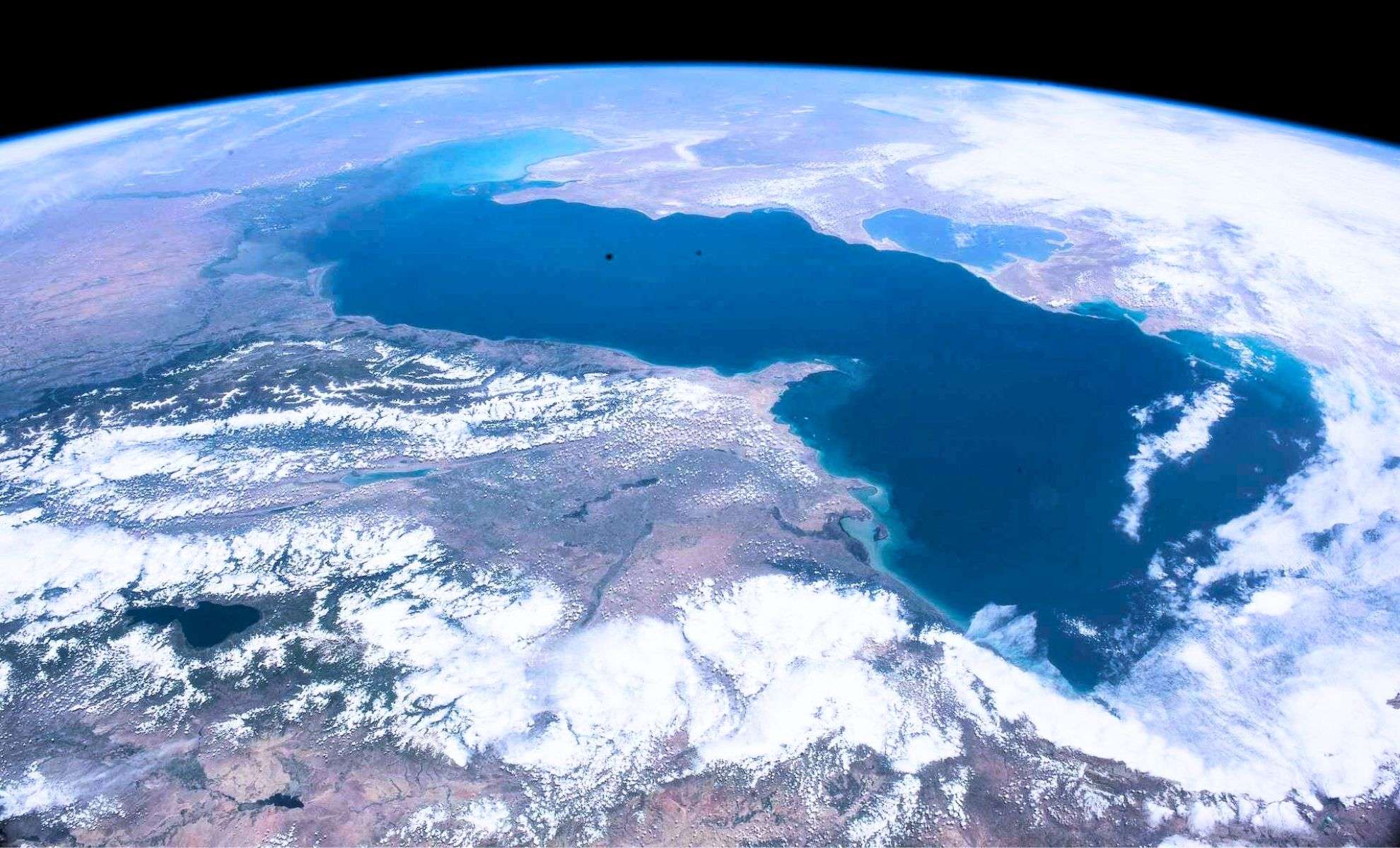
Recognized as the planet’s largest enclosed inland body of water, the Caspian Sea is retreating at an unprecedented rate that has alarmed researchers. Previously a fixed landmark in Central Asia, the sea’s water levels have now fallen beneath the lowest points recorded since modern measurements began, plunging to below -29 meters, reports Russia's Caspian Fisheries Research Institute.
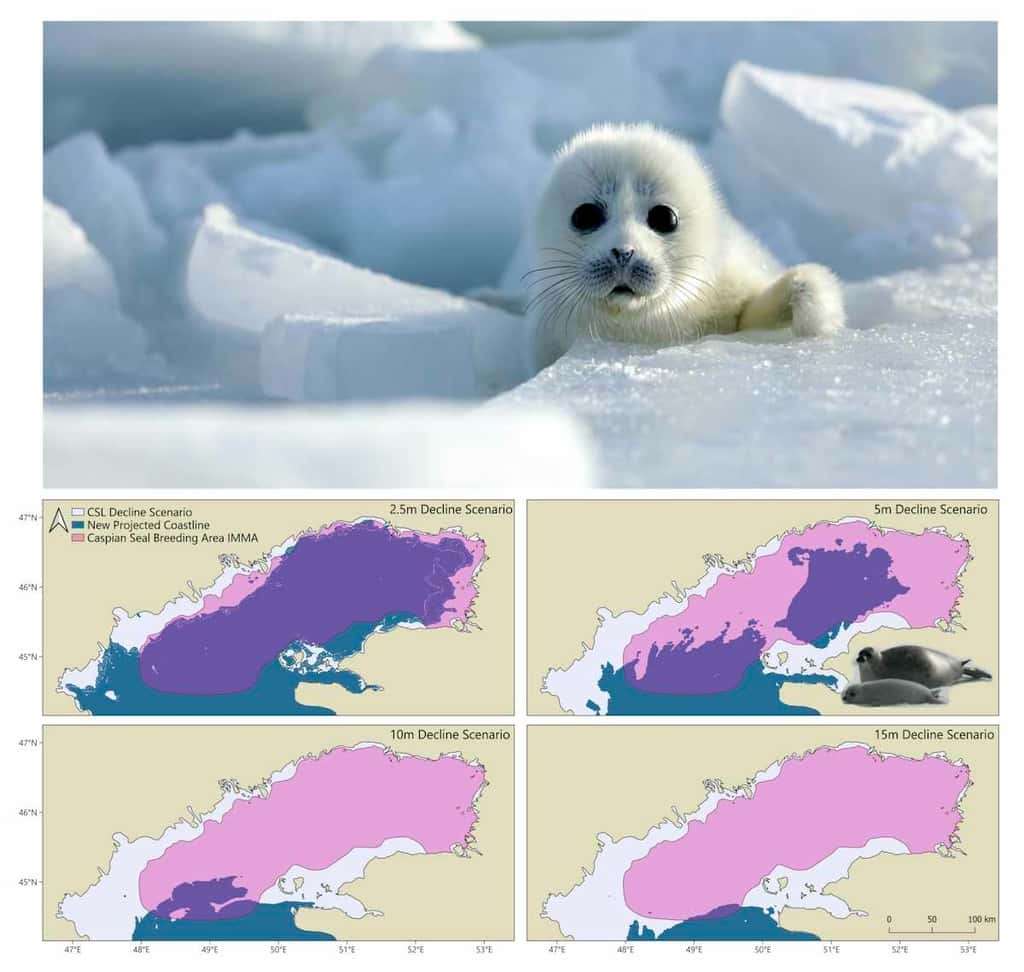
The decline, which has been ongoing for decades, has drastically sped up lately. A new study published in Nature’s Communications Earth & Environment reveals that the Caspian Sea could drop by as much as 18 meters by 2100 depending on greenhouse gas emissions. Even with milder warming, losses of 8 to 10 meters are likely, threatening to dry out large portions of the northern basin and drastically transform the nearby landscapes.
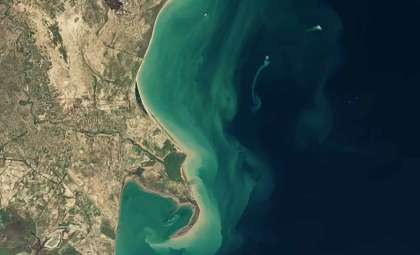
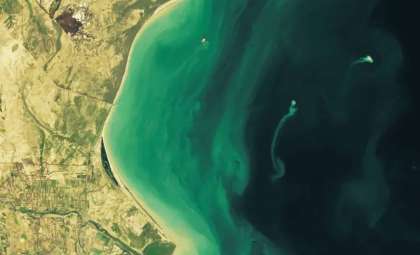
Satellite observations from ESA and NASA have monitored slow shifts since the 1990s, but recent data reveal a dramatic new pattern: water levels are decreasing by up to 30 centimeters annually since 2020, which is three times faster than before.

Rising temperatures drive evaporation that drains the sea
The Caspian’s shrinkage isn’t mainly caused by water diversion, unlike the fate of the Aral Sea. The leading cause is increased temperatures, which intensify evaporation rates. Matthias Prange, the study’s lead author at the University of Bremen, explains that warming has triggered a “hydrological tipping point” where evaporation surpasses combined precipitation and river inflow, particularly from the Volga River, responsible for 80% of the Caspian’s freshwater input.
“The sea is effectively bleeding out,” says Dr. Sergey V. Melnikov, senior researcher at the KaspNIRKh institute. “Evaporation is increasing, inflow is declining, and all of this is exacerbated by human use for agriculture and industry. The northern basin is already turning to desert.”
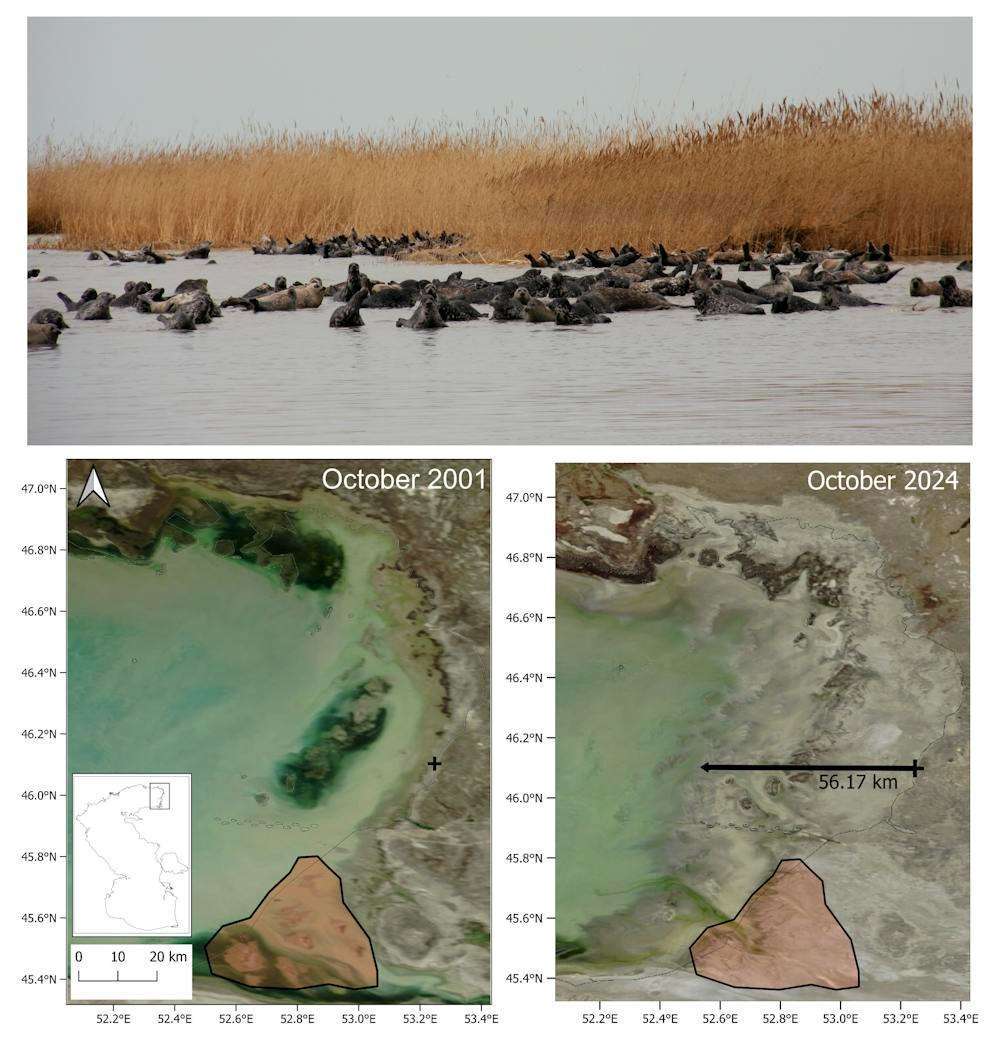
The shallow northern shelf, often no deeper than 5 meters, is particularly at risk. Small drops in water level expose large areas of seabed, habitats that were once crucial for millions of migratory birds, sturgeon spawning grounds, and the endemic Caspian seal, which has already lost up to 81% of its breeding zones, according to extensive field studies by the University of Leeds.
Economic and geopolitical impacts as waters recede
The Caspian’s decline is affecting nations bordering it, including Kazakhstan, Russia, Azerbaijan, Iran, and Turkmenistan. Entire ports in places like Aktau and Baku now lie miles away from the shoreline. Businesses must deepen navigation channels just to maintain operations around offshore oil and gas platforms.
More critically, the Volga-Don Canal, the only waterway linking the Caspian Sea to the Black Sea, is becoming less navigable, threatening the “Middle Corridor”—a vital trade route connecting China and Europe that avoids Russian territory. Growing transport expenses and limited channel capacity force regional authorities to make billion-dollar infrastructure decisions.
“This isn’t just about climate—it’s about geopolitics,” says Dr. Nigar Bayramova, a hydro-policy expert at Baku State University. “The Caspian is not only vital for trade but also for energy security. Its disappearance has the potential to reshape economic alignments in the region.”
Local water loss signals broader global concerns
The Caspian’s drying trend is increasingly seen as a warning sign for inland water bodies worldwide, with parallels drawn to stress on water systems like Lake Chad, Great Salt Lake, and Lake Titicaca. Endorheic basins—closed water bodies without outlets—are especially vulnerable to climate fluctuations, making the Caspian a clear indicator of potential future crises.
Using state-of-the-art CMIP6 climate models, scientists project that without substantial emissions reductions, rising temperatures alone could trigger irreversible losses in Caspian Sea levels. Each 1°C increase in global temperature could cause an extra 2 meters of water level drop.
Despite rising awareness, collaborative efforts among the five bordering nations to combat the issue remain limited. While plans for conservation and infrastructure adaptation exist, their execution is lagging behind the rapid rate of the sea’s decline.
“We don’t have the luxury of time,” warns Dr. Prange. “We’re watching an entire sea disappear in real time. That should alarm everyone.”
- Categories:
- News










0 comments
Sign in to Comment