
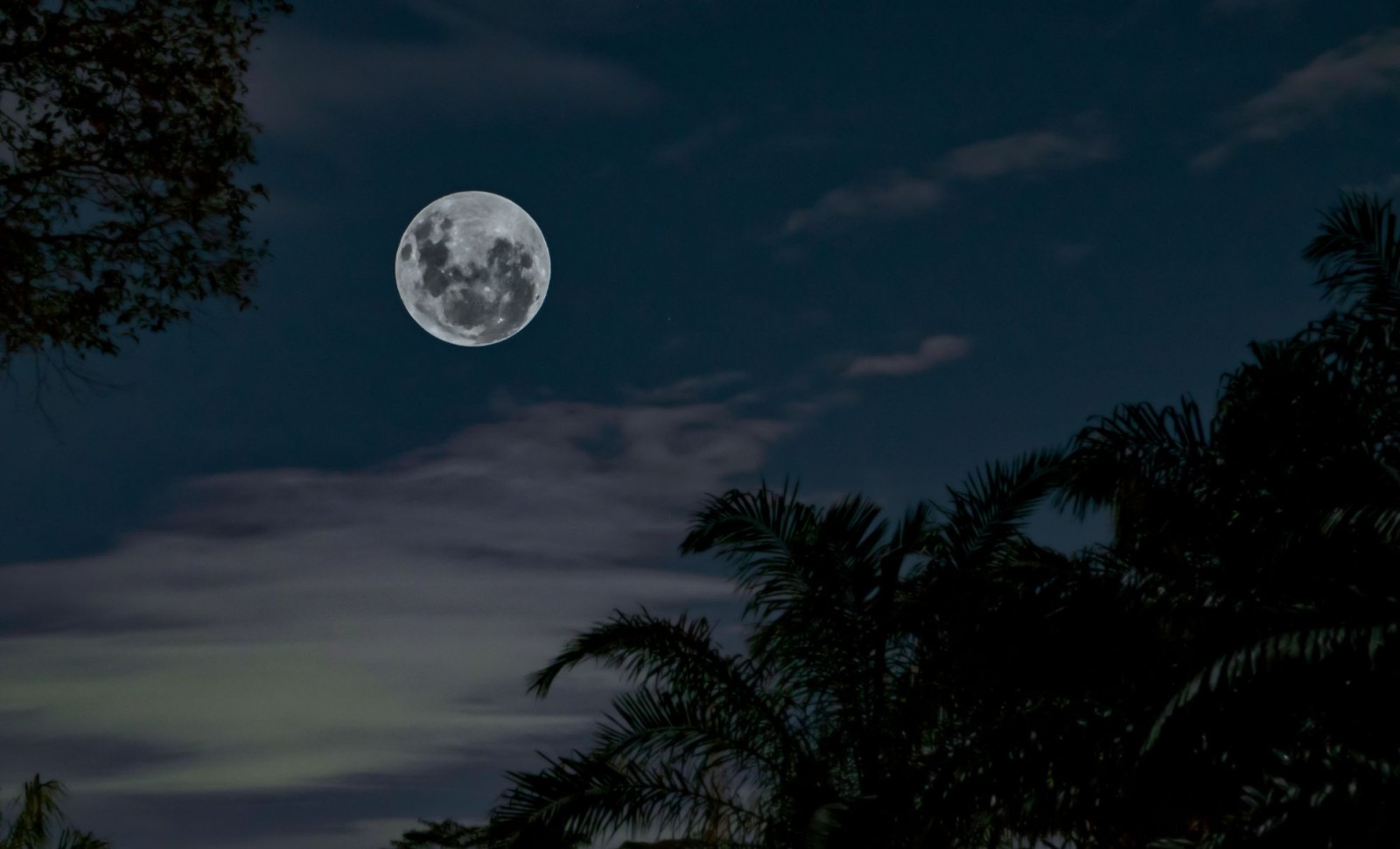
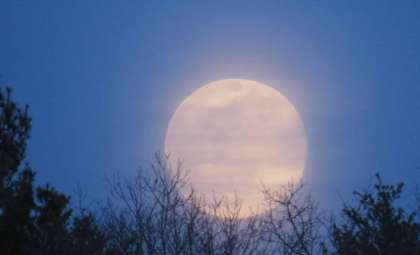
Observers worldwide are gearing up to see the year's final supermoon, popularly called the “Cold Moon.” This radiant lunar event is best viewed shortly after moonrise, when the moon looks especially large near the horizon due to the “moon illusion.”
As December ends, the full moon earns the name Cold Moon, inspired by the frigid winter nights. Notably, this December full moon is 2025’s last supermoon, appearing bigger as it reaches its closest orbital distance to Earth.
Understanding the Cold Moon’s Supermoon Status
The word “supermoon” is popular but lacks strict astronomical definition. Earthsky explains that a supermoon happens when the full moon is within 90% of its closest approach point, the perigee. This proximity makes the moon look larger and brighter compared to an ordinary full moon. This Cold Moon offers the last chance in 2025 to enjoy this spectacular view.

When the moon is nearer to Earth, its gravity has a stronger effect on tides, and it can seem up to 14% larger than when farther away. This feature will be noticeable even without special equipment, though some enthusiasts may prefer using binoculars or telescopes to examine lunar details.
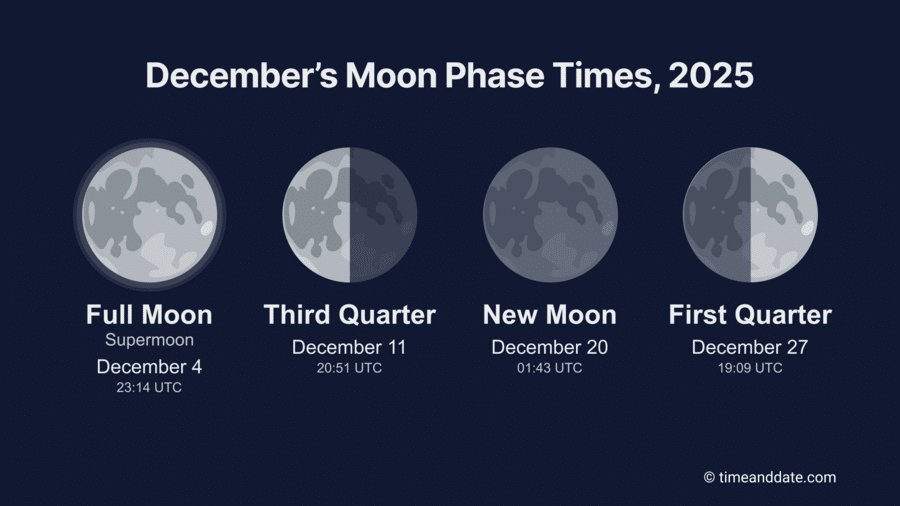
When and Where to Watch the Cold Moon
To fully enjoy the Cold Moon’s brilliance, timing and location matter. The moon reaches its peak fullness at 6:14 PM EST on December 4 and remains visible throughout the night. The most dramatic sight is often right after it rises, when near the horizon it appears larger. In New York, moonrise occurs at approximately 3:54 PM EST, while in Los Angeles it happens around 4:22 PM PST.
For optimal viewing, find dark areas away from city light pollution, such as rural or remote locations with clear skies. Even without binoculars or a telescope, the Cold Moon’s glow should be easily observable, though those tools can enhance the viewing experience.
- Categories:
- Astronomy

0 comments
Sign in to Comment