
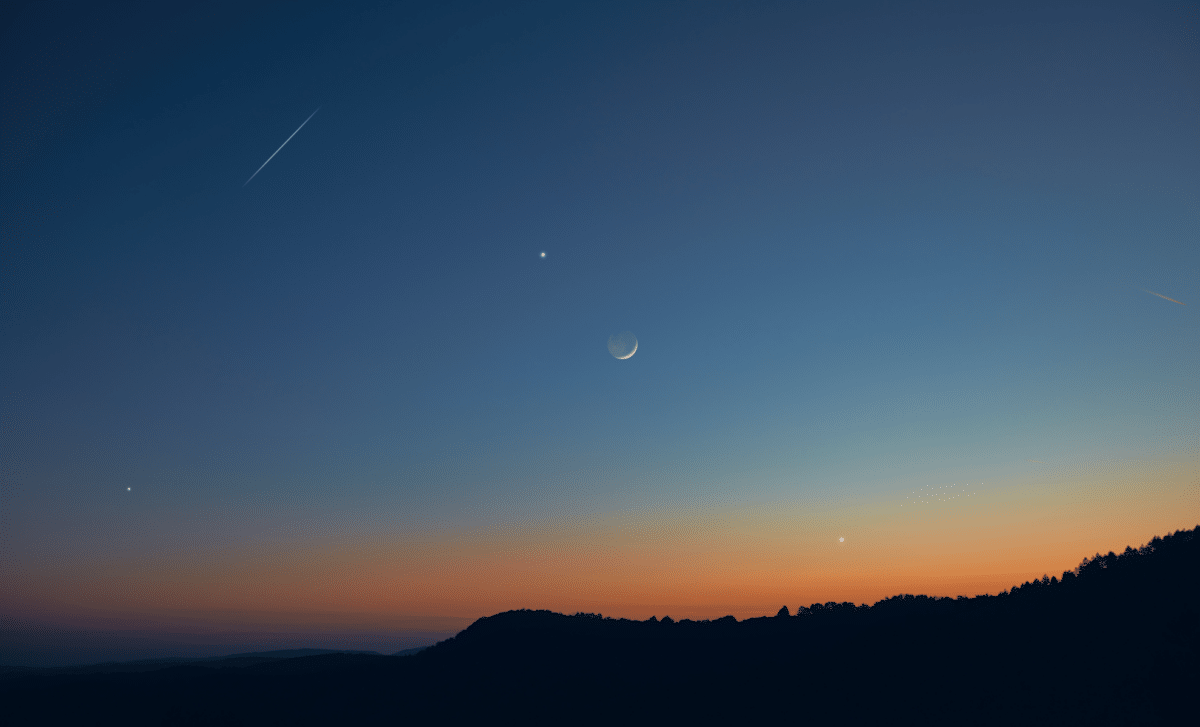
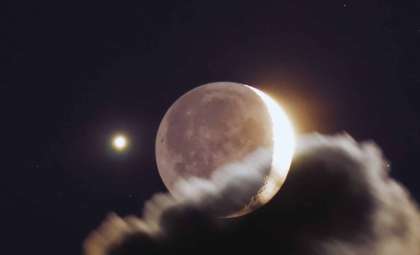
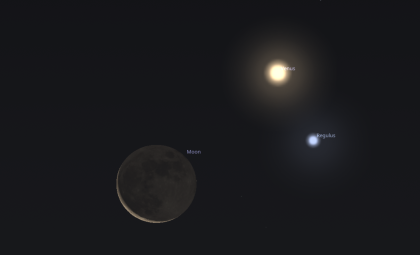
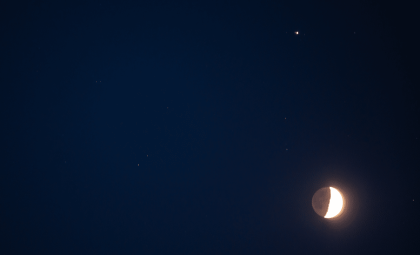
On the evening of May 20, stargazers across the United States will get the chance to observe a stunning celestial event as the waxing crescent moon comes into close proximity with Jupiter, the largest planet in our solar system. According to Space.com, this pairing will become visible shortly after sunset, presenting a rare and beautiful spectacle for both casual skywatchers and astronomy enthusiasts alike. The bright figures will slowly traverse the western sky, offering a brief but memorable view against the backdrop of spring.
The Moon’s Graceful Approach to Jupiter
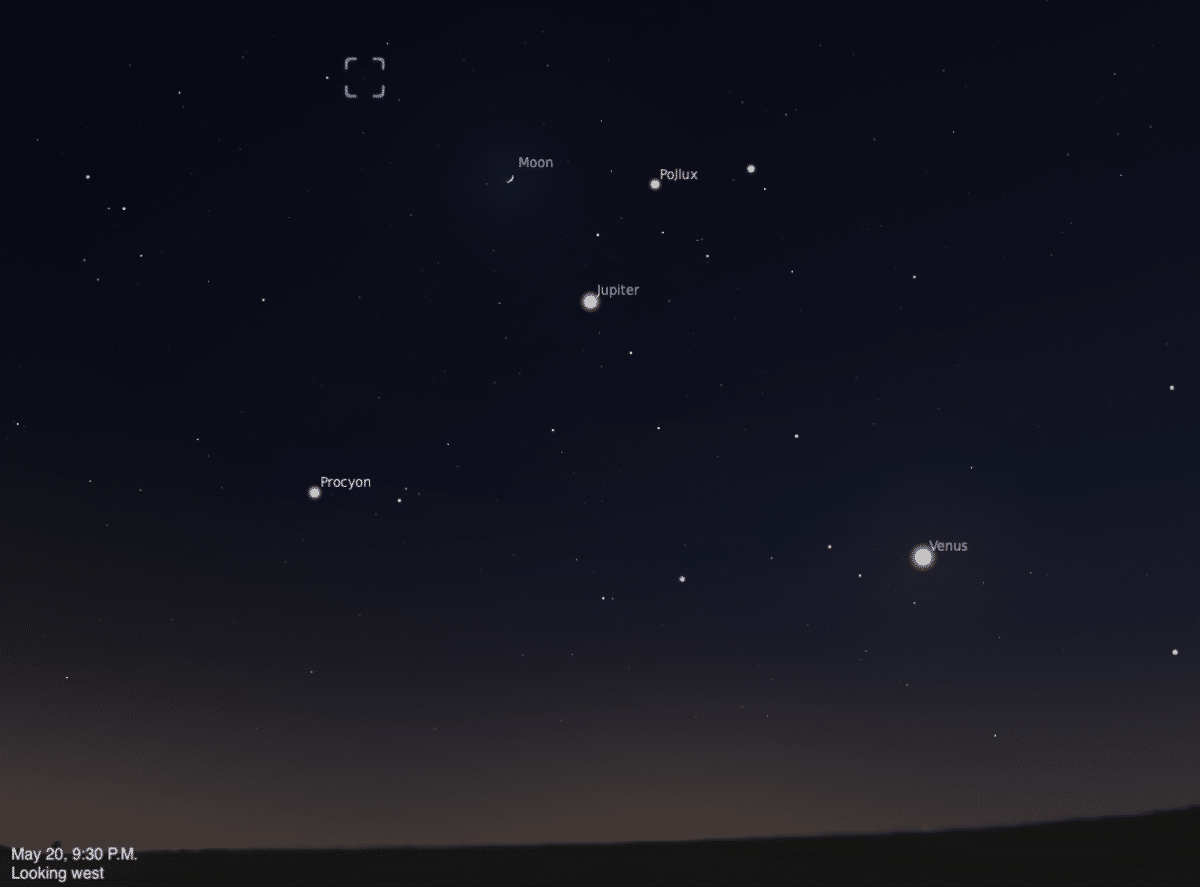
As daylight fades, the slim crescent moon will appear to move gracefully beside Jupiter, maintaining a separation of less than 10 degrees – roughly the span of a fist held at arm’s length. As noted on Space.com, the bright stars Castor and Pollux in the Gemini constellation will also be visible, enriching the visual experience. This conjunction not only delights the eye but also emphasizes the ongoing dynamic motion of our nearby celestial bodies. Through the night, the moon will gradually drift away from Jupiter as it continues its path around Earth, providing an opportunity to witness subtle movements in the night sky.
Venus Enhances the Evening Sky
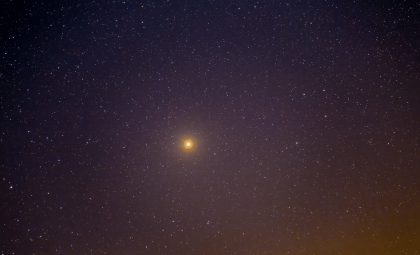
Although Jupiter and the moon take center stage, Venus will also be visible just above the horizon, shining brightly as the evening star. Visible over the coming months, Venus offers telescope users a chance to observe subtle shifts in its phases across its smooth, pale disk. Observers should wait until the sun has fully set before using telescopes pointed westward to safely view Venus, whose luminosity rivals that of Jupiter and the moon, creating an impressive trio of evening celestial objects.

Exploring Features Through a Telescope
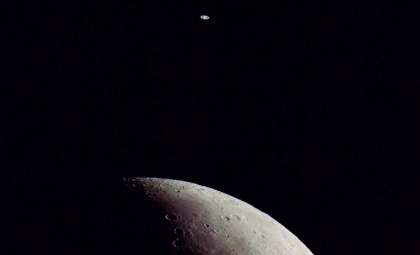
Those using a 4-inch or larger telescope can enjoy viewing Venus, but Jupiter reveals even more captivating detail. With a 6-inch scope, skywatchers can spot the cloud bands on Jupiter, the Great Red Spot, and its four largest moons — Io, Europa, Ganymede, and Callisto — appearing as tiny lights orbiting the gas giant. Observing the moon through the telescope reveals impressive craters along the terminator line, the dark region of Mare Crisium, and ancient lava plains like Mare Fecunditatis, highlighting the solar system’s ancient history.
Best Viewing Times and Locations
The visibility of this celestial event varies depending on your location. For those in the northeastern United States, Venus will set roughly two and a half hours after sunset, followed by Jupiter, while the crescent moon will disappear near midnight. Skywatchers in other locations should check tools like Time and Date’s skywatching guide for exact timings. This event serves as a reminder that although celestial phenomena are universal, the specific view varies considerably due to Earth’s latitude, longitude, and local features.
- Categories:
- News


0 comments
Sign in to Comment