
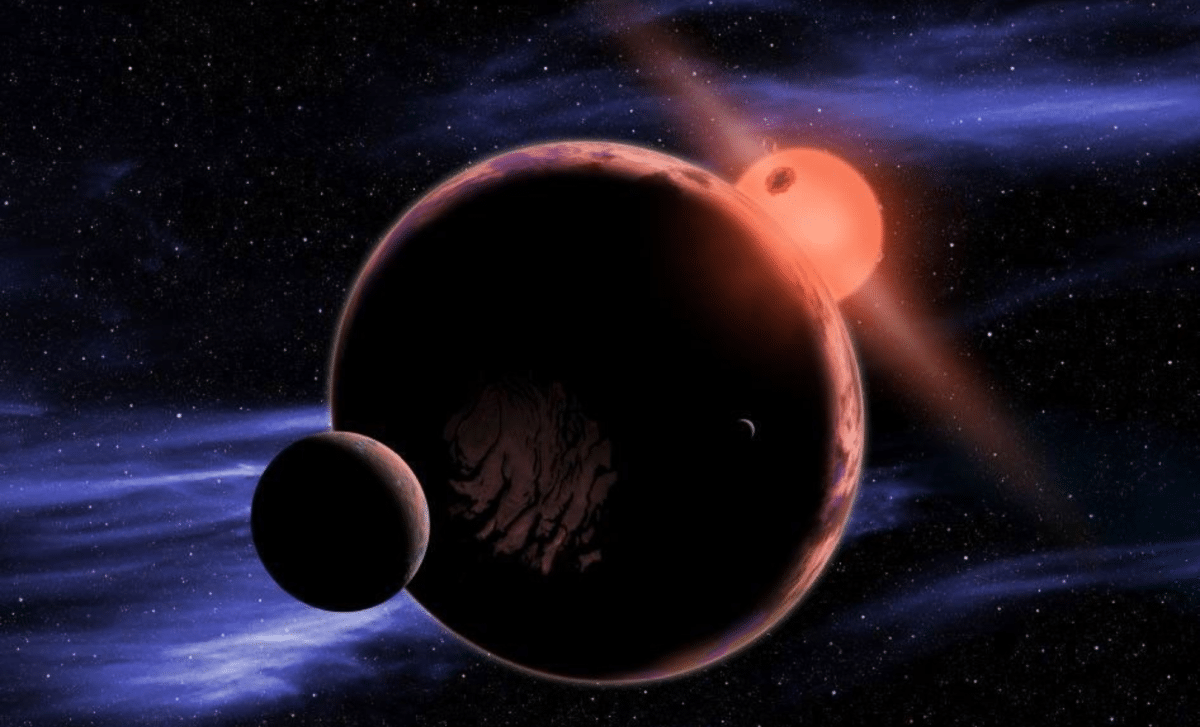
Red dwarf stars are the most prevalent stars in our galaxy and are often targeted in the hunt for habitable exoplanets. Their numerous rocky planets make them attractive candidates for supporting life. Yet, new research posted on the arXiv preprint archive questions the potential for oxygen-generating life thriving in these systems. Giovanni Covone and Amedeo Balbi's study suggests that the light emitted by red dwarfs might lack the necessary "quality" to sustain vital biological processes such as photosynthesis, crucial for producing oxygen on which complex life depends.
The Importance of Light Quality in Sustaining Life
When assessing a planet’s habitability, researchers typically focus on the “habitable zone”, where liquid water can exist due to suitable energy levels from the host star, especially photons in the visible spectrum (400 to 700 nanometers). However, life’s dependence on stellar radiation involves more than just photon quantity; the quality of that light is equally vital. Covone and Balbi introduce the concept of exergy, which denotes the maximum usable work obtainable from the star’s radiation. They argue that the thermodynamic quality of light is essential for driving key biological functions like photosynthesis. Since red dwarfs predominantly emit infrared light, their spectra may provide insufficient energy quality to promote oxygen-producing organisms effectively.
Exergy Explained and Its Biological Significance
Exergy measures how effectively starlight can be harnessed to perform biological work. While stars like our Sun emit abundant visible light capable of powering photosynthetic reactions, red dwarfs mainly give off infrared radiation. Although infrared still provides energy, it is less effective in initiating crucial chemical reactions, such as splitting water molecules to release oxygen. The authors, found on the arXiv preprint server, estimate that red dwarfs’ exergy is roughly five times lower than that available from solar-type stars. This stark difference has significant consequences for the potential development of life around these stars.

Lower-Energy Radiation From Red Dwarfs
One major obstacle to life around red dwarfs is the relatively low energy their emitted light carries. Being cooler than stars like the Sun, red dwarfs release most energy in the infrared portion of the spectrum, which lacks the ability to break water molecules—a critical first step in the photosynthesis process. Photosynthesis demands photons with sufficient kinetic energy to split water bonds, and red dwarf radiation fails to meet this threshold. Despite red dwarfs' total energy output being considerable, the quality of this radiation is inadequate for fostering oxygen-producing life similar to Earth.
Understanding the Red Limit in Photosynthesis
Can life forms around red dwarfs evolve to utilize infrared light instead of visible wavelengths? Some astrobiologists have speculated this possibility; however, the study indicates it is improbable. The “red limit” — the longest wavelength suitable for supporting photosynthesis — is about 1.0 micrometers for solar-type stars but approximately 0.95 micrometers for red dwarfs. This constraint means organisms cannot simply adapt to absorb longer infrared wavelengths, hindered by the host star’s spectral output and atmospheric conditions, limiting biological adaptation for efficient oxygen production.
Competition From Anoxygenic Microorganisms
Though oxygenic life faces challenges, anoxygenic bacteria may flourish around red dwarfs, as they efficiently use infrared radiation. However, their proliferation could overshadow oxygenic bacteria responsible for atmospheric oxygen buildup. Without significant oxygen, complex multicellular life may never arise. This competition risks maintaining anaerobic ecosystems on planets orbiting red dwarfs, which would constrain the evolution of complex life forms.
Habitable Environments Around Red Dwarfs Are Rare
The findings imply that while life around red dwarfs is not impossible, the emergence of robust oxygen-supported biospheres is probably exceptional. Despite their abundance, the combined effects of low exergy and the red limit greatly reduce the chance of Earth-like life developing. Earth's biosphere, while energetically inefficient, harnesses enough energy to sustain complex life. Around red dwarfs, however, the extreme conditions may prevent similar biological systems. The study suggests focusing the search for extraterrestrial life on stars like the Sun, where energy quality more reliably supports oxygenic organisms.
- Categories:
- Astronomy





0 comments
Sign in to Comment