
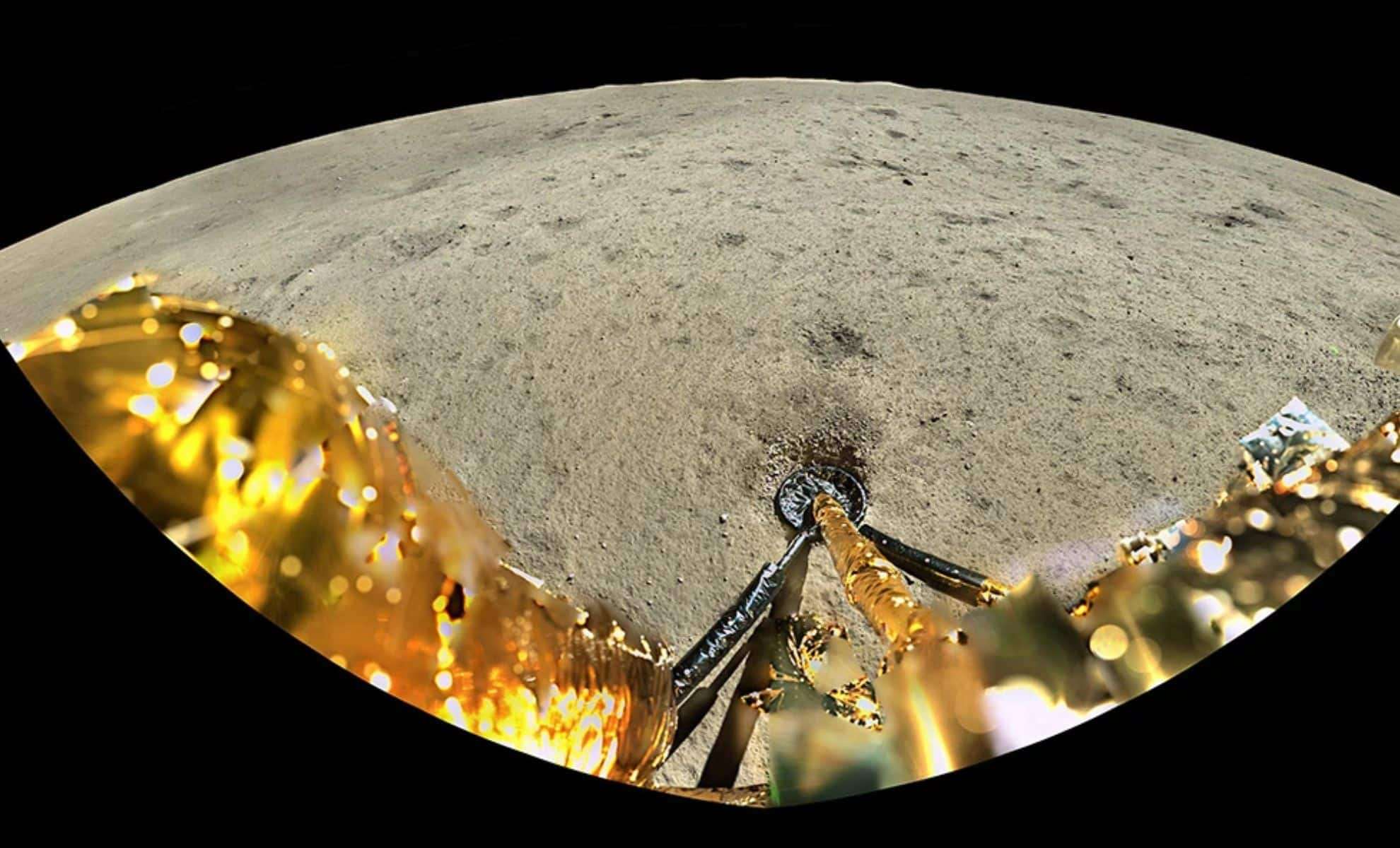
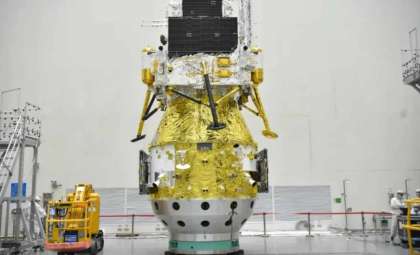
Recent analyses from the Chang’e-6 lunar mission have revolutionized our comprehension of the Moon’s far side, providing fresh perspectives on its geological and chemical makeup. These breakthroughs, derived from samples gathered within the South Pole-Aitken (SPA) Basin, illuminate the Moon’s volcanic past, ancient magnetism, and the distribution of water inside its mantle. The study published in Nature represents a major advance in decoding the enduring puzzles about the Moon’s uneven characteristics, highlighting stark contrasts between its near and far hemispheres.
South Pole-Aitken Basin: Unlocking the Moon’s Geological Secrets
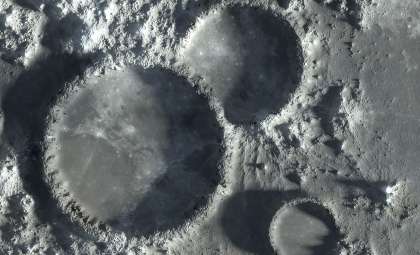
The South Pole-Aitken Basin stands as one of the Moon’s most vast and ancient impact structures, spanning more than 2,500 kilometers across. The colossal collision responsible for this basin dramatically influenced the Moon’s geological narrative. The cataclysmic event released energy roughly equivalent to a trillion atomic bomb detonations. Yet, until now, the full scope of how this impact shaped lunar geology was not thoroughly understood.
Wu Fuyuan, a distinguished academician at the Chinese Academy of Sciences (CAS) and pioneer at the Institute of Geology and Geophysics (IGG), highlighted this finding’s importance. “The SPA Basin is among the Moon’s three principal tectonic domains. However, the precise consequences of such an enormous impact on the Moon’s evolution have remained elusive,” he remarked during a CAS press briefing.

With the Chang’e-6 mission, scientists have, for the first time, analyzed the geochemical traits of the SPA Basin, offering vital clues about the Moon’s internal framework and the aftereffects of this primeval event. The samples extracted have unveiled critical aspects regarding the mantle’s composition and its progression over billions of years.
Insights into Volcanism and Magnetic Evolution
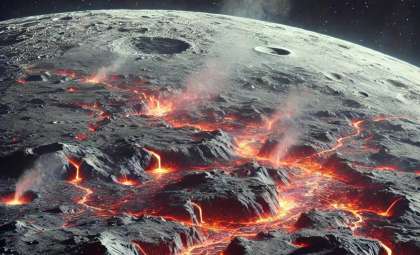
The Chang’e-6 findings revealed compelling proof of volcanic processes occurring on the Moon’s far side. Evidence points to volcanic activity spanning from roughly 4.2 billion to 2.8 billion years ago, indicating prolonged geological dynamism and challenging the belief that this hemisphere was dormant. This suggests volcanism played a pivotal role in the lunar developmental timeline.
Additionally, the mission uncovered data on the Moon’s primordial magnetic field from the far side for the first time. Significant magnetic intensity variations identified around 2.8 billion years ago provide insight into the dynamo mechanism that generated the Moon’s magnetic influence in its early era. Li Chunlai, from CAS’ National Astronomical Observatories and deputy chief designer of Chang’e-6, stated, “This discovery grants humanity direct evidence about the deep interior material properties on the Moon’s far side.”
These insights help clarify the processes that impacted the Moon’s core and mantle formation, shedding light on the persistent puzzle of its asymmetric geology. It appears the far side underwent unique geophysical evolution potentially shaped by ancient collision events.
Understanding Water Variance Within the Moon
Another remarkable achievement from Chang’e-6 centers on the water content found in lunar mantle material. The far-side samples reveal a noticeably lower abundance of water compared to near-side counterparts, supplying new evidence for an throughout the lunar interior. This finding holds significant consequences for theories about the Moon’s origin and its inner transformation.
Analysis showed that the basaltic mantle source from the SPA Basin is extremely deficient in incompatible elements—those that typically indicate a rock’s geochemical evolution. As Yang Wei of IGG explained, “The mantle source of SPA basalt exhibits substantial depletion in incompatible elements.”
Such depletion could imply that the early lunar mantle was originally low in these elements or that the enormous SPA impact profoundly modified the Moon’s interior composition. These results emphasize how large-scale impacts have influenced the Moon’s deep structure and challenge long-held ideas about its formative history.
Challenging Traditional Lunar Models
Chang’e-6’s groundbreaking discoveries are already reshaping lunar science perspectives. Mahesh Anand, a professor at the Open University in the UK, stated, “Many of the new insights from Chang’e-6 samples are overturning established lunar science hypotheses, prompting a reevaluation of previously accepted theories.”
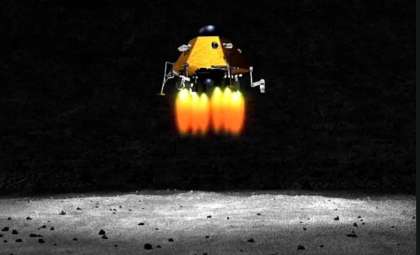
The mission’s accomplishment in retrieving far-side lunar samples represents a landmark in space exploration. Continued investigations into these materials promise to transform our approach to studying the Moon’s geology and its evolutionary trajectory. Ongoing analysis is expected to reveal even deeper knowledge about the Moon’s internal composition and the shaping forces active over billions of years.
- Categories:
- News






0 comments
Sign in to Comment