
China is embarking on a bold journey in space exploration throughout the next decade, as outlined in its 15th Five-Year Plan (2026-2030). The China National Space Administration (CNSA) is preparing to initiate four pioneering projects that will probe the Sun, the Moon, and distant regions of space. These ventures aim to deepen humanity’s knowledge of the universe, from hunting for planets resembling Earth to investigating the universe’s earliest epochs.
Probing the Dawn of the Cosmos: The Hongmeng Initiative
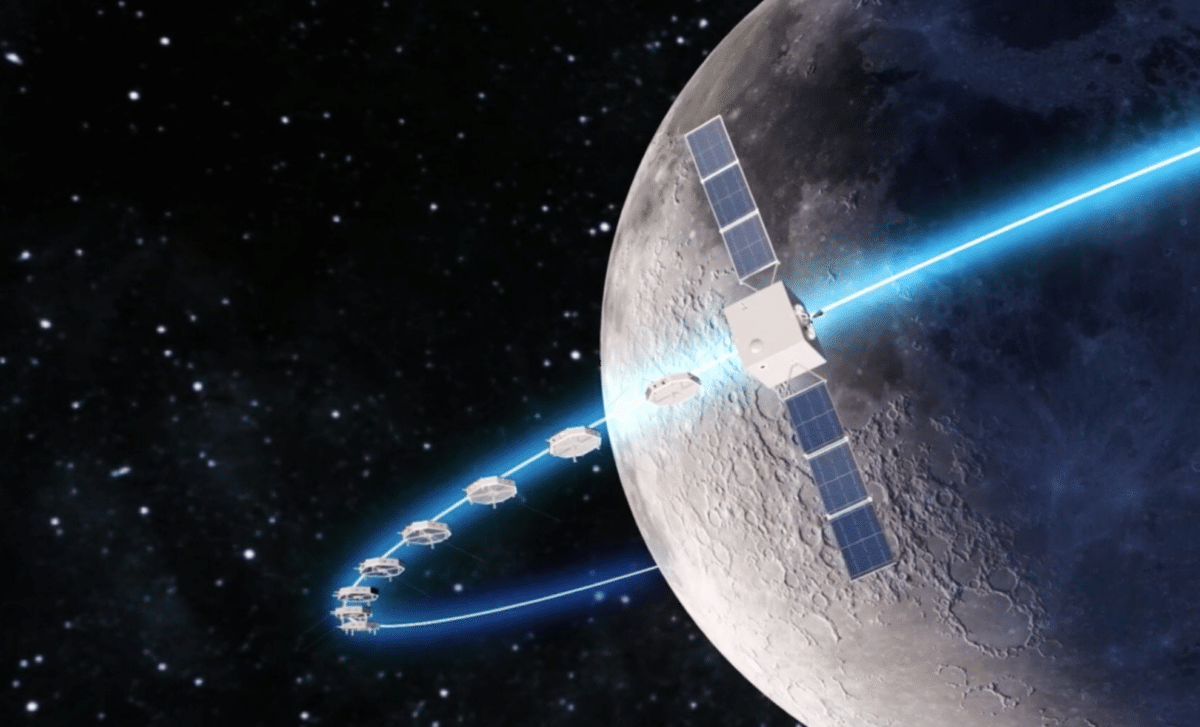
Among the most captivating missions is the Hongmeng Initiative, which plans to set up an array of low-frequency radio telescopes on the far side of the Moon. This site is ideal because it is naturally shielded from Earth’s radio noise, providing an unparalleled environment for studying the universe’s formative moments. Hongmeng will seek out faint signals from the Cosmic Dark Ages, the era predating the formation of the first stars. These signals, beyond the reach of conventional telescopes, could illuminate the birth of the earliest cosmic structures. As described by the video’s narrator, the project acts as “a colossal cosmic microphone… designed to detect the Universe’s infant cries.”
This cutting-edge initiative complements state-of-the-art instruments such as NASA’s James Webb Space Telescope, offering a distinctive perspective that may unlock new insights into the universe’s origins. If successful, Hongmeng might answer key questions about the nature of space and time, shedding light on cosmic evolution.

The Kuafu-2 Solar Mission: Unlocking the Sun’s Secrets
As highlighted by Universe Today, the Kuafu-2 mission builds on earlier efforts to study the Sun by focusing on its magnetic fields and solar activities. This mission will orbit around the Sun’s poles, areas seldom explored by prior missions, aiming to capture unprecedented observations of solar dynamics. The narrator in the video shared by CGTN describes it as “a cosmic microscope, gazing directly into the Sun’s magnetic core.” By examining solar phenomena from polar vantage points, Kuafu-2 will enhance understanding of solar storms and their impacts on our planet.
Deciphering the Sun’s magnetic cycles is vital not only for solar physics but also for predicting space weather, which can affect satellites, electrical grids, and astronaut safety. Kuafu-2 promises to transform our grasp of solar behavior and improve space weather forecasting capabilities.
Quest for Earth’s Twin: The Exo-Earth Expedition
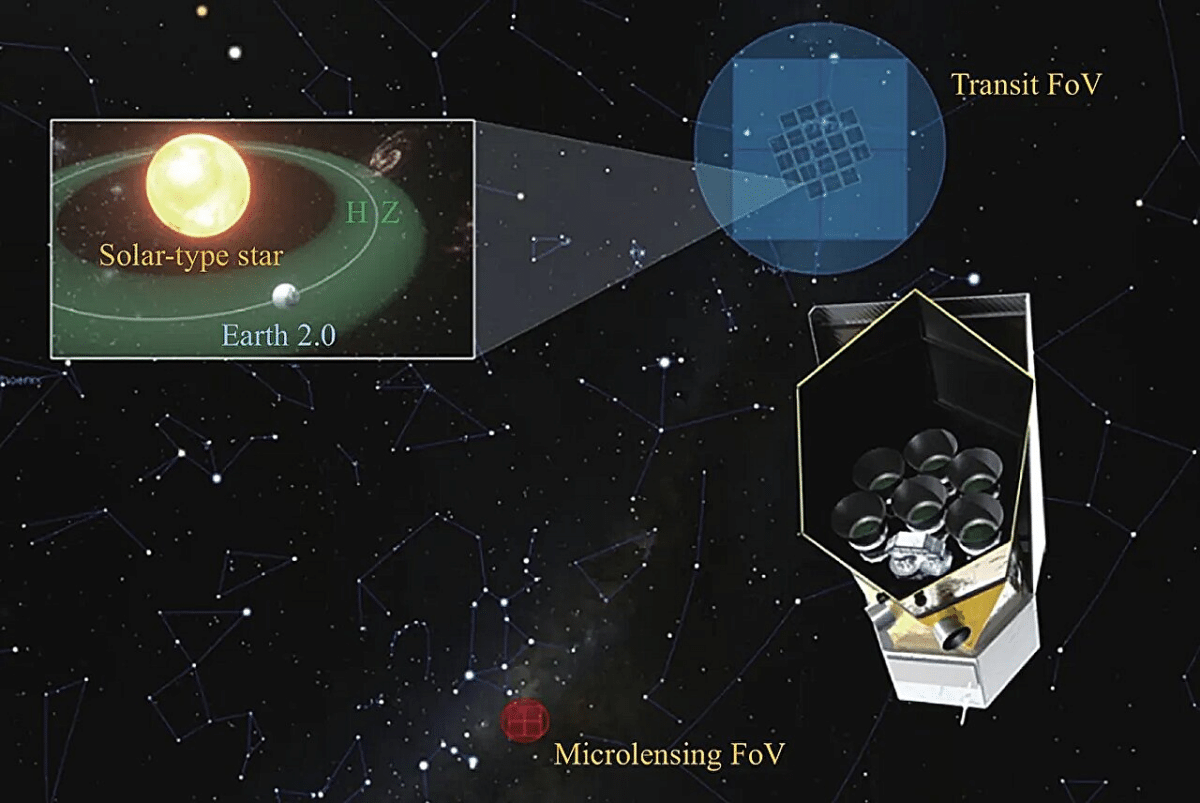
The highlight of China’s future space exploration is the Exo-Earth endeavor, a satellite mission aimed at discovering Earth-like planets beyond our solar system, often called “Earth 2.0.” Targeting thousands of stars within the Milky Way, this satellite will search for planets similar in size to Earth that lie in habitable zones conducive to life. Set for launch by 2028, Exo-Earth is poised to make significant contributions to the study of potentially habitable worlds.
This mission underscores China’s determination to take a leading role in exoplanet research following precedent missions like NASA’s Kepler and TESS. Success with Exo-Earth could greatly expand knowledge about the abundance of Earth analogs in our galaxy, edging us closer to answering whether life exists elsewhere in the cosmos.
Diving into High-Energy Astrophysics: The eXTP Observatory
The eXTP space observatory, a multinational project spearheaded by China, will investigate some of the universe’s most extreme phenomena, such as black holes, neutron stars, and explosive supernova events. Equipped with advanced X-ray instruments combining timing precision and polarization measurements, this observatory will probe physical laws in conditions unattainable on Earth.
Featuring instruments like Spectroscopic and Polarimetry Focusing Arrays, eXTP will deepen comprehension of matter behavior in extreme environments. By studying these cosmic powerhouses, the mission aims to illuminate fundamental physics aspects including gravity, quantum theory, and the structure of space-time itself. Slated for launch around 2030, eXTP has the potential to revolutionize astrophysics research.
- Categories:
- News







0 comments
Sign in to Comment