
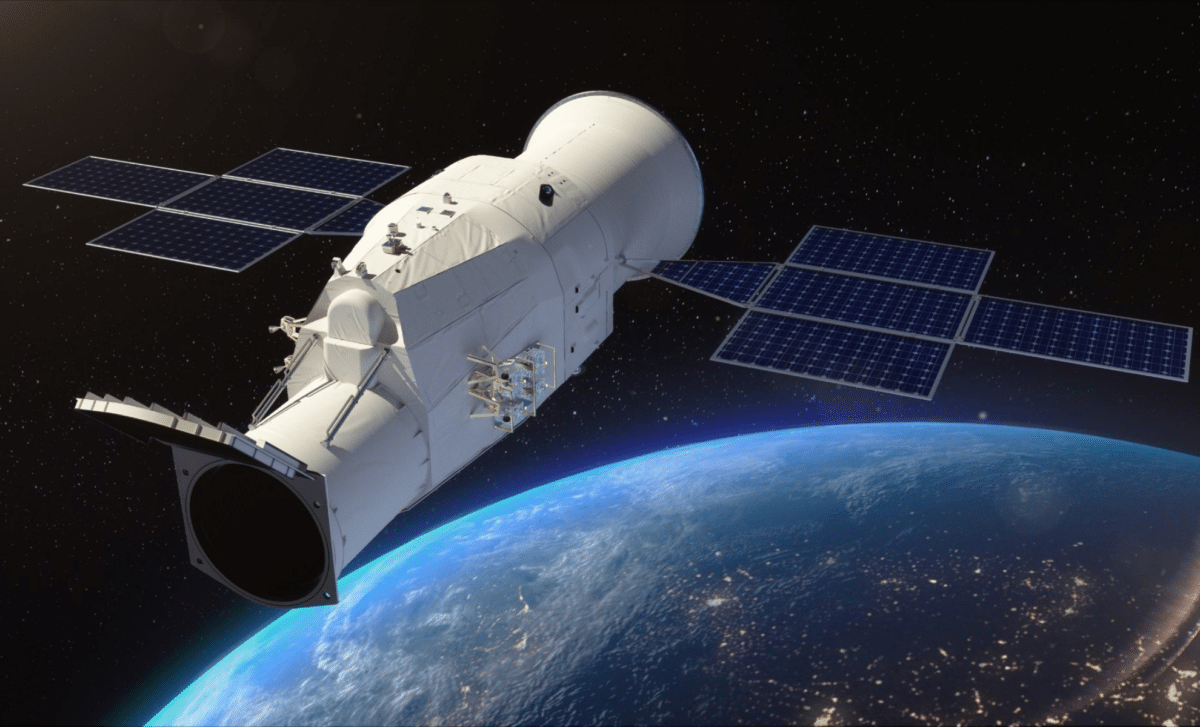
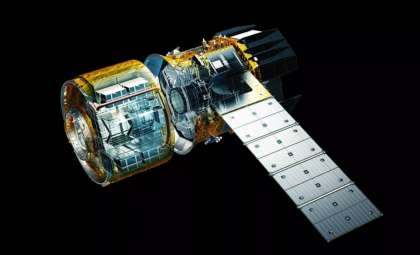
China has reached a pivotal point with its Chinese Space Station Telescope (CSST), also referred to as the Xuntian Space Telescope. The project recently achieved a major breakthrough by successfully completing a scientific data simulation of exceptional quality, a critical achievement that paves the way toward the telescope’s upcoming deployment. This milestone marks a significant advance for one of China's flagship space astronomy endeavors, which promises to contribute extensively to astrophysics, cosmology, and related sciences.
Simulating the Future: Preparing the CSST for Launch
Extensive testing and simulations are vital prerequisites to any space mission, guaranteeing the accuracy and functionality of all components and instruments. For the CSST, scientists in China have crafted a detailed simulation platform that replicates the main optical system and observational tools. As reported by CGTN, this system generates scientifically precise, pixel-level simulated observation data with remarkable fidelity.
The significance of this advanced simulation cannot be underestimated.

“The work provides clear expectations for the CSST’s capabilities in the direct imaging of exoplanets, offering technical guarantees for scientific output in this frontier field,” said Ji Jianghui, a researcher at the Purple Mountain Observatory.
This simulation toolkit validates the telescope’s performance, assuring that the eventual data produced will be both reliable and impactful once CSST begins its operations in orbit. Acting as a ‘digital rehearsal,’ it allows fine-tuning of all systems, addressing potential shortcomings long before the mission initiates.
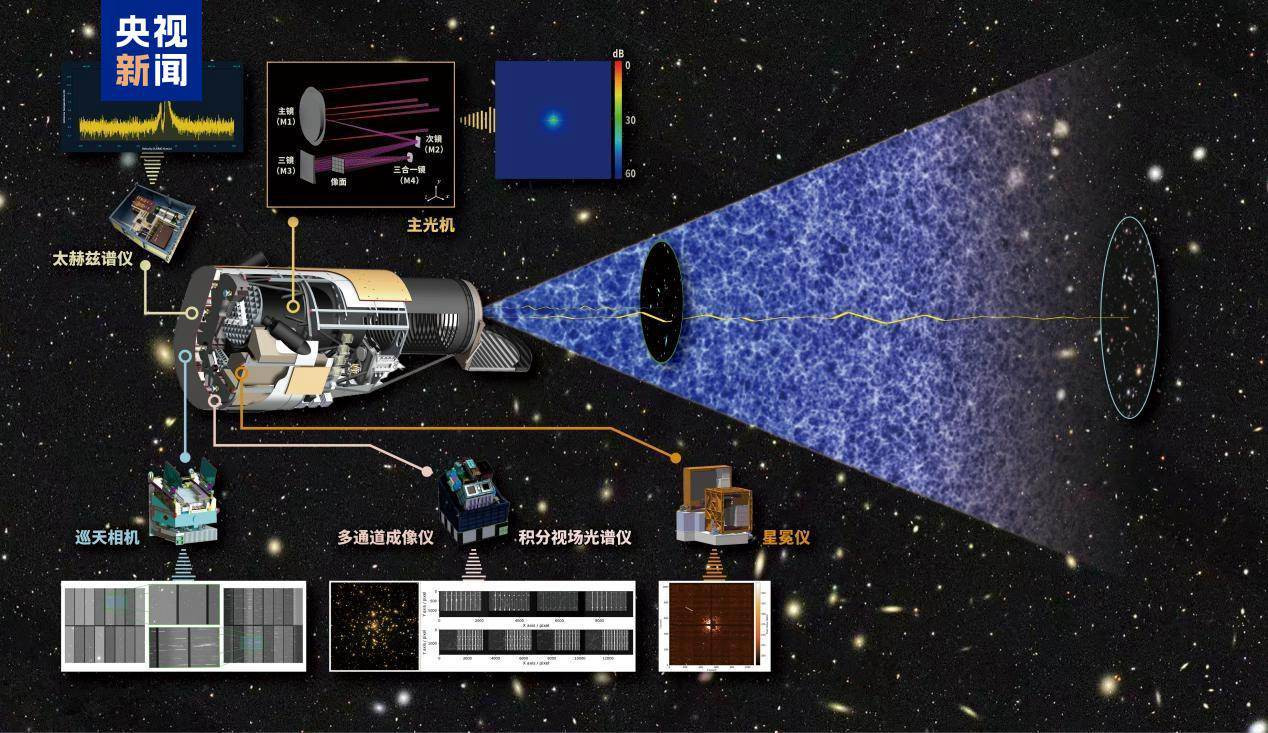
In practical terms, this digital verification process confirms the telescope’s scientific ambitions, refining observation methods to ensure that once launched, the CSST will deliver expansive, detailed, and multi-spectral images of astronomical targets. This capability is expected to accelerate advancements in cosmology and foundational physical sciences.
Boosting Insight Through High-Precision Imaging Technologies
A standout aspect of the CSST is its cutting-edge optical design, intended to capture detailed observations of diverse cosmic phenomena. Featuring a 2-meter diameter primary mirror, the telescope boasts an extensive field of view, enabling wide-area sky surveys with superb accuracy. It is engineered to operate across a broad electromagnetic spectrum, supporting studies of a variety of universal objects.
Thanks to its expansive coverage and refined imaging, the CSST will empower researchers to examine galaxies, stars, planetary systems, and even the Milky Way with unprecedented clarity. The mission’s collected data is expected to unlock secrets about some of the universe’s most elusive and distant phenomena, including exoplanet research.
“This offers reliable data support for the development of data processing systems, scientific pre-research and post-launch scientific operations,” said Li Cheng, a professor at the Department of Astronomy at Tsinghua University.
With its capacity to capture extensive, multi-wavelength astronomical surveys, the CSST is set to become a cornerstone instrument for probing the universe’s structure, evolution, and the formation of cosmic bodies. It is anticipated to deliver discoveries that could reshape our cosmic perspective.
Integrating Seamlessly with China’s Space Station Infrastructure
The CSST is designed not as a standalone instrument but as a connected component of China’s orbital space station. Operating autonomously in orbit, it also possesses the capability to dock with the space station for servicing, resupply, and technological upgrades. This integration ensures the telescope will be a durable asset for ongoing scientific exploration from space.
The telescope will provide detailed observations of select celestial bodies, exemplified by high-resolution imaging of exoplanets, star systems, and galaxies. Its spectroscopic survey capabilities will allow researchers to investigate the composition and physical characteristics of these far-off targets more deeply. As a key element of China’s expansive space program, the CSST will serve fundamental research purposes and also support future missions and international collaborations in space science.
- Categories:
- Space








0 comments
Sign in to Comment