
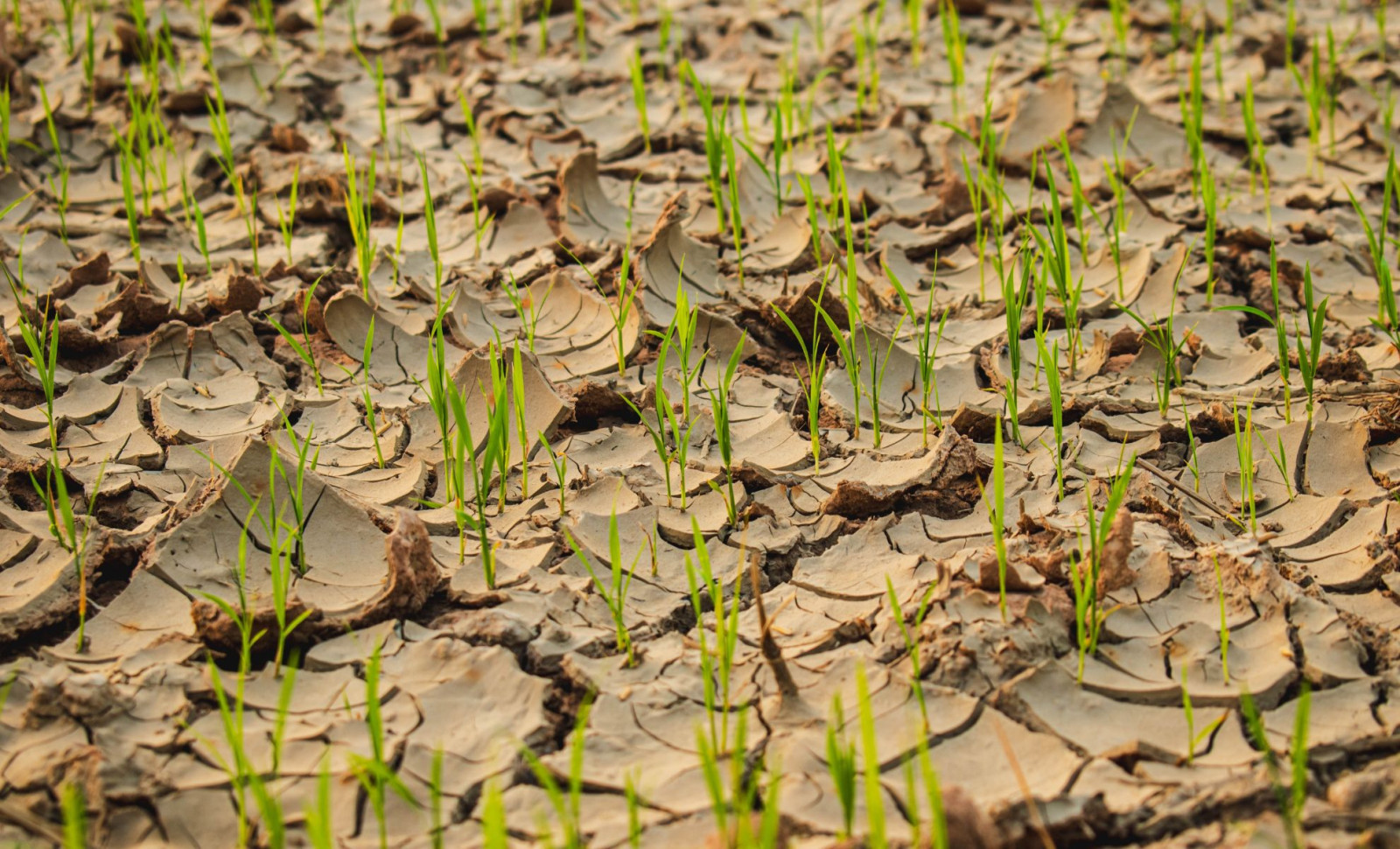
A team of Chinese scientists has pioneered a method to convert loose desert sand into durable, nutrient-rich soil in under one year. This innovative technique accelerates a natural process by harnessing beneficial microorganisms.
Their research targets the ongoing challenge of desertification affecting numerous arid regions worldwide. Instead of planting vegetation first, the scientists focus on reconstructing the soil structure to enhance plant survival rates.
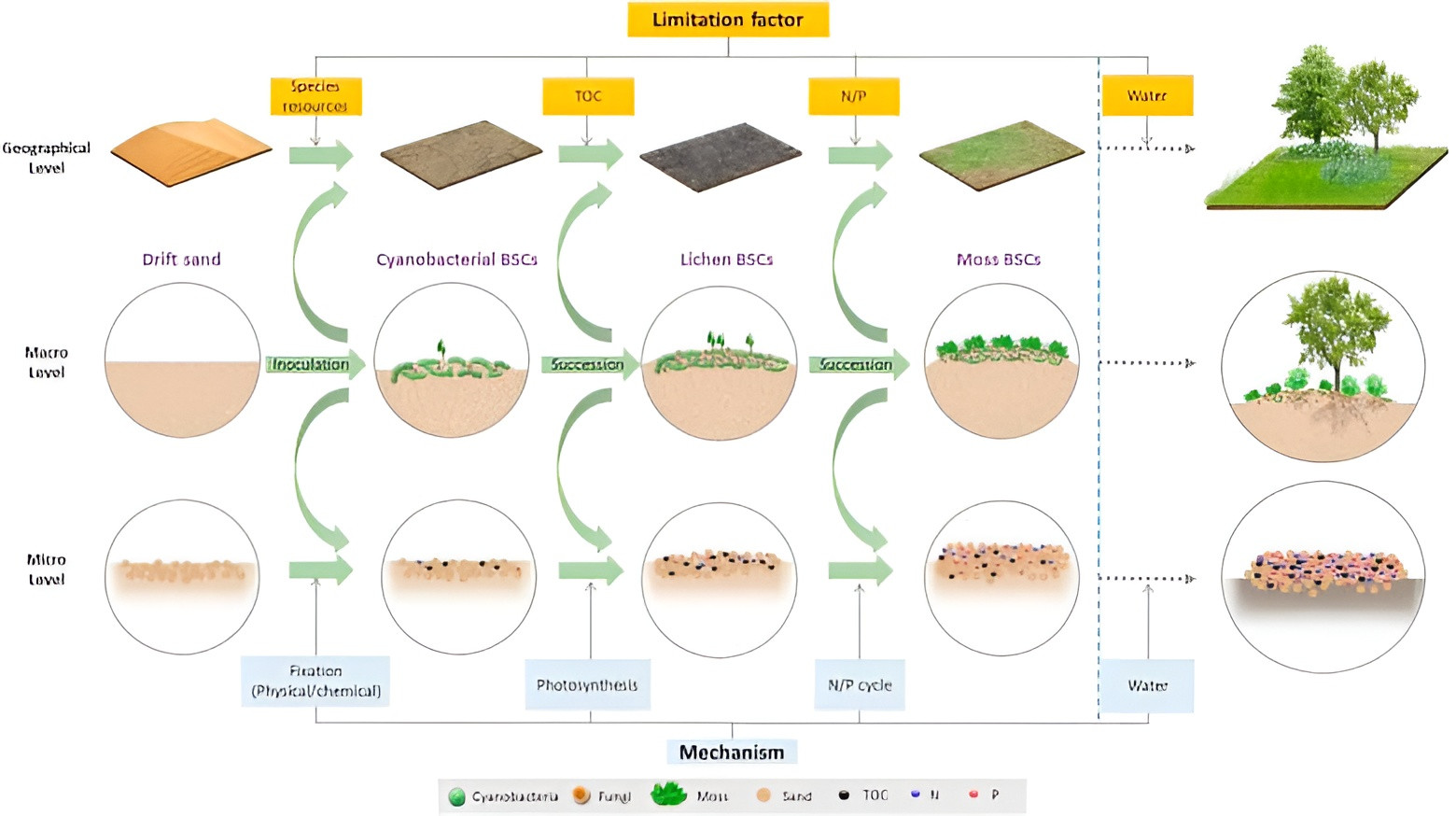
Central to this approach are biological soil crusts—thin microbial layers forming naturally on desert surfaces. These crusts function as a protective shield, stabilizing the sand and creating conditions favorable for ecosystem recovery.

Fast Stabilization of Sand by Cyanobacteria
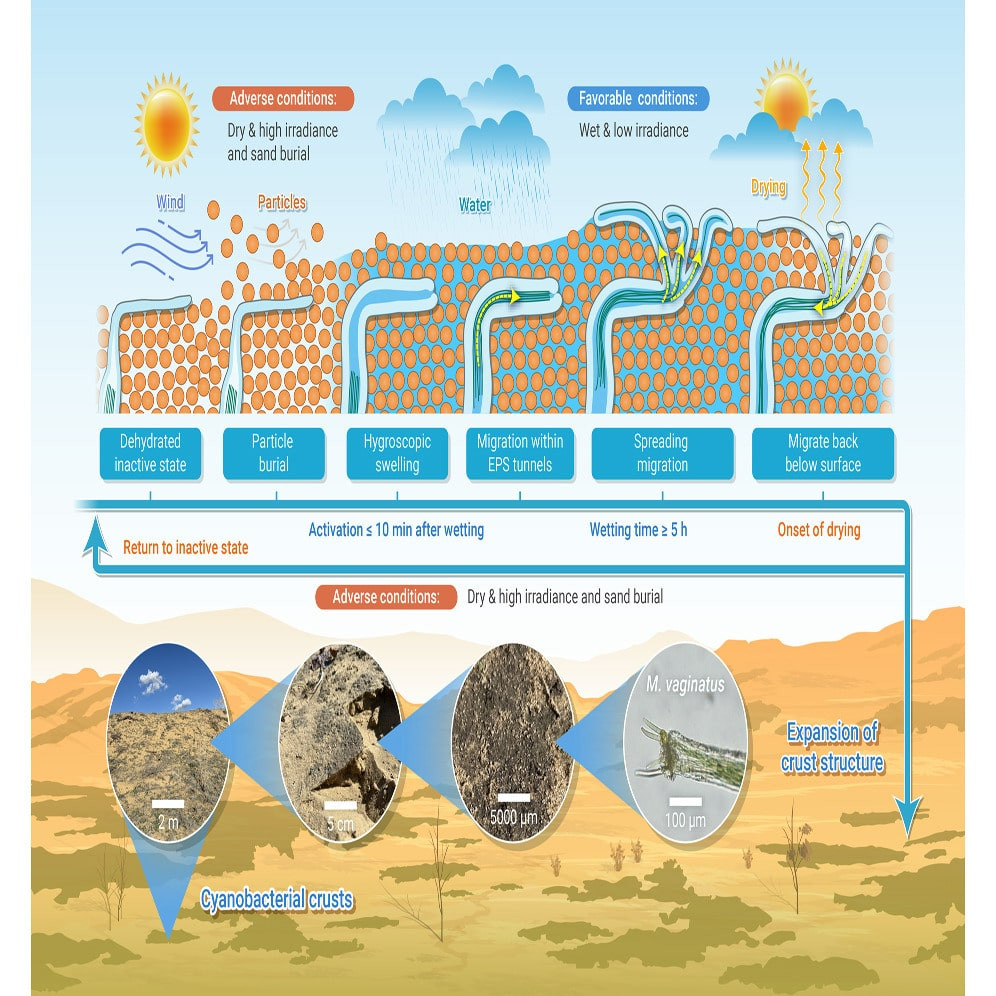
The method involves spraying cultivated cyanobacteria directly onto the sandy terrain. According to research published in Soil Biology and Biochemistry, these microorganisms secrete sticky substances that bind sand particles into a cohesive crust. Zhao Yang, deputy director at the Shapotou research station, likens this process to an industrial technique.
“The process is similar to mixing cement, requiring the optimal ratio and stirring method.” The comparison highlights how precise the balance must be to create a stable surface.
Field trials conducted near the Taklamakan Desert in Xinjiang demonstrated that these crusts form within 10 to 16 months. Researchers from the Chinese Academy of Sciences confirmed that these treated zones remained intact even after seasonal dust storms, which typically erode loose sand. Zhao noted a major breakthrough in scaling the approach:
“The solid inoculum has not only overcome the limitations of the spraying method but also greatly enhanced the feasibility of large-scale promotion.”
Laboratory studies validate these results. Data indicate that once the crust establishes, wind erosion is reduced by over 90%, indicating a much stronger and more resistant surface.
Microbes Initiate the Formation of Viable Soil
Cyanobacteria thrive in harsh extremes, using sunlight to convert carbon dioxide into organic compounds that enrich barren sand.
Some cyanobacterial species also capture nitrogen from the atmosphere, supplying essential nutrients to support plant growth. Coverage by Earth.com explains how this fosters a progressively diverse and active microbial ecosystem.
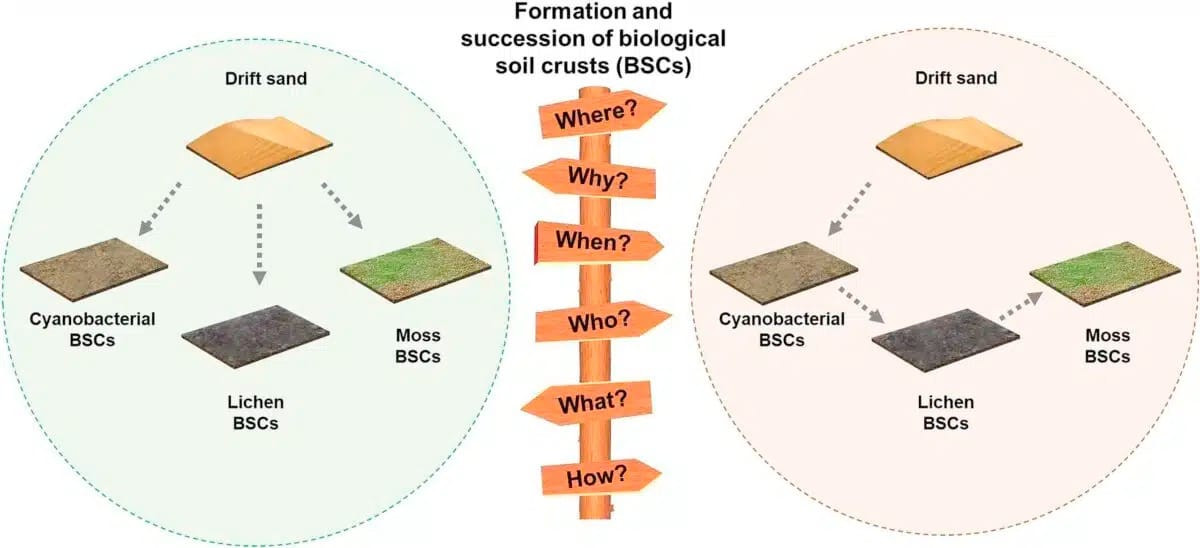
As the crust matures, it accumulates dust and organic matter. The buildup of dead microbial cells and residues forms an initial organic layer, eventually allowing lichens and mosses to colonize, further reinforcing the ground structure.
Enhanced Moisture Conservation Despite Fragility
A significant advantage of this method is improved water retention. After rainfall, areas covered with the crust maintain surface moisture longer than exposed sand. This short delay in drying helps seeds establish roots. In untreated deserts, water rapidly evaporates or drains away, making plant survival challenging. The darker, porous crust traps moisture and minimizes evaporation, lending more stable conditions during early plant growth.
However, limitations remain. Desertification often stems from human pressures like overgrazing, which this technology does not directly resolve. The biological crust can be easily damaged by foot traffic, vehicles, or wildlife; such disruptions can erase months of progress, especially before lichens and mosses solidify the layer.
Researchers emphasize the importance of utilizing native microbial strains, which are naturally adapted to extreme desert conditions such as heat, salinity, and extended drought. Introducing foreign species risks lower effectiveness or failure. Although the rapid restoration capability is remarkable, sustaining these rehabilitated lands will require ongoing management, including protecting against human disturbance and monitoring crust development under varying environmental conditions.
- Categories:
- Science











0 comments
Sign in to Comment