
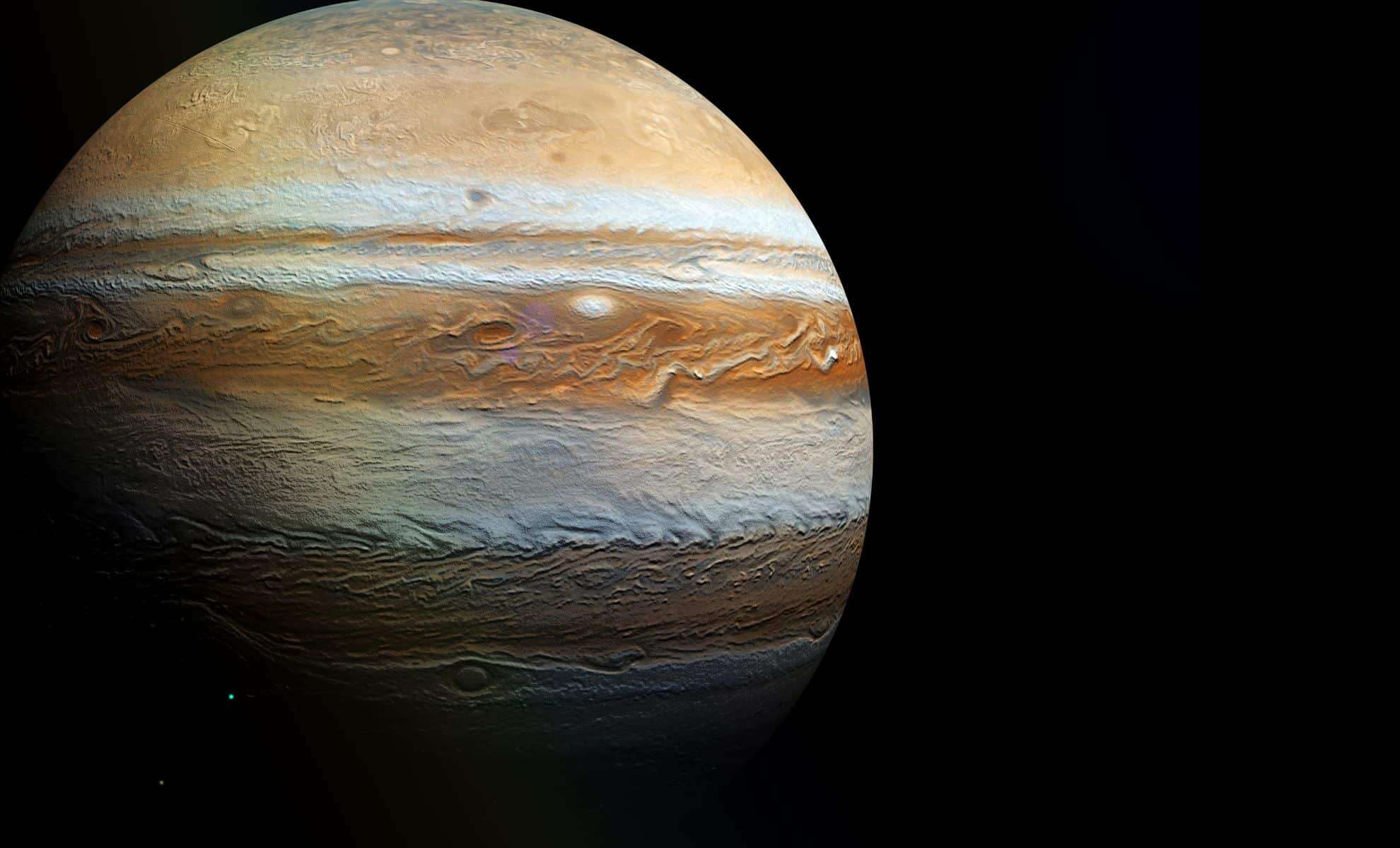
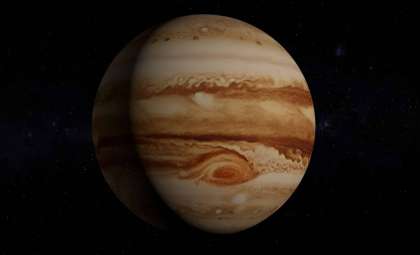
A newly published study in Science Advances led by planetary scientist Chris Moeckel from UC Berkeley introduces a compelling resolution to a long-standing mystery involving the uneven distribution of ammonia in Jupiter’s atmosphere. By combining observational data from NASA’s Juno spacecraft and the Hubble Space Telescope, the team suggests that colossal hailstorms produce “mushballs” that influence ammonia’s atmospheric placement.
Jupiter’s Turbulent Climate: A World Apart from Earth
These unusual mushballs form amid powerful thunderstorms and plunge deep into the planet’s troposphere, transporting ammonia away from higher altitudes and resolving an enduring chemical puzzle.
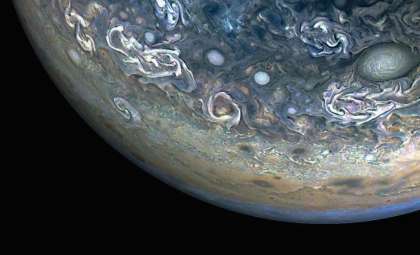
Jupiter’s weather is renowned for its colossal storms, cyclones, and lightning strikes that far exceed Earth's scale. However, its uniqueness also stems from the intense vertical airflow inside the atmosphere.

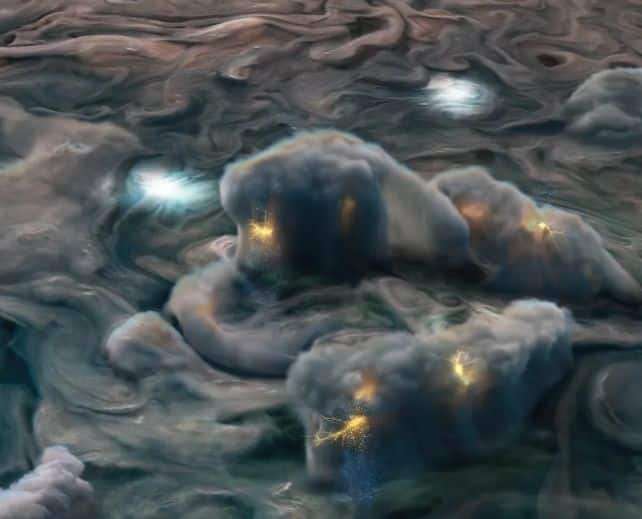
During massive storm events, water vapor ascends from deep within, meeting cooler layers saturated with ammonia vapor. Here, the ammonia functions like antifreeze, enabling the development of ammonia-water droplets.
“This process leads to droplets of ammonia-water liquid that fall while colliding with ascending ice crystals, generating electrified clouds. This discovery was unexpected since ammonia-water clouds are nonexistent on Earth,” explained Heidi Becker, a planetary scientist.
Tracking a Persistent Storm: Supporting Data
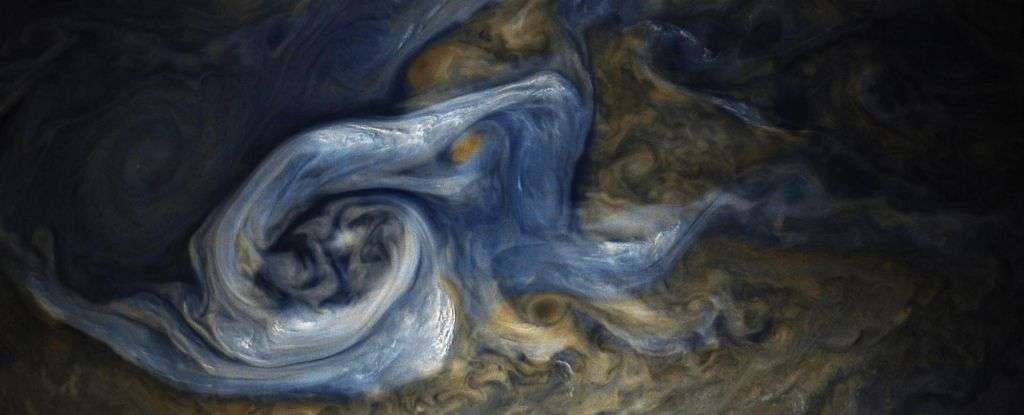
The group scrutinized data collected in July 2017, when Juno traversed an ongoing lightning storm active to this day. Juno’s microwave radiometer registered signals across six radio frequency bands, while Hubble captured observations in ultraviolet, optical, and near-infrared wavelengths.
They identified remarkable features: besides witnessing vigorous electrical phenomena, a faint radio ‘cold spot’ indicated potential melting ice or ammonia emissions beneath the cloud layer. Moeckel described this signal as the critical proof reinforcing the mushball hypothesis.
The proposed model suggests these mushballs are sufficiently large and dense to endure a lengthy descent into Jupiter’s depths. During this fall, they extract ammonia from the upper atmosphere and deposit it at depths nearing 150 kilometers, where the mushballs eventually evaporate, releasing their ammonia contents.
Could Mushballs Influence Other Gas Giants?
This discovery could extend beyond Jupiter itself. Comparable atmospheric traits have been observed or theorized on other gas giants like Saturn, Uranus, and Neptune. All those worlds exhibit uneven ammonia levels and intense weather phenomena. The mushball mechanism might be a widespread atmospheric process, potentially occurring on exoplanets as well.
The findings question previous assumptions about gas giant interiors, emphasizing that the upper atmospheric observations might not reliably reflect deeper planetary layers.
“Observations of Jupiter mostly reveal surface conditions. While many features are shallow, certain intense vortices and storms penetrate deeper,” Moeckel said. “Our work highlights that the atmospheric surface is not an accurate proxy for the planet’s interior.”
- Categories:
- Space






0 comments
Sign in to Comment