
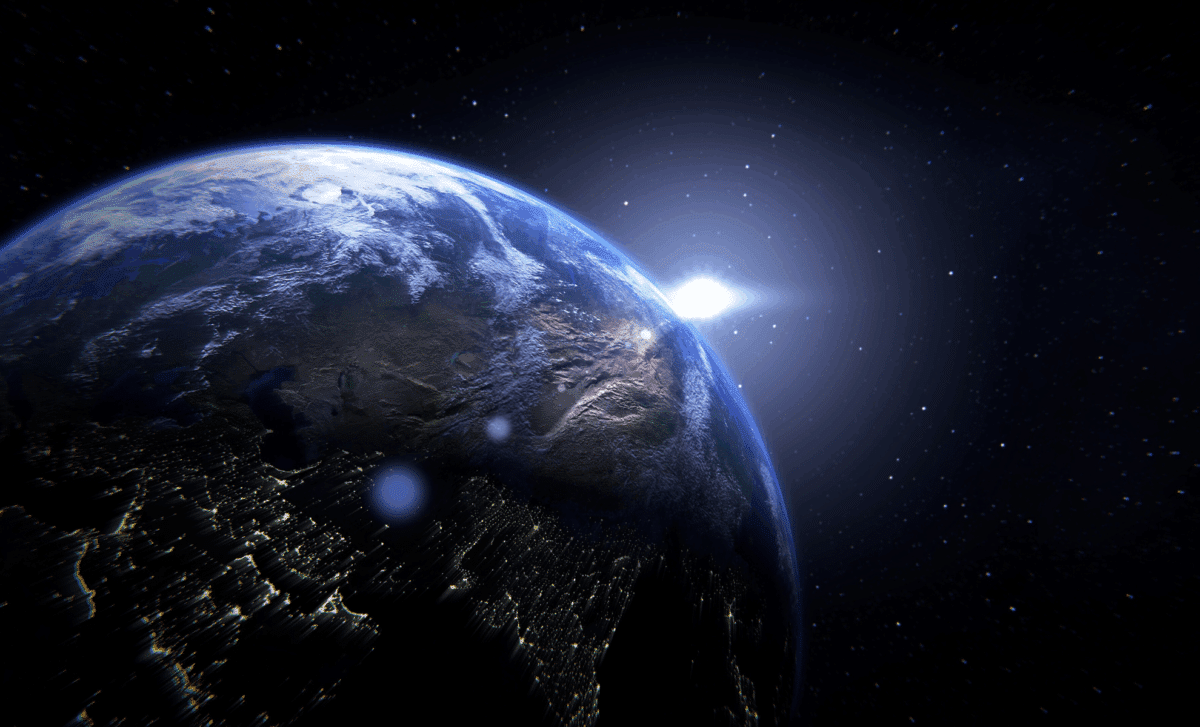
Is it possible that Earth is the sole planet in the observable universe supporting a civilization akin to ours? A novel hypothesis reshapes our cosmic perspective, relying on rigorous probability rather than speculative philosophy.
Dubbed the Solitude Zone, this innovative framework presents a compelling statistical argument: our solitude might arise not from the scarcity of life, but from occupying a unique cosmic timeframe.
Proposed by Dr. Antal Veres from the Hungarian University of Agriculture, this model is backed by mathematical rigor and detailed in a recent Acta Astronautica publication.
Reevaluating The Fermi Paradox: Why One Might Be the Norm
The enduring Fermi Paradox questions why, in an enormous and ancient universe, we see no signs of other advanced beings. For years, explanations have ranged from Great Filters to civilizations self-destructing. The Solitude Zone approach turns this narrative around: what if the expectation to encounter others is misplaced, and being alone is statistically probable right now?
This model acknowledges the likelihood of life elsewhere but determines a specific range in which the probability of having exactly one civilization at our technological stage exceeds the odds of multiple or zero civilizations. Dr. Veres identifies this statistically favored condition as the Solitude Zone.

It doesn’t assert we are first or last—simply that we might currently stand alone.
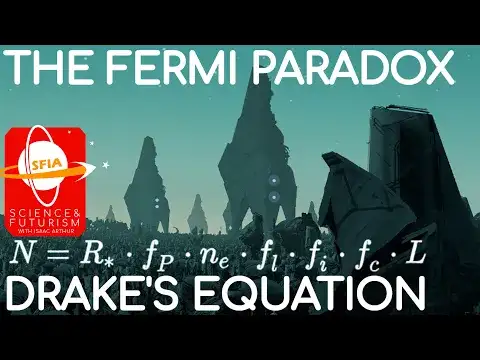
The Interplay of Complexity, Energy Use, and Cosmic Probability
Veres’ theory hinges on four main quantitative factors: complexity, likelihood of existence, probability of emergence, and the total count of possible planetary systems. It expands on traditional tools like the Kardashev Scale and Drake Equation.
A novel element is incorporating technological complexity as a scaling parameter. This ranges from basic life forms to civilizations harnessing entire stellar systems. Each complexity level maps to its own probability window. For example, a Kardashev Type II civilization, commanding a star’s full energy output, faces different solitude odds compared to our near-Type I status.
Currently evaluated at roughly 0.7 on the Kardashev Scale, our position yields about a 29.1% chance that we are alone. This percentage slightly increases under conditions like the Critical Earth Hypothesis, yet stays below 50%. This indicates a remarkable possibility: either other civilizations exist or life is nonexistent—but there remains a slim but meaningful chance that only one civilization like ours is present. Hence, the Solitude Zone.
From Widespread Life To Cosmic Isolation: What Scenario Fits Our Reality?
Dr. Veres ran his model under different assumptions about how life arises. In an astrobiological optimist scenario, where life evolves easily and abundantly, solitude chances plummet—implying a universe full of civilizations awaiting discovery.
Conversely, the Hard Step Evolution model, involving rare evolutionary leaps, suggests life might be exceedingly scarce, making the absence of any civilization more probable than the presence of just one.
Between these extremes, the Solitude Zone emerges clearly, especially when the Rare Earth Hypothesis is considered. This hypothesis argues that complex life demands a narrow array of circumstances unlikely to reoccur. Within this framework, the emergence of Earth-like intelligences might happen only once in a specific cosmic stretch, which aligns with the 29.1% solitude likelihood predicted by the model, reaching 30.3% under “Critical Earth” assumptions.
For an in-depth review, refer to the original work published in Acta Astronautica, outlining the nuanced mathematics behind this rare but plausible statistical niche.
Is Our Cosmic Loneliness Just a Temporary Phase?
Even if we reside in this Solitude Zone, it doesn’t imply permanent isolation. The passage of time is integral—civilizations emerge, progress, and potentially fade away, while our observational snapshot occupies a mere fraction of cosmic history. The model suggests that currently, given our complexity and distribution of life-bearing worlds, solitude is statistically favored.
The likelihood of solitude increases as civilizations climb higher on the Kardashev Scale. Advanced entities (Type II or III) might exist in isolation—not because others don’t exist, but because differences in communication methods, detectability, or even fundamental physics make contact improbable.
Thus, the Solitude Zone is as much about our temporal context and technological stage as it is about spatial placement. We might not be alone indefinitely; perhaps we arrived early, or maybe the universe’s grand civilization bloom lies yet ahead—or behind.
- Categories:
- News




0 comments
Sign in to Comment