
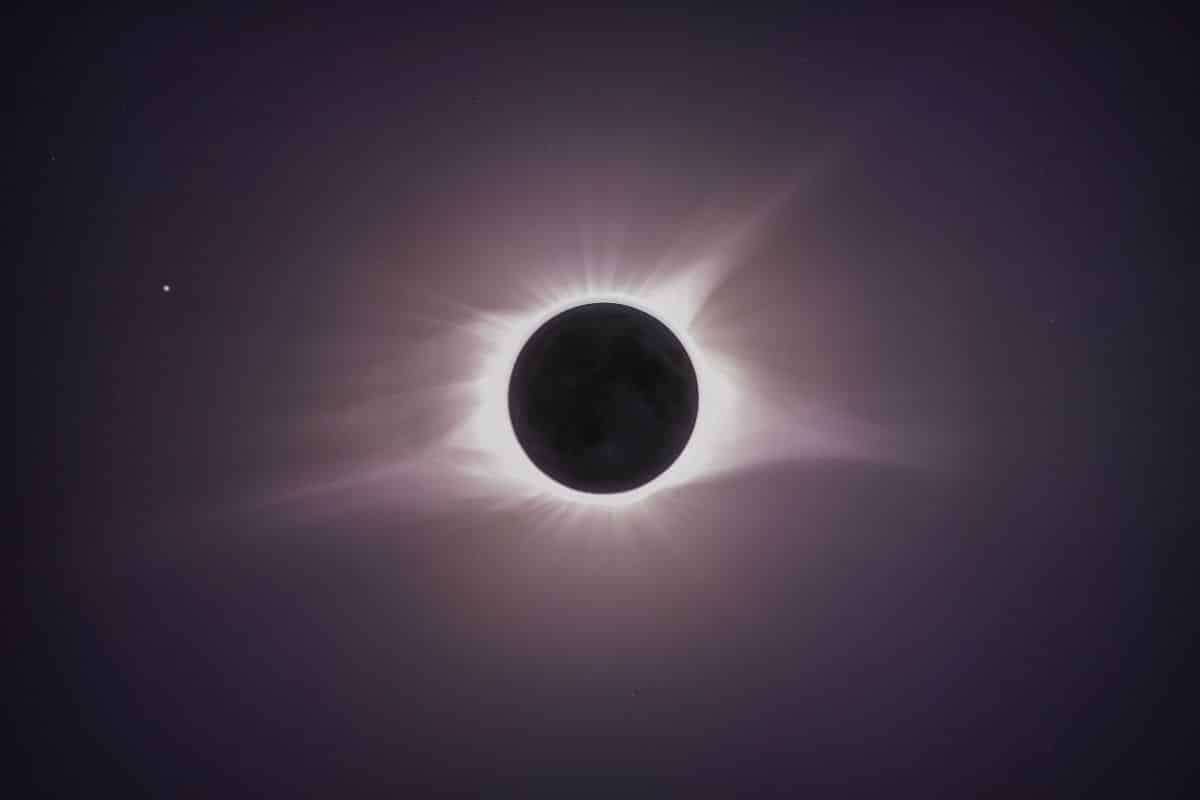
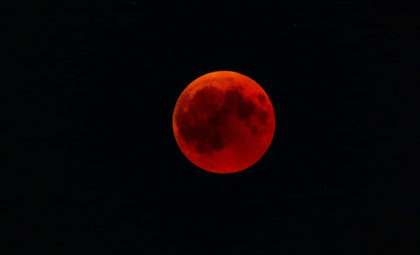
In 2471 B.C., a rare total solar eclipse darkened the skies over ancient Egypt, and new research suggests this extraordinary event might have influenced a major shift in the civilization’s religious beliefs.
Evidence now points to this eclipse occurring during Pharaoh Shepsekaf’s rule, coinciding with a notable departure from the solar worship traditions that dominated the Fourth Dynasty.
The Celestial Shadow on Solar Deities
For the ancient Egyptians, the sun was far more than a source of light—it symbolized cosmic order itself. Deities such as Ra, the creator god who journeyed across the heavens in his solar boat, and Horus, the falcon-headed god presiding over kingship and the skies, stood at the heart of Egypt’s religious and royal ideologies, especially during the Old Kingdom. These gods represented both life’s sustaining power and the divine right of pharaohs to rule.
This devotion shaped much of the state religion and pharaonic identity. Pharaohs were regarded as incarnations of Ra, and monumental tombs like the Giza pyramids were carefully oriented with solar phenomena. Rulers such as Khufu, Khafre, and Menkaure incorporated the sun god’s influence into their names and architectural projects, reflecting cycles of the sun’s death and rebirth.

The Shift Under Shepsekaf
Space.com reports that Shepsekaf, the Fourth Dynasty’s final pharaoh, distinctly diverged from these solar-centered customs. He notably omitted the “Ra” suffix from his royal titles—a striking break given the era’s strong focus on solar worship.
Even more surprising was his abandonment of pyramids for a mastaba-style tomb, today called the Mastabat el-Fara’un. Unlike his predecessors’ Giza burials aligned with Heliopolis, the hub of solar worship, Shepsekaf’s tomb lies near Buto in the Nile Delta, a region associated with Lower Egypt and deities such as Wadjet.
Fascinatingly, this location aligns with the path of totality for the 2471 B.C. eclipse—a powerful astral phenomenon occurring in Shepsekaf’s reign. This coincidence raises the possibility that the eclipse influenced his rejection of solar traditions and choice of burial placement.
Interpreting Ancient Astronomical Events
Recent studies using modern astronomical methods have unraveled parts of this mystery. Giulio Magli, an archaeoastronomer at Politecnico di Milano, applied precise calculations to map ancient solar eclipses, revealing how this one cast a midday shadow over Egypt—likely perceived as a significant omen.
Though ancient Egyptian records seldom explicitly mention eclipses, inscriptions like the Stela of Huy reference “darkness during the daylight.” The cultural and religious changes during Shepsekaf’s time hint that such celestial events may have left a profound impact.
Magli emphasizes that advances in modeling the Earth’s historical rotation rates now allow researchers to pinpoint where the moon’s shadow fell with unprecedented accuracy.
“It’s easy to calculate when eclipses happened,” Magli explained, “but it’s only recently that we’ve improved our models to know where on Earth the umbra — the moon’s shadow — actually fell.”
The Resurgence of Solar Cults
Despite this eclipse's apparent disruption, solar worship rebounded during Egypt’s Fifth Dynasty. Pharaohs resumed building pyramids and constructed dedicated Sun Temples—monuments specifically honoring solar gods. Though more modest than earlier efforts, these projects signaled a renewed embrace of solar theology.
Nearly a thousand years later, another total solar eclipse occurred during the reign of Akhenaten around 1338 B.C. Known for championing Aten, the sun disk deity, Akhenaten fully incorporated solar symbolism into his reign, contrasting Shepsekaf’s apparent distancing even amid another midday darkening.
- Categories:
- News





0 comments
Sign in to Comment