
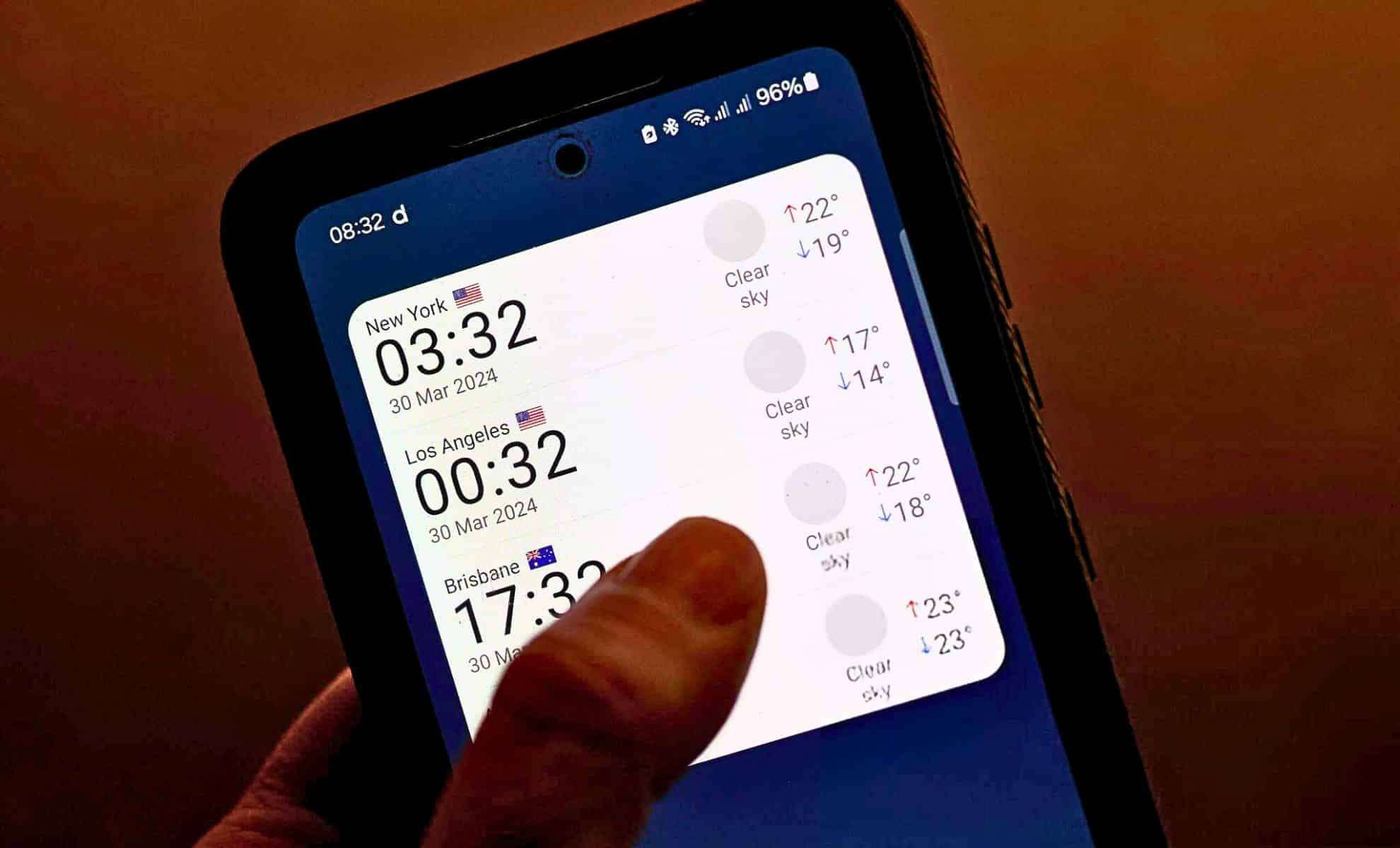
On Sunday, March 9, 2025, millions across America will adjust their clocks forward by one hour to mark the start of daylight saving time (DST). While extra evening sunlight is welcomed by many, others dislike losing an hour of sleep.
The twice-annual clock adjustment has sparked debate for years. Some advocate for making daylight saving time permanent, citing possible boosts in economic activity and a reduction in crime, whereas others argue that standard time better supports human health.
Despite various attempts to stop the clock changes, Congress has not yet made a definitive ruling. With rising political will and growing health-related concerns, could 2025 finally see an end to this longstanding practice?

Efforts to Establish Year-Round Daylight Saving Time
Recent proposals have called for making DST permanent, thus eliminating the need to adjust clocks backward in November.
The most prominent initiative was the Sunshine Protection Act, introduced in 2018 by Florida's Sen. Marco Rubio and Rep. Vern Buchanan. This legislation aimed to keep the United States on daylight saving time all year, removing the biannual time switches.
Although the Senate unanimously approved the bill in 2022, it encountered delays in the House and was never enacted into law.
Returning to office in January 2025, former President Donald Trump has voiced support for abolishing DST, describing it as “inconvenient and very costly to our nation.” While his administration has suggested revisiting the issue, no formal measures have been implemented so far.
Concerns Raised by Health Professionals Against Permanent DST
Though many relish the benefit of longer daylight hours, medical experts caution that year-round daylight saving time may negatively affect human health.
Institutions such as the American Medical Association and the American Academy of Sleep Medicine maintain that standard time aligns better with natural circadian rhythms.
Studies indicate that the circadian rhythm disruptions triggered by DST are linked with higher rates of heart disease, stroke, obesity, and depression. Furthermore, darker winter mornings could increase accident rates and lead to lower productivity.
Currently, some states such as Hawaii and most of Arizona have opted out of DST and stay on standard time year-round. However, federal law prohibits states from adopting permanent daylight saving time without congressional approval.
Historical Attempts at Permanent Daylight Saving Time in the U.S.
The U.S. has previously tried maintaining daylight saving time year-round on two occasions—during World War II and again in 1974 amid an energy crisis.
Both experiments sparked debate. The 1974 trial lasted less than a year, ending after 10 months due to widespread complaints about dark mornings in winter, particularly affecting children traveling to school.
Energy savings from DST have also been questioned. A 2005 analysis revealed that extending daylight saving time only lowered national electricity demand by roughly 0.5% daily, a modest reduction.
Supporters emphasize that additional evening light helps reduce crime and encourages outdoor recreation, but critics argue that public health must be the top priority.
Looking Ahead
For the foreseeable future, Americans will continue to set clocks forward on March 9 and back on November 2, following a pattern that has persisted for decades.
However, growing political debate and health-related concerns suggest that discussions about the future of daylight saving time are far from settled.
Will 2025 mark the end of biannual clock changes in the U.S., or will this timekeeping tradition carry on indefinitely? Time will ultimately decide.
- Categories:
- News











0 comments
Sign in to Comment