
Within a Seattle storage facility, stacks of canned salmon remained untouched for decades. These tins, some dating back to 1979, were initially reserved for quality assurance by the Seafood Products Association. Once the organization no longer required them, they reached out to the University of Washington for further examination.
Chelsea Wood, an associate professor specializing in aquatic and fishery sciences, promptly agreed to investigate.
The contents of these expired cans have offered researchers a unique glimpse into over four decades of Alaskan oceanic history. Published in the academic journal Ecology and Evolution, the findings are challenging existing perspectives about parasites, marine food webs, and long-term conservation impacts.

A 42-Year Marine Record Preserved in Cans
The assortment included 178 cans representing four salmon species. Scientists catalogued 42 cans of chum salmon (Oncorhynchus keta), 22 cans of coho salmon (Oncorhynchus kisutch), 62 cans of pink salmon (Oncorhynchus gorbuscha), and 52 cans of sockeye salmon (Oncorhynchus nerka). All were sourced from the Gulf of Alaska and Bristol Bay between 1979 and 2021.
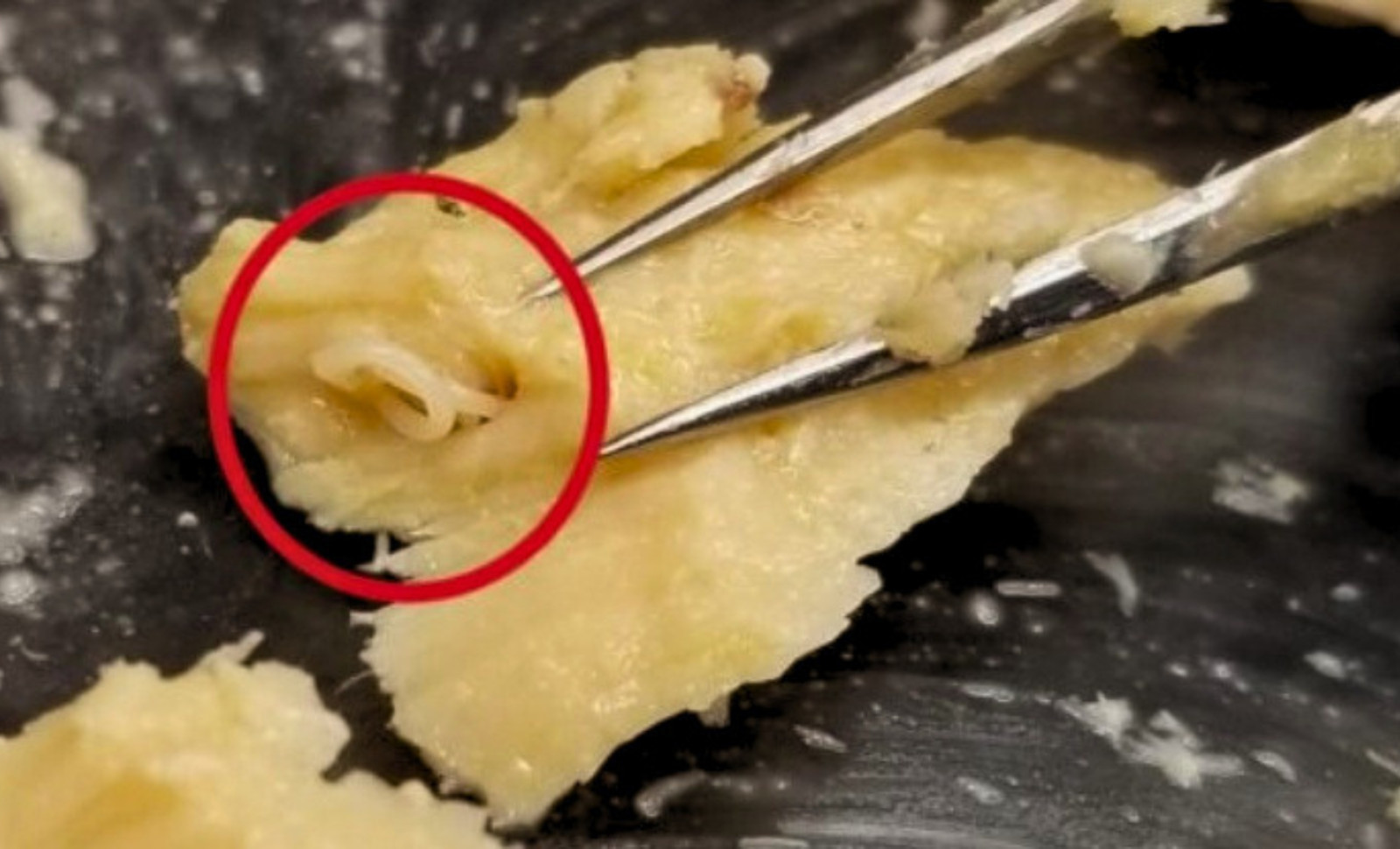
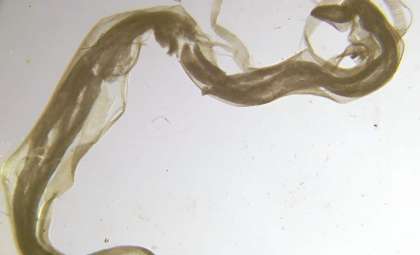
While the canning preserved the fish, it also retained something unexpected. Inside the fillets, researchers uncovered anisakid, tiny marine nematode parasites roughly one centimeter long. These worms were destroyed by the canning process and posed no health risk to consumers. For Natalie Mastick, then a University of Washington doctoral candidate and now a postdoctoral researcher at Yale’s Peabody Museum, these parasites served as invaluable historical markers.
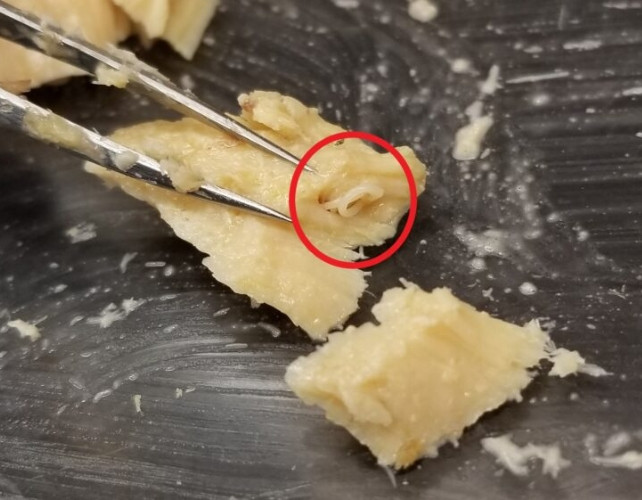
Mastick and her team developed techniques to extract and quantify the parasites. By carefully separating fillets with forceps under a dissecting microscope, they were able to count worm remains per gram of salmon with precision.
The Role of Parasites as Indicators of Ocean Health
Anisakids follow a complex life cycle involving multiple hosts. These parasites start free in the ocean, enter the food web by being consumed by small invertebrates like krill, and subsequently infect fish such as salmon. Their cycle completes inside marine mammals where they reproduce. The mammals then release the eggs back into the water, continuing the cycle.
“The common perception is that finding worms in salmon is indicative of a problem,” Wood explained. “However, the anisakid life cycle involves several crucial components of the food web. Their presence signals that the fish originated from a balanced ecosystem.”
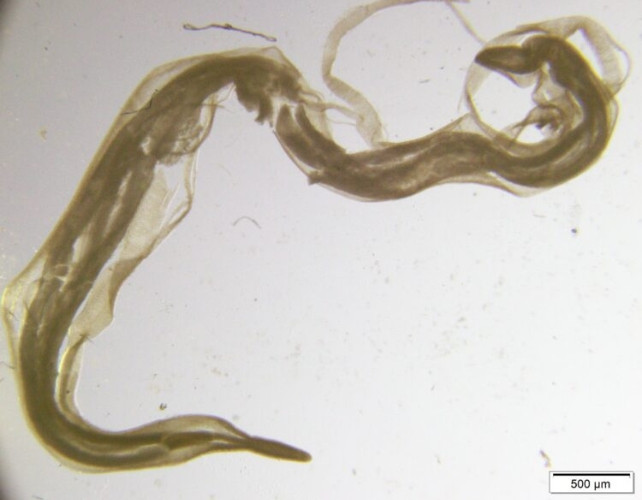
If any host species were to vanish, the parasite’s life cycle would be interrupted, causing their numbers to decline. Healthy ecosystems with abundant krill, fish, and marine mammals support steady or growing anisakid populations. Humans are not suitable hosts for these parasites, and consuming fully cooked infected fish is safe.
Distinct Patterns Observed Among Salmon Species
The study revealed contrasting trends: anisakid frequency increased in pink and chum salmon over time, while remaining stable in coho and sockeye salmon.
Mastick noted the rising parasite numbers in pink and chum salmon likely indicate a robust or recovering ecosystem. “An increase in parasites means they successfully found all necessary hosts to reproduce,” she said, “which points to a balanced or improving marine environment.”
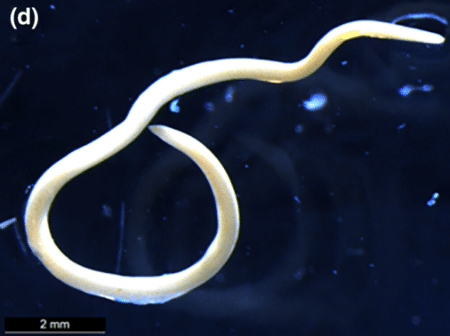
The steady parasite levels in coho and sockeye salmon are less straightforward. The canning destroyed soft worm tissues, complicating species-level identification. “While we confirmed family-level classification, we couldn’t determine exact species,” the researchers stated. Varying host dependencies among anisakid species might explain the differing trends across salmon types.
Impact of Environmental Laws on Marine Parasite Populations
One major factor behind increasing parasite numbers could be the Marine Mammal Protection Act, enacted in 1972, predating the earliest cans studied. This legislation forbade hunting and disturbing marine mammals in U.S. waters and promoted ecosystem-based resource management.
Following the law, populations of seals, sea lions, and whales recovered, providing more hosts necessary for anisakid reproduction. The study period, from 1979 to 2021, coincides with this population resurgence.
Researchers also consider rising ocean temperatures and the Clean Water Act as potential influences on parasite trends.
Unlocking New Research Opportunities from Old Cans
This exploration has attracted fresh funding. In summer 2025, Mastick and Wood secured a grant from the North Pacific Research Board to extend their investigation into historical parasite records through December 2027. They are testing if their approach can be used on other canned fish varieties such as sardines, herring, tuna, and halibut.
For Wood, the project originated from a simple inquiry and an openness to uncover scientific insights in unconventional materials. “Our discoveries depended on building networks and tapping into unexpected sources of historical data,” she reflected.
Global studies quoted in the research estimate that anisakid prevalence in fish has surged by more than 280 times since the 1970s in some regions.
- Categories:
- Science


0 comments
Sign in to Comment