

New analysis has shown that the interstellar comet 3I/ATLAS, officially identified on July 1, 2025, was actually recorded in images from the Vera C. Rubin Observatory nearly two weeks earlier. This discovery, detailed in The Astrophysical Journal Letters, highlights that the comet was active and observable well before its formal recognition, offering valuable insights into the early travel stages of a visitor from beyond our solar system.
Rubin Observatory Captures Comet Ahead of Formal Detection
Prior to the official identification of 3I/ATLAS, the Vera C. Rubin Observatory in Chile had already detected the comet during its science validation phase beginning on June 20, 2025. Data collected on the telescope’s initial night of testing revealed the comet's presence, a full ten days ahead of the discovery made by the Asteroid Terrestrial-impact Last Alert System (ATLAS). Colin Orion Chandler of the University of Washington and collaborators analyzed this preliminary footage through a specialized data processing method, as the observatory’s standard pipeline had yet to be activated.
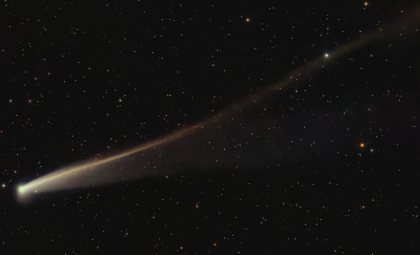
Chandler emphasizes the significance of these findings by saying, “If the Rubin Observatory’s science validation stage had started a bit earlier, its data systems might have officially pinpointed this interstellar visitor first.” During late June and July, subsequent observations from Rubin documented the comet’s active coma—a glowing cloud of dust and gas—as it warmed while approaching the Sun. These results indicate that Rubin may annually detect similar interstellar objects, boosting prospects for its Legacy Survey of Space and Time program.

Collaborative Space Missions Decode Comet's Composition
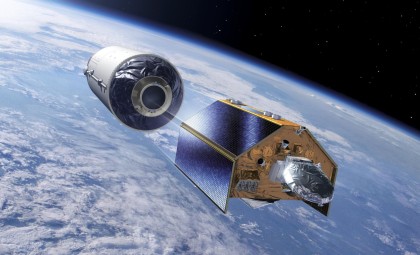
3I/ATLAS has been extensively observed by spacecraft destined for Jupiter, including ESA’s JUICE and NASA’s Europa Clipper. These missions coordinated to study the comet as it passed between their vantage points in late 2025, with JUICE focusing on the comet’s sunlit side and Europa Clipper observing its shadowed hemisphere.
“As the comet passed between JUICE and Europa Clipper, we were able to informally coordinate observations between the two spacecraft,” said SwRI’s Kurt Retherford in a statement.
Ultraviolet spectrographs aboard both spacecraft detected atoms such as hydrogen, oxygen, and carbon emitted when solar radiation broke down the comet’s molecular gases. The comet’s carbon levels were notably higher than those found in typical solar system comets, confirming observations from the James Webb Space Telescope that recorded excess carbon dioxide in its coma. These chemical markers offer scientists a means to contrast interstellar comets against those formed within our own solar neighborhood, helping to understand their origins.
“By studying the ratio of water-ice and dry ice [i.e. carbon-dioxide ice], we can compare the composition of this interstellar comet to comets native to our solar system,” said SwRI’s Philippa Molyneux. “This helps us understand if the solar system where 3I/ATLAS formed is similar to ours or different.”
Clues About a Cosmic Voyager's Journey
Examinations indicate that 3I/ATLAS is an ancient object, with an estimated age between seven and twelve billion years. Its nucleus spans approximately one kilometer, moving at a swift velocity of 140,000 mph (61 km/s). The comet’s rapid speed and unique composition imply it has encountered multiple stars before entering our solar system. Even when hidden from Earth’s view behind the Sun during its perihelion in October 2025, observations confirmed the comet remained active and continued shedding gases.
The combined efforts from the Rubin Observatory, documented in The Astrophysical Journal Letters, alongside data from various space probes, have produced an unprecedentedly detailed profile of an interstellar comet. As researchers delve deeper into the data on 3I/ATLAS, their insights are expected to sharpen future detection and analysis of interstellar visitors crossing our solar system.
- Categories:
- Science





0 comments
Sign in to Comment