
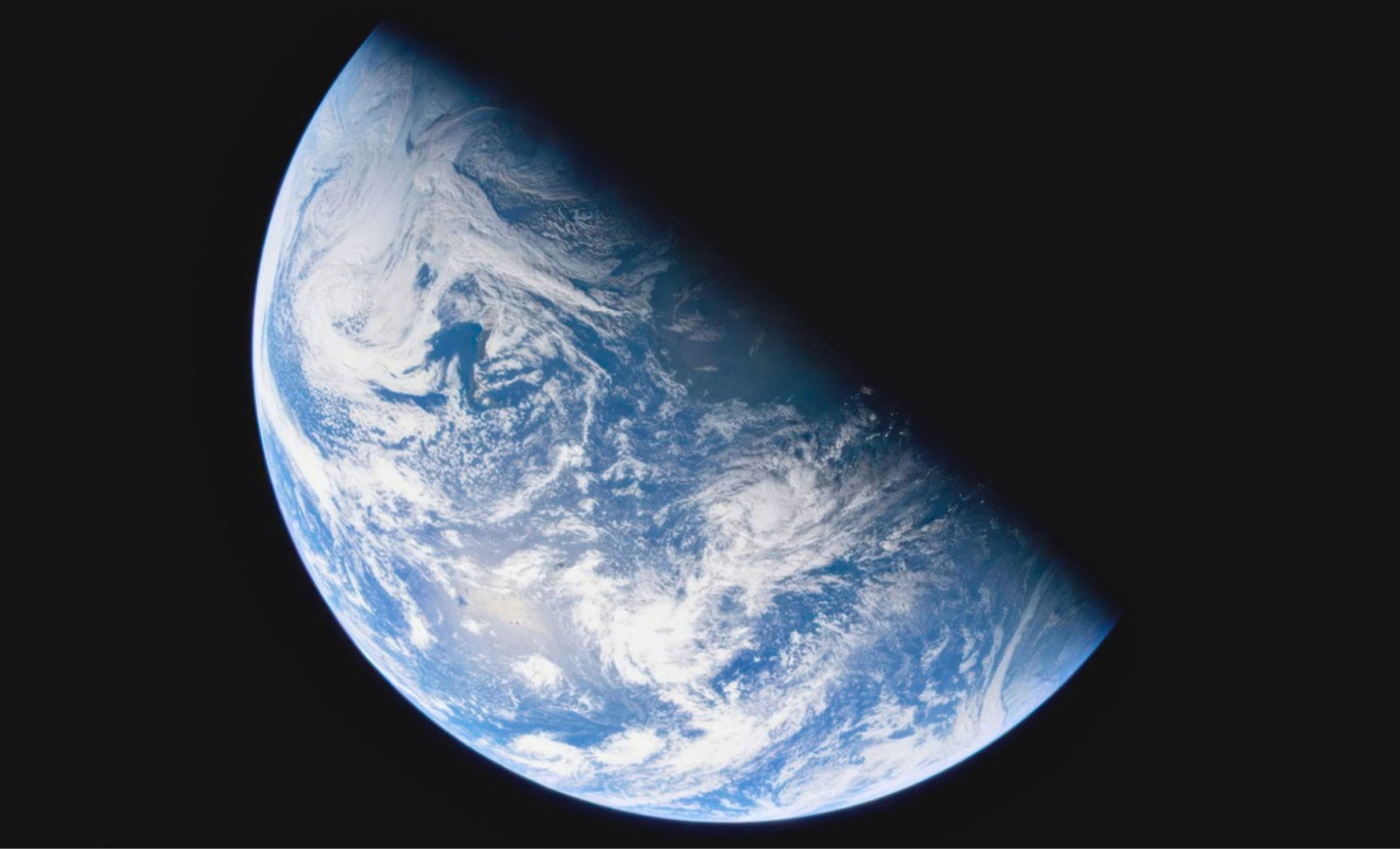
If you hoped to enjoy an extra hour of sleep next Monday, there’s no need to adjust your clock just yet. The idea of a 25-hour day is real but won’t occur for approximately 200 million years. Time remains on our side.
Behind this headline lies a more pressing and surprising reality. Since 2000, the traditional 24-hour day has been lengthening at a pace of 1.33 milliseconds per century. This slowdown isn’t mainly due to the Moon’s gravitational influence as in the past. Instead, melting ice sheets in Greenland and Antarctica are increasingly responsible for reducing Earth’s rotation speed.
“In barely a century, human activity has altered the climate enough to influence the very rotation of our planet,” explained Surendra Adhikari, a NASA Jet Propulsion Laboratory geophysicist and co-author of the recent research.

The Moon’s Influence on Earth’s Spin Is Waning
For billions of years, Earth’s rotation was shaped by gravitational interaction with the Moon. Its tidal forces generate oceanic bulges, which act as brakes when Earth spins beneath them, due to friction with the ocean floor. NASA’s Goddard Space Flight Center provides a detailed explanation here, estimating this process slows Earth by roughly 2.4 milliseconds every century.
Though gradual, this deceleration means it will take around two hundred million years for the day to lengthen by a full hour. This isn’t a calendar event to anticipate but rather a long-term geological trend.
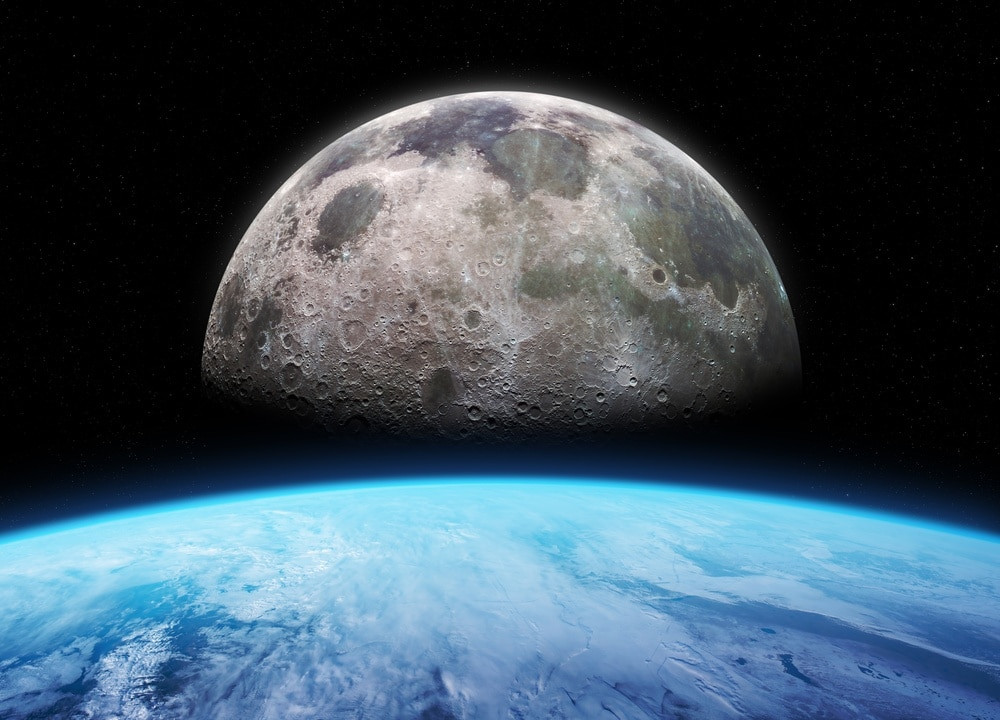
Nonetheless, this age-old pattern is now being altered. A team led by Mostafa Kiani Shahvandi from ETH Zurich examined over 120 years of observations and found that climate-induced mass redistributions are accelerating this slowdown beyond what lunar effects alone could cause.
Ice Melt Changes Earth’s Shape and Spin
Between 2000 and 2018, researchers measured that the day’s lengthening specifically linked to ice melt and groundwater loss was 1.33 milliseconds per century, an increase from less than 1 millisecond per century in the previous hundred years. These insights are from a NASA Earth science publication released in July 2024.
The underlying mechanics are straightforward. As the enormous ice sheets of Greenland and Antarctica melt, the meltwater shifts from the poles toward equatorial oceans. This redistribution causes Earth’s shape to become slightly flatter, which slows its rotation. This effect is similar to how a figure skater extends their arms to spin more slowly.
Satellite measurements from NASA’s GRACE and GRACE-FO missions precisely tracked these mass shifts. Researchers combined that data with historical records dating to 1900 to reconstruct the trend.

The implications are significant. If greenhouse gas emissions continue at the present pace, by 2100, climate-related day lengthening could hit 2.62 milliseconds per century. This means human-driven ice melt will surpass lunar tidal friction as the main factor slowing Earth’s rotation. For the first time, terrestrial forces will outweigh celestial ones in regulating the length of a day.
Why Even Milliseconds Matter Today
Though milliseconds seem trivial, they critically impact technologies like GPS.
GPS satellites calculate position by measuring how long radio signals take to reach receivers. Since light travels about 300 meters in a microsecond, even minimal timing discrepancies due to Earth’s rotational shifts can translate into errors spanning multiple city blocks.

Authorities like the International Earth Rotation and Reference Systems Service publish updates comparing atomic time to Earth’s irregular rotation. Since 1972, the National Institute of Standards and Technology has inserted 27 leap seconds into Coordinated Universal Time to maintain synchronization, with the last addition made at the end of 2016.
The rapid loss of polar ice adds an unpredictable factor to these precision timekeeping challenges. As Adhikari and his colleagues emphasize, Earth’s rotation is now as much a climate issue as an astronomical one.
Earth’s Spin Axis Is Also Shifting
This mass redistribution from melting poles not only slows rotation but also nudges the planet’s spin axis, a phenomenon known as polar motion.
Applying machine learning to a century’s worth of data, scientists concluded that 90% of variations in the axis’ movement stem from alterations in groundwater, ice, glaciers, and sea level. Over the past hundred years, the axis has shifted roughly 30 feet.
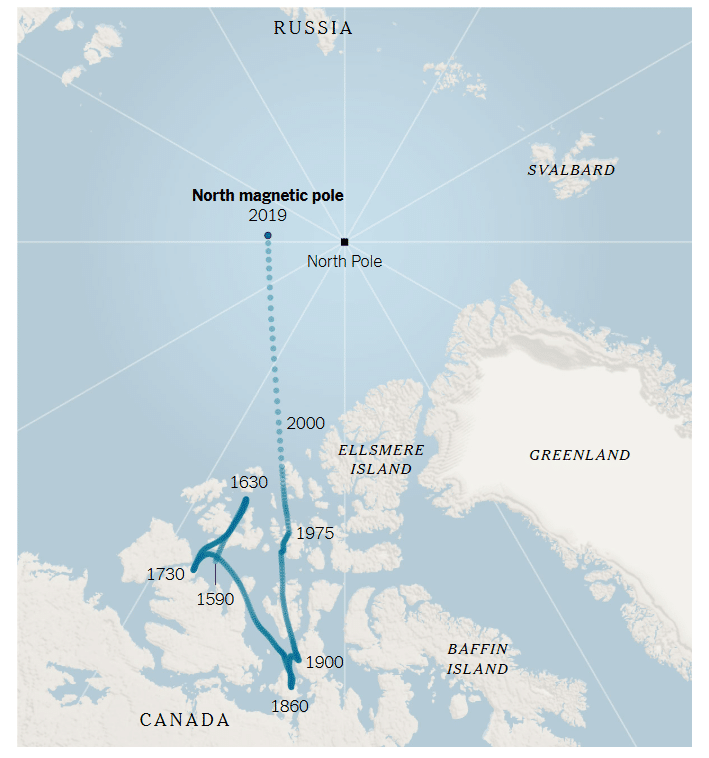
A pronounced eastward shift starting around 2000 aligns with rapid ice melt in Greenland and Antarctica alongside groundwater loss in Eurasia. These findings confirm climate-driven surface mass changes now influence the entire planet.
The Gradual Farewell to 24-Hour Days
A study from the University of Toronto, published in Science Advances, highlights that Earth’s day was remarkably stable for over a billion years at 19.5 hours. This was due to a resonant atmospheric tide driven by the Sun that counterbalanced the Moon’s slowing effect, a delicate balance that ended long before humans existed.
Currently, the day is lengthening unnaturally, driven by human-induced ice mass loss connected to global warming. Eventually, the day will stretch to 25 hours, marking a world affected by forces we are only beginning to fully understand.
For a straightforward comparison of day lengths across planets, visit NASA’s Space Place.
- Categories:
- Science













0 comments
Sign in to Comment