
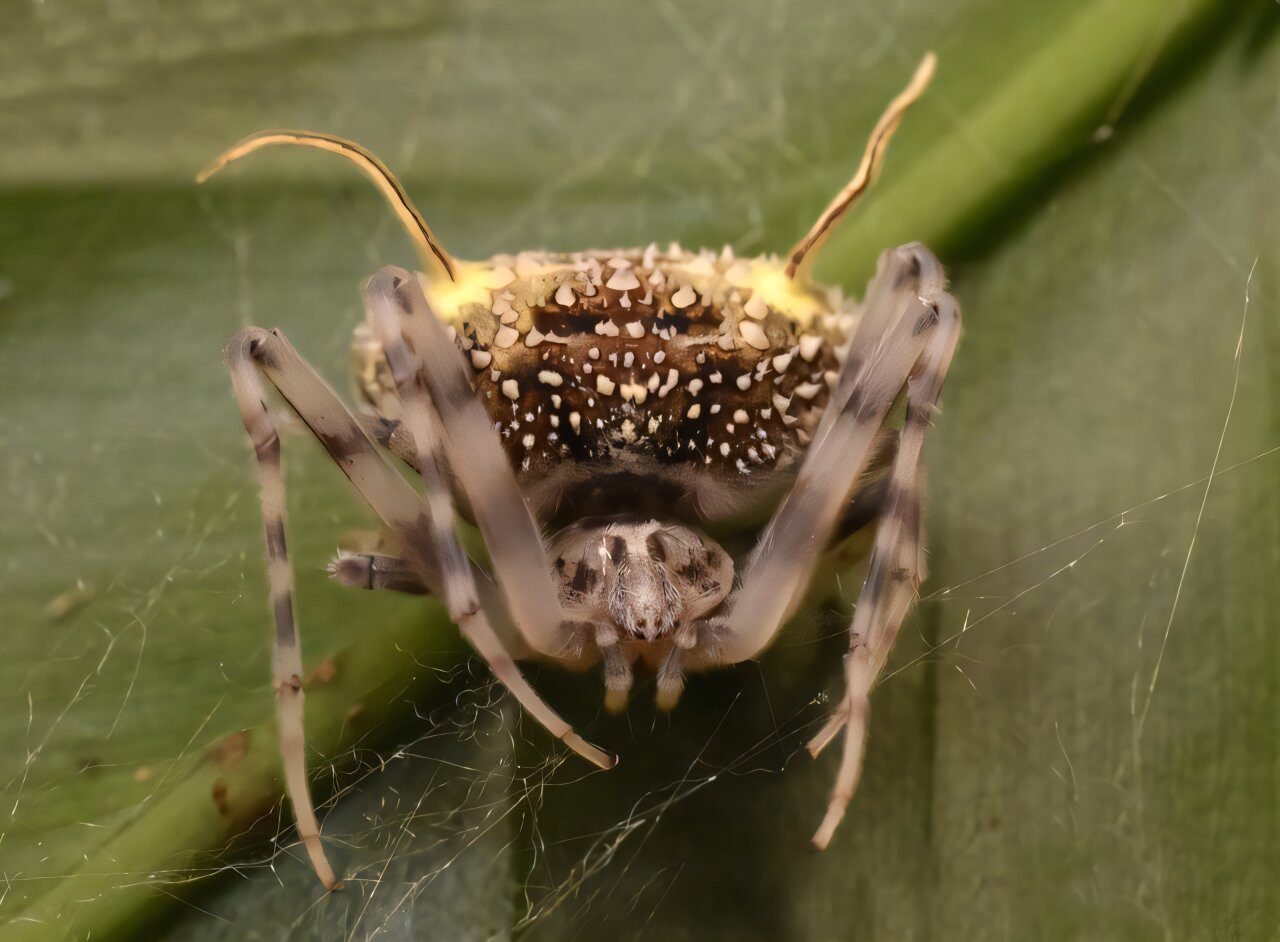
Deep in Ecuador’s Amazon rainforest, researchers have uncovered a spider that astonishingly mimics a parasitic fungus. Discovered during a night field expedition, this master of disguise initially deceived the observers. Its unique camouflage strategy helps it remain undetected while hunting.
The discovery took place within the Llanganates-Sangay corridor, an area celebrated for its diverse ecosystems. At first glance, scientists thought they were looking at a tiny fungus growing beneath a leaf.
Known as Taczanowskia waska, this species is part of a still-mysterious genus. The rarity and the challenges of finding it in the wild explain why it had evaded detection until now, according to research detailed in Zootaxa.

Spider’s Detailed Fungus Imitation
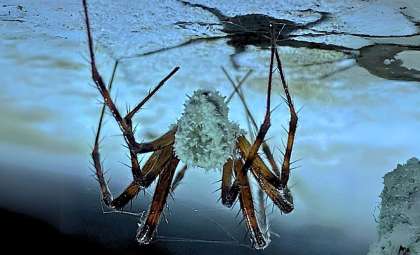
This arachnid closely resembles fungi from the genus Gibellula, fungi known for colonizing spiders. Its abdomen sports extended structures and a pale coating, effectively replicating fungal growth patterns.
Beyond appearance, its behavior is also mimicked: the spider remains motionless beneath leaves, exactly where those fungi typically grow. The study in Zootaxa emphasizes how this fusion of form and behavior creates a convincing illusion that fools other animals.
“The importance of this discovery extends well beyond the description of a novel taxon, representing the first reported case of Arachnid mimicry of an araneopathogenic fungus,” stated the authors.
Evading Threats and Capturing Food
This remarkable camouflage performs a dual function. It keeps the spider safe from predators by blending into a commonly overlooked fungus-like backdrop. At the same time, it allows the spider to ambush prey unaware of the lurking danger.
According to the researchers, this is an uncommon example of mimicry serving two roles simultaneously. The eight-legged predator cleverly conceals itself while enhancing its hunting success.
Citizen Science Leads to This Breakthrough
This revelation began with a post on iNaturalist. Initial observations mistook the organism for a fungus, but later expert analysis confirmed it was a spider.
Biologist Nadine Dupérré, part of the research effort, highlighted the importance of such community-driven sightings. She remarked:
“Finds like these demonstrate the value of scientific collections. They enable us to classify new species and compare them with historical specimens. Combined with international collaboration and citizen science, this opens up new opportunities for researching biodiversity.”
- Categories:
- Science









0 comments
Sign in to Comment