
Archaeologists in Hungary have made an extraordinary find: the graves of three high-ranking warriors estimated to be around 1,100 years old, accompanied by exquisite weaponry and valuable artifacts. Genetic analysis has uncovered a surprising family link among them.
Dating back to the 920s or 930s, the burials occurred during a pivotal era when the Hungarian kingdom was solidifying its position in Europe. Volunteers from the Katona József Museum’s community archaeology program assisted during the excavation, which was directed by Wilhelm Gábor, the museum’s archaeology chief. Their discovery offers an invaluable glimpse into the military traditions and kinship ties that endured for centuries.
Lavish Artifacts Highlight Status and Influence
The warriors’ graves were richly adorned with items indicative of wealth and power. One burial included a saber, bow, and collection of coins, underscoring the individual’s significance. This grave also contained ornate silver jewelry, including a gold ring embedded with blue glass gems and finely worked silver bracelets.

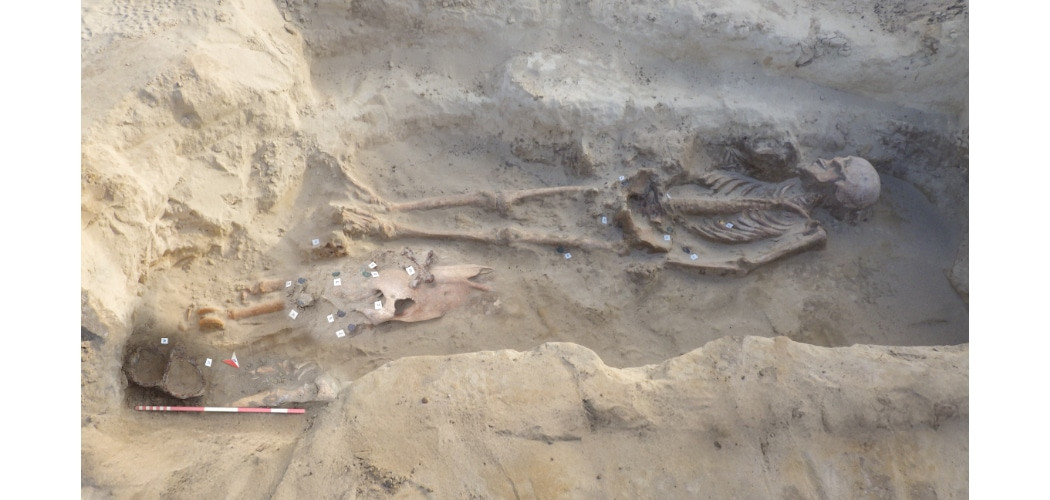
The Pulszky Society-Hungarian Museum Association noted that these items point to the buried individual’s role as a likely leader both militarily and socially.
Another young warrior, estimated to be about 15 or 16 years old, was laid to rest with a quiver holding seven arrows and an exquisitely decorated bow, reflecting his high social ranking even at a tender age. Meanwhile, the third warrior, who died between 30 and 35 years old, was buried with similar prestigious objects—including a horse harness embellished with gilded silver.
Tracing Family Bonds Through Ancient DNA
The most captivating aspect of this excavation is the DNA evidence revealing that the three men were probably relatives. Genetic tests indicate that the elder warrior may have been the father or brother of the younger warrior associated with the bow. This discovery hints that these warriors could have fought together on the battlefield.
Researchers also found that kinship was traced through their paternal line, emphasizing the importance of family loyalty in preserving military and social standing, as demonstrated by their burial sites.
The Warriors’ Diet: Insights from Isotope Studies
Isotopic examination of the remains revealed that these warriors consumed diets high in animal protein, a luxury at the time. Archaeologists suggest this reflects their privileged access to superior nutrition.
While everyday people likely had limited food options, these warriors enjoyed a rich diet befitting their status as elite fighters. Studies are ongoing to gain a clearer understanding of their individual identities, although the circumstances of their deaths remain uncertain.
“It can be stated that an elite warrior group, presumably members of a military leadership, were buried here,” the researchers wrote.
- Categories:
- Science








0 comments
Sign in to Comment