

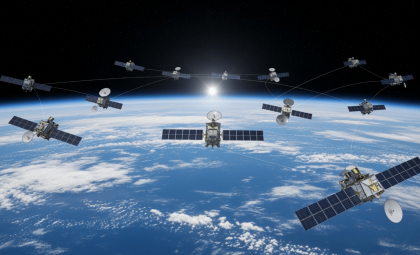
Elon Musk and SpaceX are pioneering a transformative initiative with plans to deploy an enormous fleet of artificial intelligence-equipped satellites. As reported by Space.com, this vast network of spaceborne data hubs aims to significantly enhance global computing power by harnessing the unique environment of orbit. This groundbreaking project has the potential to revolutionize AI deployment on a planetary scale while advancing satellite technology to new heights.
Creating Advanced AI Satellite Networks
The vision includes satellites fitted with high-efficiency solar panels, cutting-edge heat dissipation systems, and rapid laser communication networks to establish a powerful orbital computing platform. Musk revealed that a dedicated manufacturing facility will soon be producing these AI satellites at scale, stating, “If anyone is interested in working on AI satellites, this will become the primary hub.” This centralized approach is designed to speed up production and foster collaboration among developers and scientists focused on AI applications in space.
The initiative builds upon the technological foundation of the existing Starlink V3 satellites, which Musk highlighted as already encompassing many required features. He stated, “Most of this tech is derived from what we’ve done with Starlink V3.” Utilizing proven components is essential to supporting the envisioned constellation, which could reach up to one million satellites, demanding advancements in orbital management, energy efficiency, and onboard computing capacity.

Watch @ElonMusk provide a technical update on SpaceX’s capability to manufacture, launch, and operate AI satellites at scale → https://t.co/PSCyWrNsOg pic.twitter.com/vhtr46uax7
— SpaceX (@SpaceX) June 8, 2026
Powering an Orbital AI Computing Grid
Each satellite is engineered to deliver up to 150 kW of peak power, with steady output around 120 kW, sufficient to support extensive computing arrays in orbit. These satellites will link via laser communications, creating a rapid, low-latency network capable of transmitting data across vast distances. Connectivity with Earth will be maintained through antennas or optical links, enabling immediate interaction between space-based AI and terrestrial systems.
This bold project addresses key challenges faced by Earth-bound data centers, such as space constraints, high energy use, and environmental impact. Elevating computing to orbit offers a scalable alternative free from terrestrial limitations, with potential applications spanning scientific research, finance, and worldwide communications, as noted by SpaceX.
Mitigating Orbital Traffic and Ensuring Safety
Though concerns about overcrowding in low Earth orbit exist, Musk is optimistic about managing such a vast constellation safely. “Space is immense, so even with thousands or potentially a million satellites, there’s ample room to maneuver,” he remarked. SpaceX’s extensive experience operating Starlink’s >10,000 satellites supports their confidence. “We’re the only operator with the expertise to manage constellations of this magnitude safely,” Musk added.
This operational knowledge gives SpaceX a strategic edge, underpinning plans to build a safe, sustainable orbital AI ecosystem. The company’s ambitions extend beyond technology to include integration with other ventures like Starship launches and xAI development.
Transforming AI Through Orbital Infrastructure
SpaceX’s plan to relocate AI processing to space heralds a revolutionary shift in computing paradigms. This fusion of space technology and AI innovation could enable unprecedented global applications unattainable with current Earth-based infrastructure. With investors and scientists eager to watch, SpaceX’s development of AI satellite tech may soon position orbital computing as a cornerstone of the future global AI landscape.
- Categories:
- Space









0 comments
Sign in to Comment