
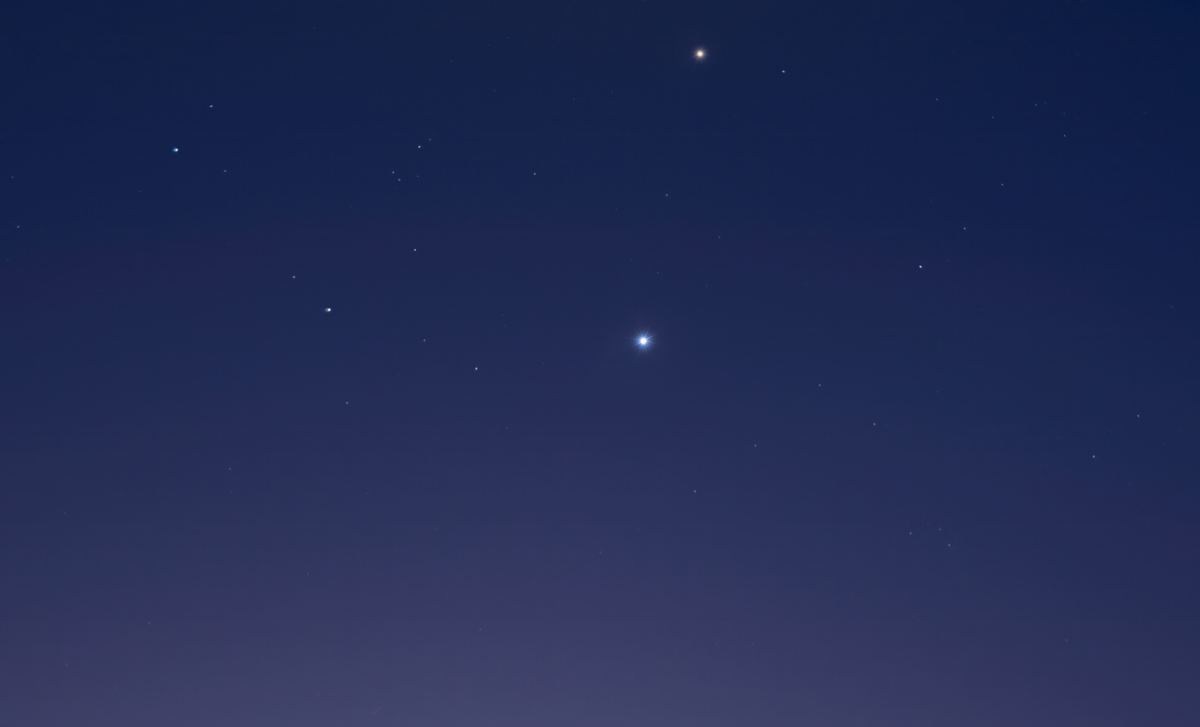
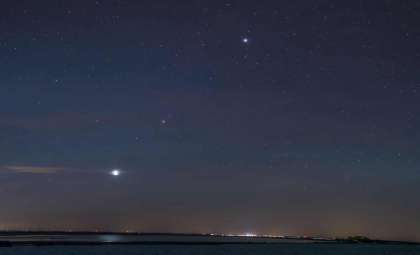
This evening presents an exceptional chance for skywatchers worldwide to observe a captivating planetary lineup featuring Mercury, Venus, and Jupiter forming a striking arrangement above the western skyline shortly after dusk. This celestial showcase offers both stunning views and excellent photography moments, though it will be visible only for a brief period, rewarding those with a keen eye and proper timing.
What’s Behind This Cosmic Alignment?
The trio aligns along the ecliptic plane, with Venus leading the formation, trailed by Mercury and then Jupiter. Over recent days, Venus and Jupiter have gradually moved apart since June 9, but Mercury has now emerged from the sun’s dazzling glare to join them. According to Space.com, the best opportunity to see this planetary parade is within 30 to 45 minutes after sunset, before the planets dip below the horizon. The fleeting nature of the event makes precise timing crucial for observers aiming to catch the complete show.
Guidance for Sky Enthusiasts and Amateur Astronomers
Star seekers equipped with telescopes have more to enjoy than just the vivid lineup. Venus appears as a bright gibbous shape, about 80% illuminated, while Mercury displays a rare half-moon phase, a challenging but rewarding sight during twilight. Jupiter, larger in apparent size, might reveal subtle details of its characteristic cloud bands under good atmospheric conditions. Observers should consider atmospheric turbulence and the planets’ low positions near the horizon for an optimal view. Even simple binoculars can enhance the experience by sharpening the celestial spectacle against the twilight backdrop.

Capturing the Moment: Tips for Night Sky Photos
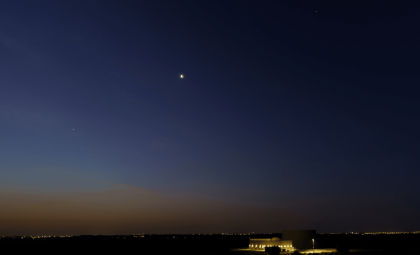
Photographers don’t need telescopes to record this event; a 50 mm to 85 mm prime lens attached to a DSLR or mirrorless camera will suffice. This planetary lineup suits landscape astrophotography, inviting shutterbugs to frame the planets alongside natural or urban silhouettes, crafting a "cosmic ladder" effect in the dusk. Balancing exposure to capture both the fading colors of the twilight sky and the bright planetary disks will yield the most impressive images. As Space.com highlights, June 12 provides a unique opportunity to photograph this rare alignment with standard gear.
The Significance of This Celestial Event
Alignments of planets like this offer more than just a visual delight—they serve as accessible windows into understanding the solar system’s dynamics. These phenomena provide an educational platform for learning about planetary phases, brightness variations, and spatial geometry. For many, observing the contrast between Mercury’s half-moon and Venus’s gibbous shape presents both a scientific challenge and a rewarding observational milestone, enhancing appreciation for astronomical mechanics.
Important Tips for Observing the Alignment
The dazzling planetary grouping demands careful planning. Viewers should face the west-northwest horizon just after sunset, ensuring an unobstructed outlook free from trees or buildings. The viewing window is brief, approximately thirty to forty-five minutes, so being prepared is essential. Photographers should consider including familiar landscape elements to add depth and context, transforming the bright planetary points into an evocative cosmic narrative.
- Categories:
- News


0 comments
Sign in to Comment