
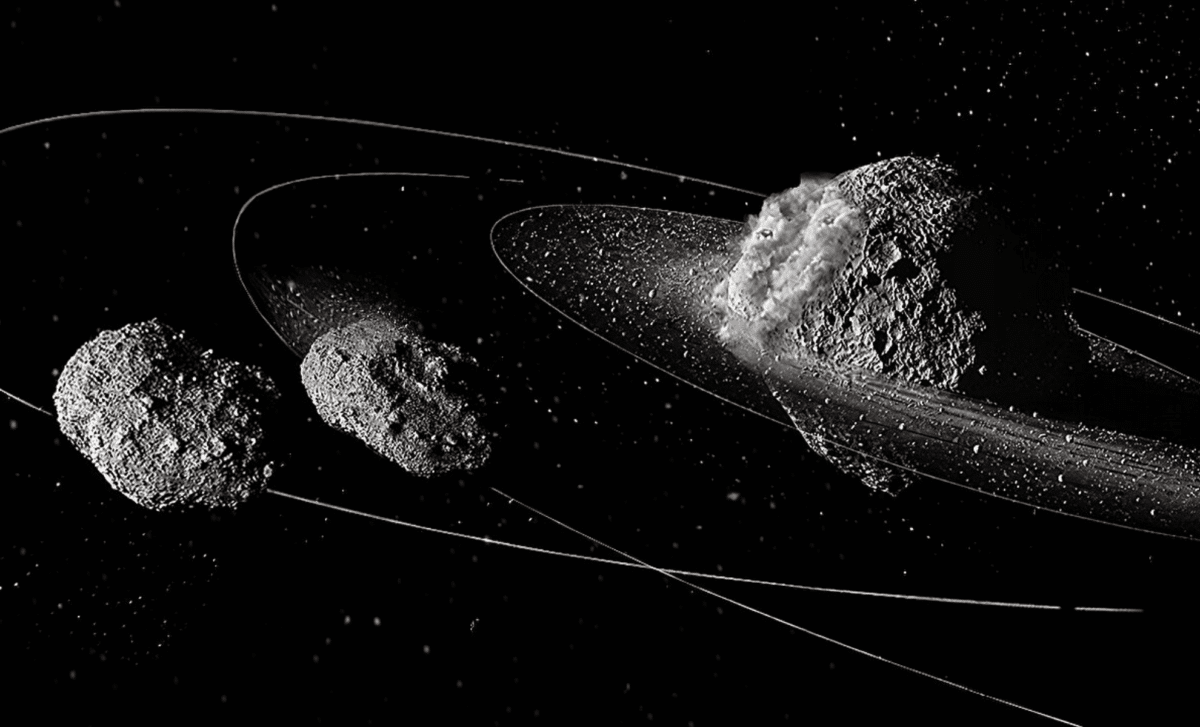
Many well-known solar system bodies are concealing surprising complexities. Binary asteroids, previously believed to host just a single moon, are showing intricate pasts involving satellites that collide, fuse, and evolve over millions of years. A notable case is Selam, the two-lobed moon orbiting Dinkinesh, uncovered by NASA’s Lucy mission. Its distinct form and orbit challenge long-standing ideas about asteroid moon formation. New findings featured in Nature Communications propose a model to decode these enigmatic structures, suggesting that multi-satellite evolutions might be far more widespread than once thought.
Unraveling the Enigma of Contact Binary Moons
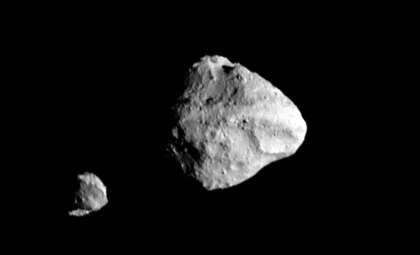
The traditional view of binary asteroids—where a smaller satellite circles a larger primary—held that fast-spinning asteroids eject material that forms a single moon near the Roche limit. This view was upended when NASA’s Lucy spacecraft studied Dinkinesh and its satellite Selam. Instead of a lone moon, the satellite appears as a contact binary, consisting of two nearly equal lobes orbiting much farther out than classical models predict. This raised questions about the origins of such satellites and why some asteroid systems are far more complex than formerly believed.
Successive Mass-Shedding Cycles
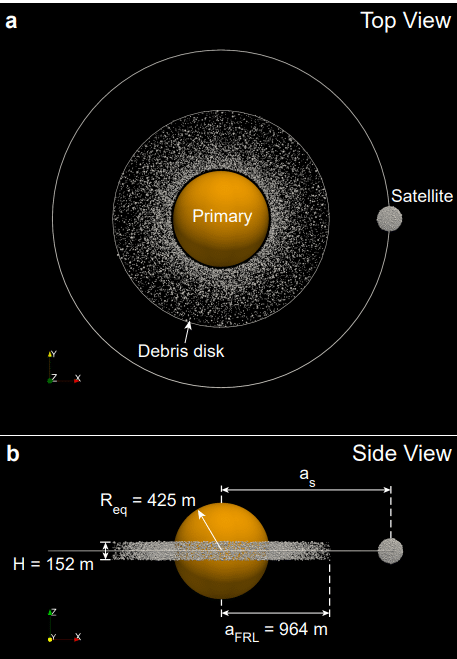
To tackle this question, scientists examined how rubble-pile asteroids evolve over long timescales, far exceeding the duration of their individual mass-shedding episodes. Simulations showed that an asteroid might experience multiple shedding phases separated by millions of years, generating new satellites that interact gravitationally with existing moons. Older satellites can move outward due to tidal or thermal influences, leading to encounters—sometimes collisions—with newly formed moons. This successive shedding process naturally explains why some satellites form contact binaries or display unusual orbital properties.

Satellite Evolution Driven by Interaction Regimes
Through sophisticated N-body simulations, researchers distinguished three key evolutionary paths for binary asteroid configurations. The “interaction regime” stands out as especially influential. Here, when an older satellite has migrated to an intermediate orbit, fresh debris can impact or gravitationally engage it, causing tidal breakups, gentle mergers, and gravitational perturbations. This intricate dance produces a variety of shapes and orbits, such as the double-lobed structure of Selam, which aligns perfectly with this regime’s dynamics.
Corroborating Evidence Across Asteroid Systems
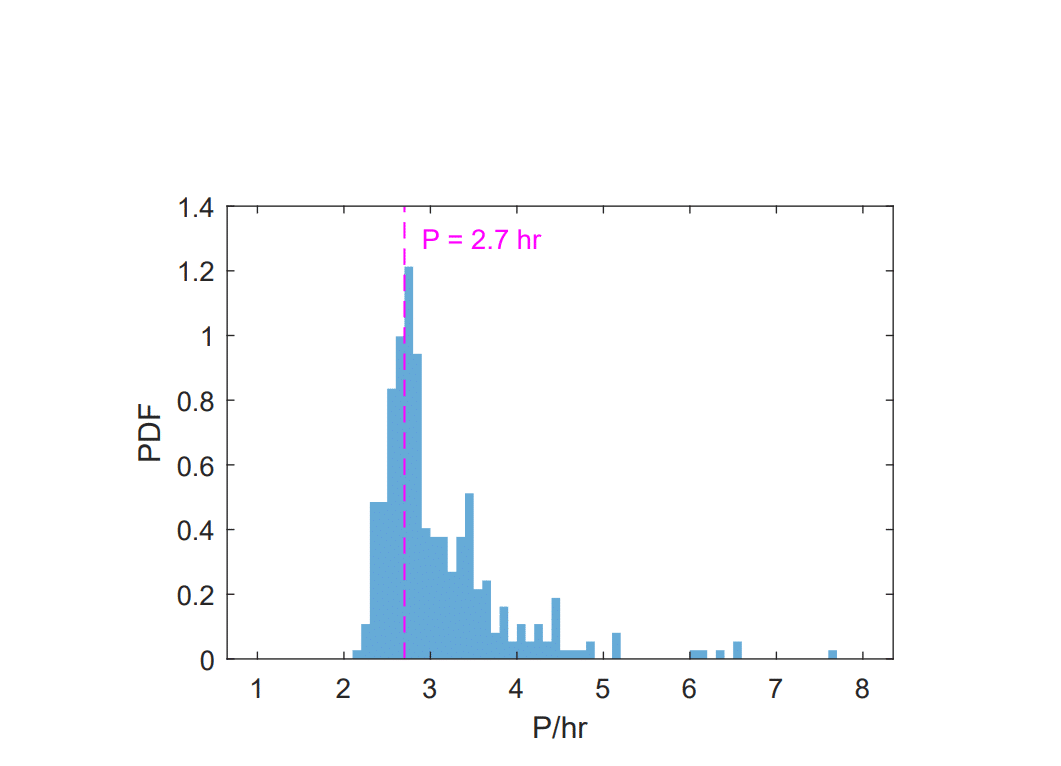
The analysis published in Nature Communications goes beyond Dinkinesh, spotlighting other celestial bodies with comparable multi-event pasts. Triple systems like 2001 SN263 and Balam may have originated through repeated shedding and satellite interactions. Likewise, active asteroids such as 311P/PANSTARRS, which undergo frequent minor material ejections, may exhibit related tidal disruption patterns on a smaller scale. Researchers estimate nearly 44% of observed binary asteroid systems show evidence for a multigenerational satellite history, highlighting the commonality of these phenomena throughout the inner solar system.
- Categories:
- Astronomy




0 comments
Sign in to Comment