
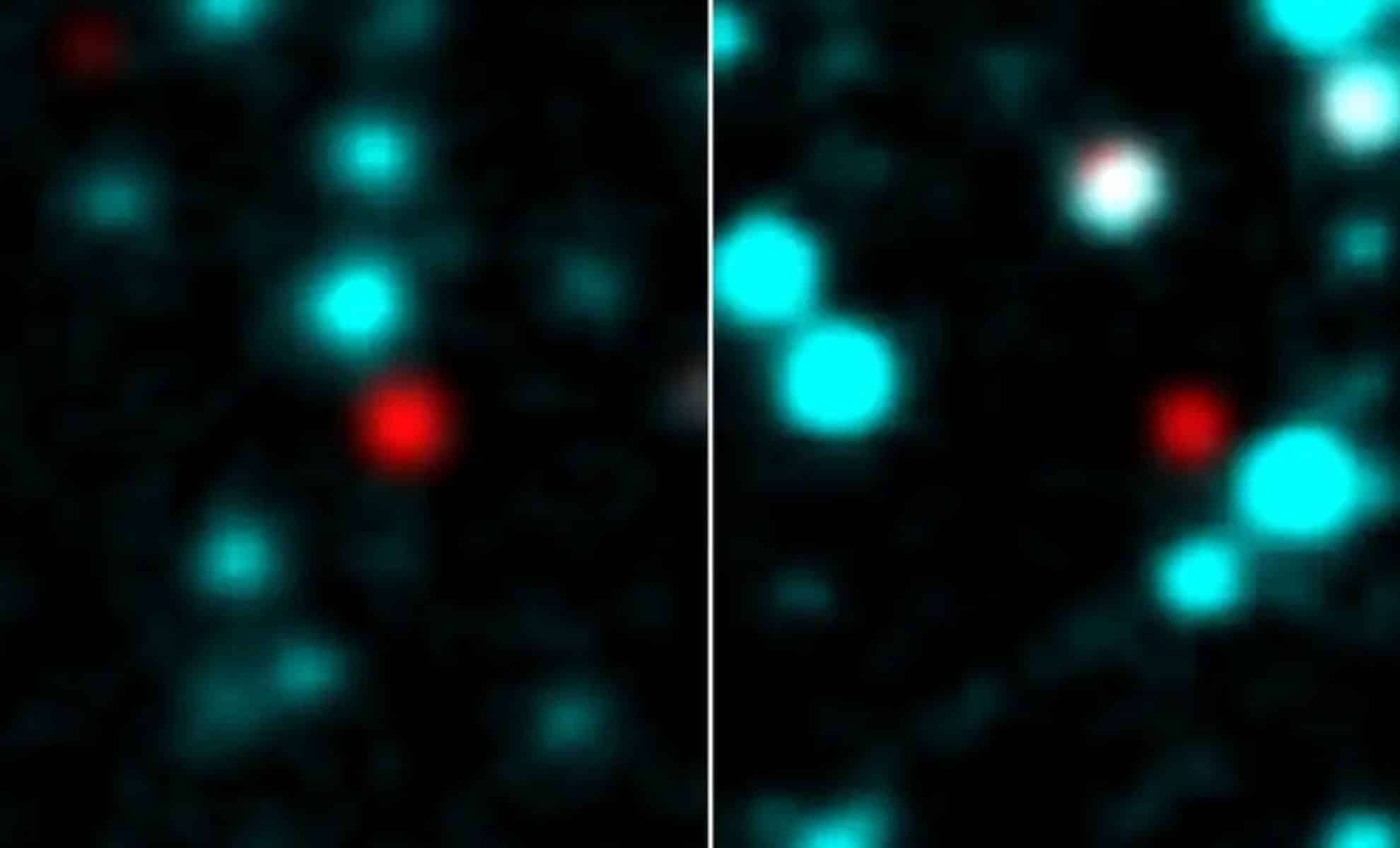
Researchers studying the Milky Way have uncovered two baffling objects, dubbed ‘frozen spheres,’ that challenge existing models of how stars develop. Initially spotted in 2021 by a team from Japan using the AKARI space telescope, these objects possess unusual traits unlike any known cosmic bodies. Although they emit infrared radiation similar to stars, their significant ice composition and secluded locations defy established star formation theories.
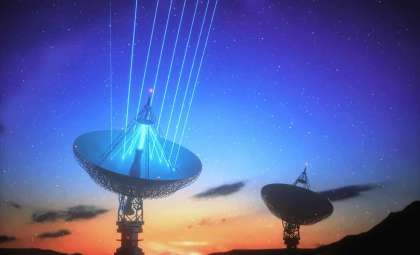
Observations conducted with the powerful Atacama Large Millimeter/submillimeter Array (ALMA) in Chile have deepened the mystery by revealing new details about their makeup and dynamics. These findings suggest that these frozen spheres might represent an entirely new class of celestial phenomena. Continued examination could provide groundbreaking insights into the processes governing the evolution of our universe.
Anomalous Features Defy Current Understanding
The newly identified frozen spheres present scientists with puzzling, seemingly contradictory attributes. While they emit infrared light typical of stars, their surfaces are enveloped in thick deposits of ice, a condition uncommon in typical stellar formation environments. Usually, stars are born within dense clouds of gas and dust that collapse under gravity, generating heat and radiation as nuclear fusion ignites. These icy spheres, however, are found in remote regions, far removed from active star-forming zones.

The objects differ in size, spanning from the scale of our Solar System up to ten times larger. Their chemical make-up contains compounds like carbon monoxide and silicon dioxide, substances frequently detected in emissions from young stars. Yet, the extraordinary abundance of ice points to cooler and more stable conditions than those normally associated with stellar birth.
Professor Jane Greaves, an astronomer at the University of Cardiff, described the phenomenon as "a captivating discovery, though perplexing. These two bodies simultaneously have enough cold to preserve ice but also emit infrared light characteristic of stars.”
Distant Galactic Locations, Shared Traits
These frozen spheres are situated in vastly separate locations within our galaxy, separated by tens of thousands of light-years. One is positioned in the Crux-Scutum Arm, about 30,332 light-years from Earth, while the other lies within the Carina-Sagittarius Arm, roughly 43,704 light-years distant. Despite this spatial gulf, both display strikingly similar spectral and infrared signatures.
This resemblance prompts critical questions regarding their origins. Could they be members of a widespread yet hidden category of objects dispersed throughout the Milky Way? Or do they stem from an uncommon cosmic event? Dr. Takashi Shimonishi, leading the study at Niigata University, noted, “Despite extensive efforts, we have yet to find any theoretical models that successfully replicate these spectral energy distributions.”
ALMA’s Role and Prospects for JWST
The enhanced sensitivity and resolution of ALMA were crucial in capturing detailed observations of these frozen spheres. By studying emissions at millimeter wavelengths, researchers gained clearer insight into their physical structures, chemical makeup, and temperature patterns. Data imply these objects may have undergone rare or turbulent cosmic incidents, possibly involving interactions with nearby stars or galactic phenomena.
Recognizing the significance of these findings, Dr. Shimonishi's team has requested additional observations through the James Webb Space Telescope (JWST). JWST’s exceptional sensitivity and spectral resolution will allow for in-depth analysis of the ice and dust components, potentially revealing the thermal history and formation pathways of these enigmatic objects. “JWST’s capabilities will enable detailed scrutiny of ice and dust chemistry, offering clues to the source’s past conditions,” Shimonishi explained.
Broader Consequences for Star Formation Theories
The existence of these frozen spheres challenges traditional beliefs about the environments necessary for star production and galactic development. The high concentrations of ice suggest a formation process occurring under colder, more stable circumstances than previously considered viable for star creation.
Upcoming research will aim to unravel several key issues, including:
- Origin Processes: What unique circumstances gave rise to these unusual objects?
- Distribution Scope: Are these frozen spheres isolated phenomena or part of a larger, undetected galactic population?
- Material Components: How did they accumulate their distinctive blend of substances?
Scientists anticipate these discoveries will illuminate previously unrecognized mechanisms operating within our galaxy and beyond.
Opening New Horizons in Space Research
This discovery underscores the vital role of sophisticated instrumentation and global partnerships in advancing our grasp of the cosmos. As observatories like ALMA and JWST continue to furnish unprecedented data, astronomers stand on the brink of transformative breakthroughs that could reshape our understanding of astrophysical processes.
“These two bodies point towards phenomena we have yet to fully comprehend,” Dr. Shimonishi reflected. “It’s an exhilarating era for cosmic exploration, as findings like this highlight how much remains to be discovered.” While awaiting further JWST data, these frozen spheres remain a captivating cosmic mystery, hinting at hidden forces molding our galaxy.
- Categories:
- Space





0 comments
Sign in to Comment