
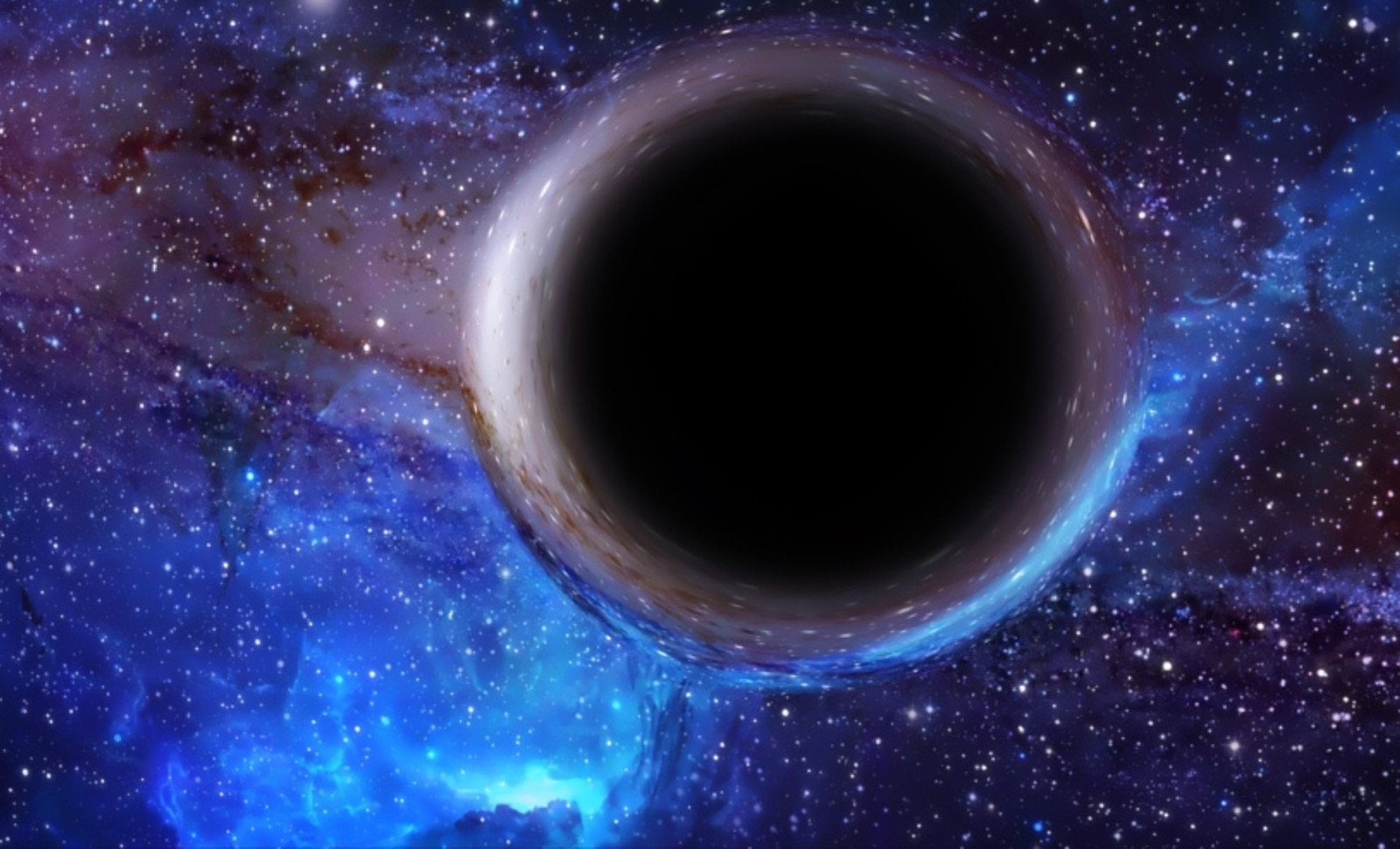
Scientists exploring a distant region of the universe have uncovered an extraordinary molecular signature, revealing a complexity rarely observed at this scale.
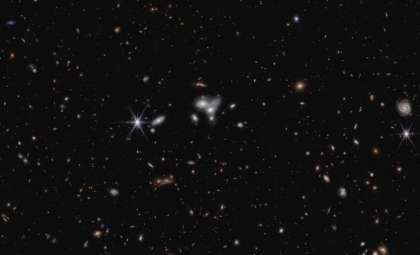
This signal arises from a cosmic object located over 12 billion light-years away, dating back to an era when the cosmos was still in its infancy. Although astronomers have studied this source for years, recent observations have unveiled astonishing new details.
Using data from various global observatories, researchers confirmed the existence of a well-known—but remarkably abundant—substance, found under conditions once believed too harsh to support such molecules. This finding challenges existing ideas about how key chemical ingredients emerged in the early universe.

A Gigantic Water Cloud Revealed
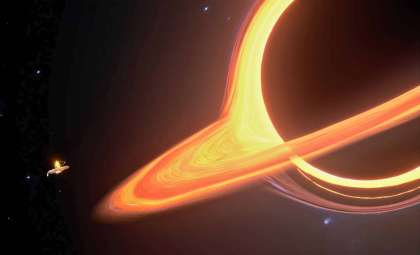
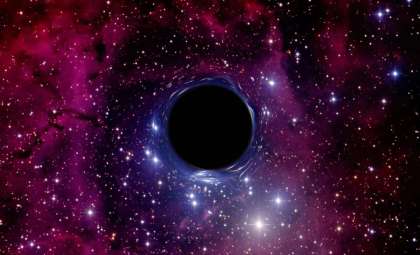
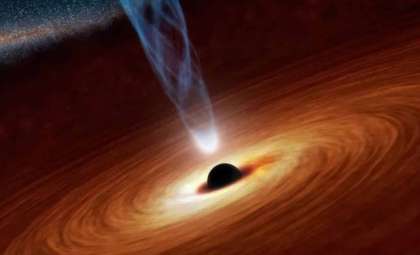
The focus of the discovery is the quasar APM 08279+5255, an intensely bright galactic core powered by a supermassive black hole estimated to have a mass 20 billion times that of our Sun. Quasars rank among the brightest and most powerful objects in space, typically residing at the center of faraway galaxies.
Situated so extremely far away, the light from APM 08279+5255 began its voyage toward Earth when the universe was less than 10% of its current age—more than 12 billion years ago. Despite this distance, it has remained a focal point due to its extreme brightness.
Recent studies led by experts at NASA’s Jet Propulsion Laboratory and Caltech have disclosed that an enormous cloud of water vapor envelops this quasar. The sheer volume is mind-boggling, matching the equivalent of 140 trillion times the total water volume of Earth’s oceans.
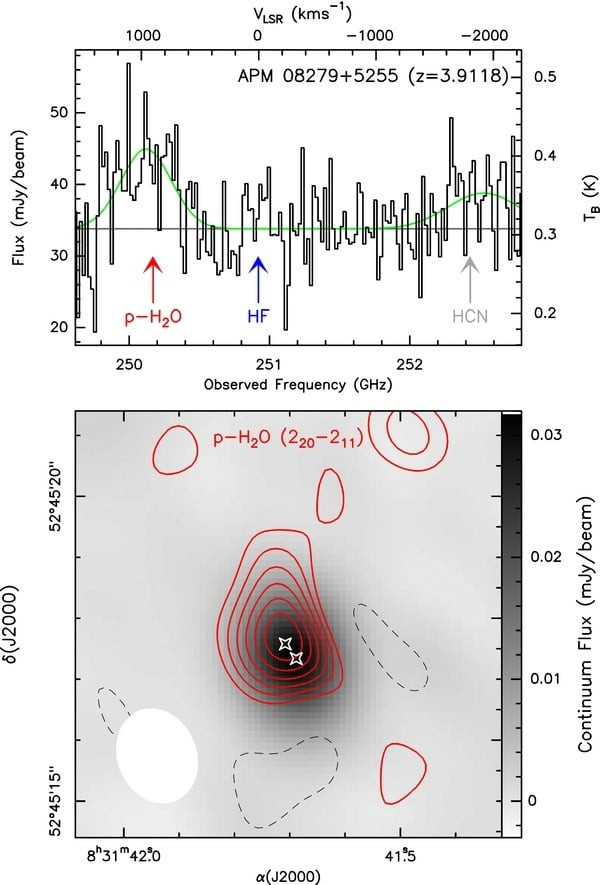
The water detection was verified using multiple instruments, including the Z-Spec spectrometer at the Caltech Submillimeter Observatory in Hawaii, and the Combined Array for Research in Millimeter-Wave Astronomy (CARMA) in California. Additionally, a team led by Caltech scientist Dariusz Lis first observed a water signature in 2010 employing the Plateau de Bure Interferometer in France.
Unusual Environmental Conditions
The environment surrounding the quasar where this vast water vapor exists differs significantly from typical molecular gas regions. These surroundings endure intense radiation, powerful gravitational forces, and elevated temperatures.
Analysis indicates the water-rich clouds maintain a temperature near minus 63 degrees Fahrenheit. This looks cold by Earth measurements but is considerably warmer and denser than comparable gas in the Milky Way or nearby galaxies. Although the gas density is about 300 trillion times less than Earth’s atmosphere, it is still notably dense for such a remote cosmic setting.
Alongside water, scientists also found carbon monoxide, a common molecule used to trace interstellar material. The coexistence of both suggests this region harbors chemically rich matter that could drive black hole activity, ignite star birth, or spread across its host galaxy.
This discovery contrasts with prior beliefs that water in space primarily forms within cold, quiet molecular clouds that support star formation. Instead, this quasar’s vicinity reveals a far more active, energetic environment, as detailed by Earth.com’s report.
Implications for Cosmic Water Formation
Detecting abundant water so early in the cosmos challenges long-standing views about when complex molecules appeared. Most astronomers linked such development to mature, stable galaxies.
Finding water in such vast quantities and at this epoch suggests that interstellar chemical processes emerged under broader conditions than formerly expected. It also hints that the essential ingredients for potentially habitable environments formed earlier and more frequently in cosmic history.
Quasars like APM 08279+5255 offer unique insights into the early universe’s structure and dynamics. Their remarkable brightness enables examination of gas flows, chemical enrichment, and the assembly of galaxies from vantage points otherwise unreachable.
While this detection does not signify life or planetary systems nearby, it proves that elements important for life existed within the first billion years after the Big Bang.
Next Steps and Future Research
The research team included scientists from JPL, Caltech, University of Colorado Boulder, University of Maryland, University of Pennsylvania, and Japan’s Institute of Space and Astronautical Science. Funding came from the National Science Foundation, NASA, and partner organizations.
Key to the discovery were instruments sensitive to submillimeter wavelengths, which lie between radio and infrared light and are ideal for detecting redshifted molecular signals from distant sources.
The Z-Spec spectrometer, capable of capturing faint molecular light such as water, was vital in revealing multiple water emission lines that confirmed both the presence and enormous scale of the water reservoir.
Upcoming observations, including those by the James Webb Space Telescope, promise to expand such discoveries by targeting other quasar systems and earlier cosmic epochs, refining our understanding of black hole growth, interstellar chemistry, and processes shaping the early cosmos.
- Categories:
- Space



0 comments
Sign in to Comment