

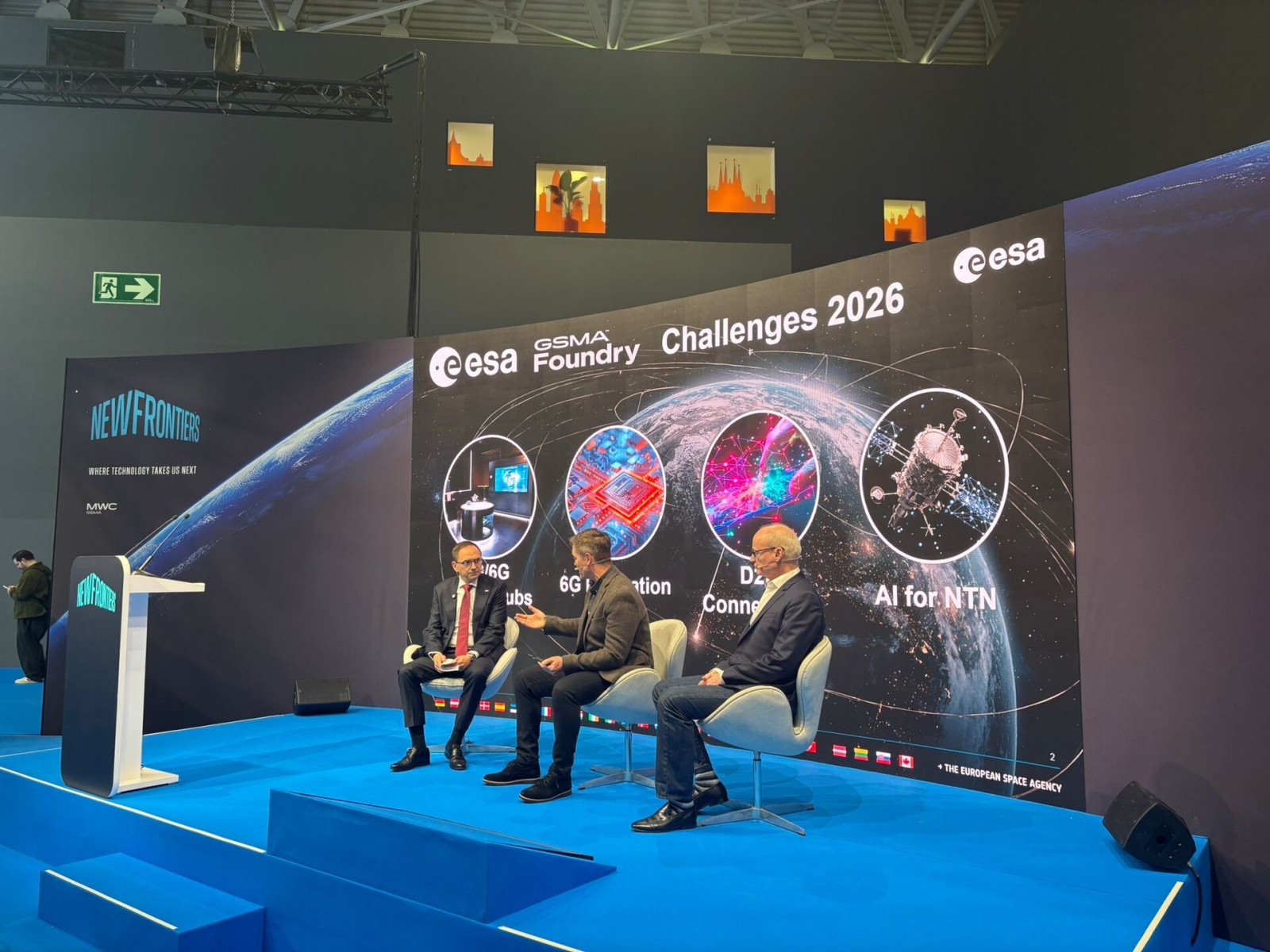
The European Space Agency (ESA) together with GSMA Foundry have announced a fresh series of challenges designed to revolutionize global communication. Backed by a funding pool of up to €100 million, this effort aims to close connectivity gaps by merging satellite and terrestrial networks. Revealed at the 2026 Mobile World Congress in Barcelona, this funding initiative is a major stride toward achieving uninterrupted global coverage. The program prioritizes novel technologies such as AI-assisted networks, direct satellite-to-device links, and pioneering work on 6G frameworks.
ESA and GSMA Foundry Partnership: Redefining Global Connectivity
The core of this ambitious program is the collaboration between the ESA and GSMA Foundry, two leading organizations driving progress in communication technology. Through targeted investments, their mission is to unite satellite systems with mobile networks to form seamless hybrid connections, ensuring continuous coverage worldwide. This alliance was enabled by steadfast backing from ESA’s Member States, particularly showcased during the ESA Council at Ministerial Level (CM25). Laurent Jaffart, ESA’s Director of Resilience, Navigation, and Connectivity, highlighted the importance of this partnership, stating,
“Our Member States’ unwavering support in our programmes, particularly during the ESA Council at Ministerial Level (CM25), has made this collaboration with GSMA Foundry possible.”
Add Cosmo Herald as a Preferred Source

This joint effort signifies a major advancement for Europe’s telecommunications and aerospace sectors. By funding projects centered on artificial intelligence (AI) in satellite communications, direct satellite-to-device connectivity, and the integration of 5G/6G networks, ESA and GSMA Foundry are charting a course toward breakthrough innovations in connectivity. This program not only encourages technological advancement but also fosters a more inclusive digital future. It aligns with ESA’s overarching vision to establish a unified global 6G network infrastructure.

Hybrid Networks: Closing the Connectivity Gap
Reliable network access remains a challenge for numerous regions worldwide. Remote and underserved communities often face limited mobile coverage, restricting education, healthcare, commerce, and emergency response capabilities. By blending satellite and terrestrial systems, ESA and GSMA Foundry strive to solve these connectivity barriers. The program outlines four critical challenges to harness the potential of hybrid networks:
AI in Non-Terrestrial Networks (NTN): Artificial intelligence will enhance coordination between satellites and ground networks. It will optimize resource distribution, boost transmission speeds, and enable adaptive responses to network congestion. AI is essential for building robust networks capable of efficiently managing growing data traffic and dynamic conditions.
Direct-to-Device (D2D): A standout feature of this initiative is the D2D challenge, allowing smartphones to connect straight to satellites without relying on ground infrastructure. This approach ensures stable connectivity in remote locations and emergency situations. By reducing dependence on physical towers, D2D enables service in previously unreachable areas, further narrowing the digital divide.
5G/6G Hubs: New hubs for 5G and 6G will facilitate integration and testing alongside satellite networks. These hubs will address practical applications such as autonomous vehicles, intelligent urban environments, and supply chains. ESA’s European Centre for Space Applications and Telecommunications in Harwell, UK, exemplifies these hubs, demonstrating the synergy of hybrid 5G/6G and satellite technologies.
6G Innovation: Looking forward, the focus also includes early-stage development of 6G technologies. This research lays the foundation for high-speed, intelligent, and efficient connected devices that will support real-time applications and autonomous systems. The progress in 6G promises broad impacts on consumer use and industrial applications.
ESA’s Vital Role in Advancing Future Connectivity
ESA’s participation extends beyond financing; it is centered on positioning Europe at the forefront of global connectivity development. By funding AI, NTN, and D2D research, ESA is preparing to lead the next wave of digital evolution. Laurent Jaffart emphasized how this synergy moves us closer to achieving the “seamless, global 6G infrastructure of tomorrow.”
ESA’s commitment to satellite technology and space infrastructure expertise guarantees the solutions created will be innovative and commercially viable. Their leadership ensures that hybrid networks rolled out will be scalable, resilient, and capable of meeting future connectivity demands worldwide.
Connectivity’s Future: Impacting Society and Industry
GSMA’s Chief Technology Officer, Alex Sinclair, underscored the transformative impact of this alliance, saying, “By merging mobile industry strengths with ESA’s space capabilities, we’re entering a new connectivity era. This funding and demonstration prove hybrid networks have moved beyond theory to become a market reality.” This evolution is set to reshape industries globally.
Applications span from autonomous transportation and smart urban infrastructure to public safety systems. Hybrid satellite-ground networks promise to enhance efficiency, security, and innovation across sectors like healthcare, logistics, and energy. This technology will empower enterprises to broaden their reach, develop new services, and stimulate economic growth, especially in underserved regions. Ultimately, this revolution ensures that even the most isolated populations gain access to cutting-edge telecommunications advances.
- Categories:
- News









0 comments
Sign in to Comment