

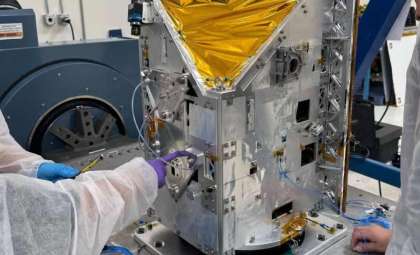
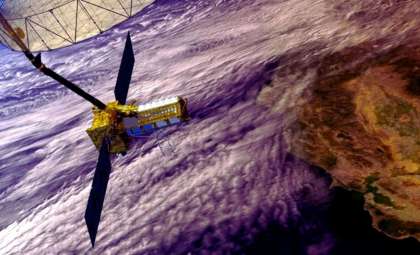
This year has already seen significant advances in aerospace, but one satellite poised for launch could revolutionize worldwide telecommunications. The Texas-based company AST SpaceMobile is preparing to deploy what it claims as the largest commercial communications satellite ever launched into low Earth orbit (LEO). Weighing approximately 6.5 metric tons with an expansive 220 square meters of phased-array antennas, BlueBird 6 represents more than just engineering prowess—it signals a major leap forward in the expanding realm of space-based internet networks.
Unlike traditional satellite internet services that require dedicated dish terminals or ground infrastructure, AST’s technology aims to deliver broadband directly to ordinary smartphones. This eliminates the need for towers, modems, or routers—only the sky is required. If successful, this could upend the current mobile network landscape and redefine rural and underserved area connectivity.
Yet the story goes beyond tech innovation. Backed by over $3.2 billion in available funds and supported by global telecom giants like Verizon, Vodafone, and stc Group, AST plans a satellite constellation rollout targeting 60 units in orbit by late 2026. The company boasts more than $1 billion in signed revenue agreements, an uncommon feat for a pre-revenue aerospace startup.

A Launch That Could Revolutionize Mobile Networks
AST’s first satellite, BlueBird 6, is set for launch early December from the Satish Dhawan Space Centre in India, according to company financial statements. Equipped with a vast antenna field and 10 GHz of signal handling capability, the satellite aims to provide up to 120 Mbps per cell, supporting thousands of simultaneous connections.
Unlike Starlink, which requires specialized user equipment, AST’s direct-to-device system is compatible with unaltered smartphones, using standard 4G and 5G technologies. This ambitious method, if validated, could remove the dependency on terrestrial towers in difficult-to-reach areas.
Following BlueBird 6, the next satellite, BlueBird 7, will launch from Cape Canaveral, with satellites 8 to 19 currently in production. AST plans five orbital deployments by the end of the first quarter 2026, continuing with launches every month or two thereafter.
Per its third-quarter investor update, AST aims to orbit between 45 and 60 satellites by the end of 2026. This initial Block 1 generation is designed to intermittently cover the US, Canada, Saudi Arabia, Japan, and the UK by early next year.
Strategic Investments and Global Telecom Partnerships
Beyond the technology, AST’s business model features strong ties with established telecom operators. Its decade-long contract with stc Group includes a $175 million upfront payment for future services, mainly targeting Saudi Arabia and the MENA region. Additionally, its expanded 2025 agreement with Verizon aims for nationwide coverage across the continental US.
In Europe, AST collaborates with Vodafone to establish a new satellite network for European operators, with operations centered in Germany. These partnerships provide immediate integration with over 50 mobile network providers serving close to 3 billion subscribers globally.
At a time when more than 2.7 billion people remain without internet access, often in rural or underserved regions, AST positions itself as a scalable substitute for terrestrial infrastructure.
AST reported $14.7 million revenue in Q3 2025, mainly from US government contracts and gateway hardware sales. Although it recorded a $123 million net loss in the quarter, a $1.15 billion convertible note issuance provides a strong financial base, making AST one of the best-funded firms in the direct-to-device market.
The Challenges of an Increasingly Crowded Orbital Environment
Global satellite deployments are accelerating rapidly. In the last year alone, more than 3,600 satellites launched into orbit. According to the Union of Concerned Scientists Satellite Database, as of October 1, 2025, there are 15,965 active satellites with 13,026 currently operational.
AST’s planned constellation will add dozens more to this already congested LEO space, intensifying concerns over orbital debris, radio frequency interference, and impacts on astronomical observations. Unlike geostationary satellites, LEO constellations require significantly more units for continuous coverage, raising the risks of collisions and spectral conflicts.
As direct-to-device satellite technology advances, regulators face pressure to manage spectrum assignments, enforce space traffic regulations, and balance public interests such as fair access and scientific preservation in commercial satellite deployments.
- Categories:
- News










0 comments
Sign in to Comment