
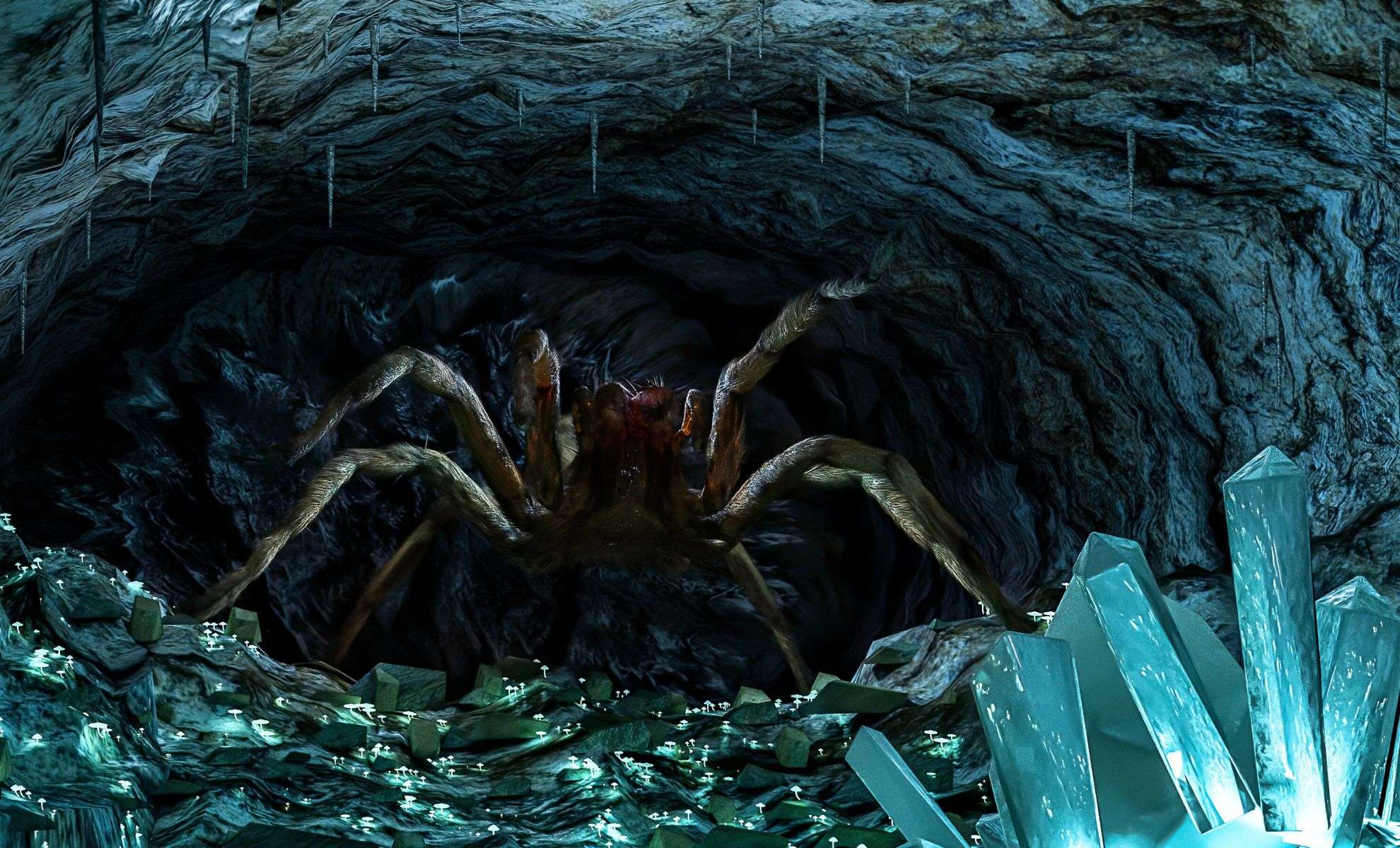
For over twenty years, a creature believed to be the largest spider ever discovered has been reexamined and reidentified. The fossil, initially named Megarachne servinei, has been revealed not to be a colossal arachnid but rather an extinct type of aquatic arthropod. This significant revision, published in Biology Letters in 2005, transformed how scientists and the public view this prehistoric specimen.
A Fossil That Confused Scientists
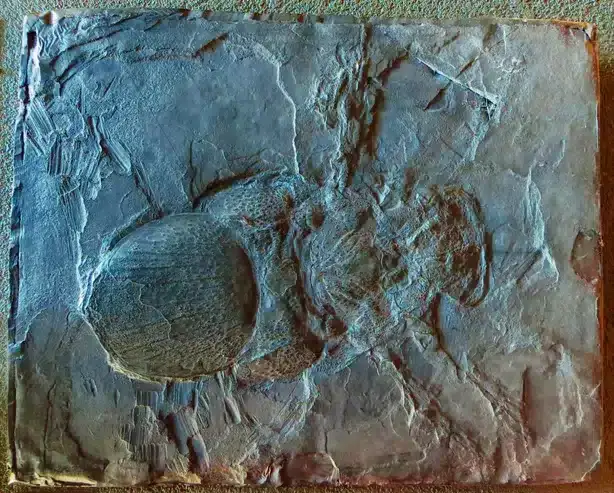
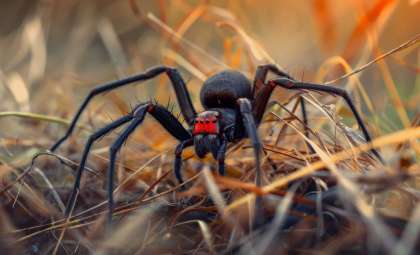
Unearthed in Argentina by paleontologist Mario Hünicken in 1980, Megarachne grabbed international attention for its apparent enormous size and spider-like appearance. Its leg span was estimated to stretch over 19 inches, with a body measuring more than a foot in length, quickly earning it the title of the largest spider ever recorded. Exhibits and documentaries fueled the fascination, presenting it as a menacing Carboniferous-era predator.
However, access to the original fossil was extremely limited for many years, as it was kept secured in a bank vault, restricting detailed study by other researchers. Once it was closely examined again in 2005, scientists uncovered new details that completely altered the understanding of Megarachne.

Initial Interpretations Based on Limited Data
The fossil initially appeared to be that of a giant spider given its broad body, segmented legs, and general morphology. Hünicken’s classification placed it within the arachnid group, reflected in the name Megarachne servinei, where "mega" indicated its huge size and "arachne" denoted spider affinity. Its extraordinary scale excited the scientific community, as no other spider-like fossil of such size had been documented before.
Still, some in the paleontology field were doubtful. National Geographic reported that critical spider characteristics, especially the spinnerets responsible for producing silk, were notably absent. Unfortunately, these doubts could not be fully addressed for years because the fossil wasn’t readily available for independent verification, illustrating how the limited availability of key specimens can prolong misinterpretations.
Reexamination Brings Clarification
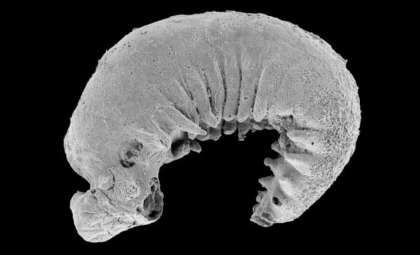
A pivotal moment came in 2005 after the discovery of a second fossil in the same Argentine locale. Researchers Paul Selden, José Corronca, and Hünicken undertook a new analysis and concluded that Megarachne belonged not to spiders but to the eurypterids, a group of extinct aquatic arthropods often called sea scorpions.
Detailed anatomical traits such as crescent-shaped lunules and pointed mucrones on the carapace closely matched those found in known eurypterid fossils. These characteristics aligned far better with aquatic arthropods than terrestrial arachnids. Although the classification changed, the original scientific name remained intact in accordance with taxonomic conventions, making Megarachne one of the most famous fossil misidentifications in scientific history.
A Media Mishap That Cemented the Myth
Just prior to the publication of these updated findings, Megarachne was showcased on the BBC documentary series Walking With Monsters. At that time, it was portrayed as a massive, fearsome spider—contradicting the revised scientific conclusions. By the time the producers learned of the true identity, changing the footage was no longer possible, so they rebranded it as a smaller type of spider (Mesothelae), though the frightening appearance stayed intact.
This episode highlights how early scientific interpretations can become entrenched, especially when amplified by popular media. As National Geographic noted, the public and scientific communities alike had embraced Megarachne as the iconic prehistoric spider. Although that turned out to be inaccurate, the revelation introduced an equally fascinating ancient marine creature from a time long before dinosaurs roamed the Earth.
- Categories:
- News




0 comments
Sign in to Comment