
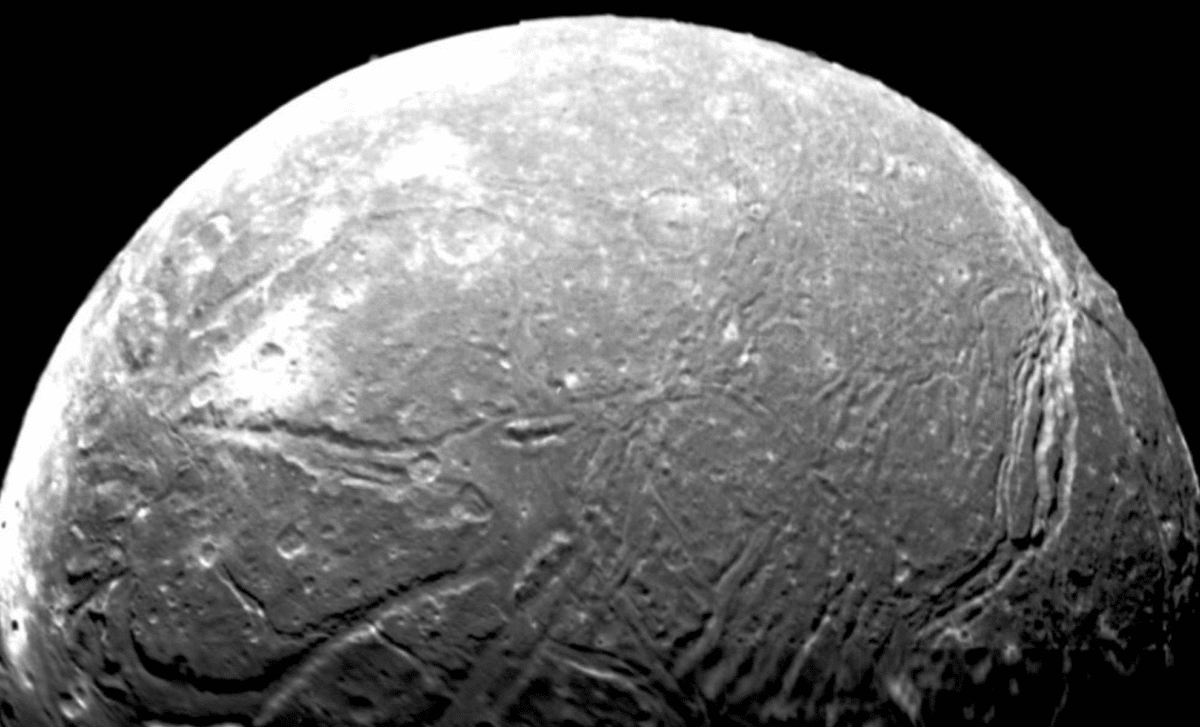
Miranda, one of Uranus’ lesser-known satellites, was traditionally viewed as a frozen and lifeless rock, too distant from the Sun to sustain any form of life. Yet, fresh findings challenge this long-held belief. A recent publication in The Planetary Science Journal proposes that beneath Miranda’s icy crust lies a subsurface ocean, potentially still liquid. Such a reservoir could create an environment conducive to life, shifting our perspective on this remote world and expanding the search for habitable zones in our solar system.
A Surprising Ocean Hidden Below Miranda’s Frozen Exterior
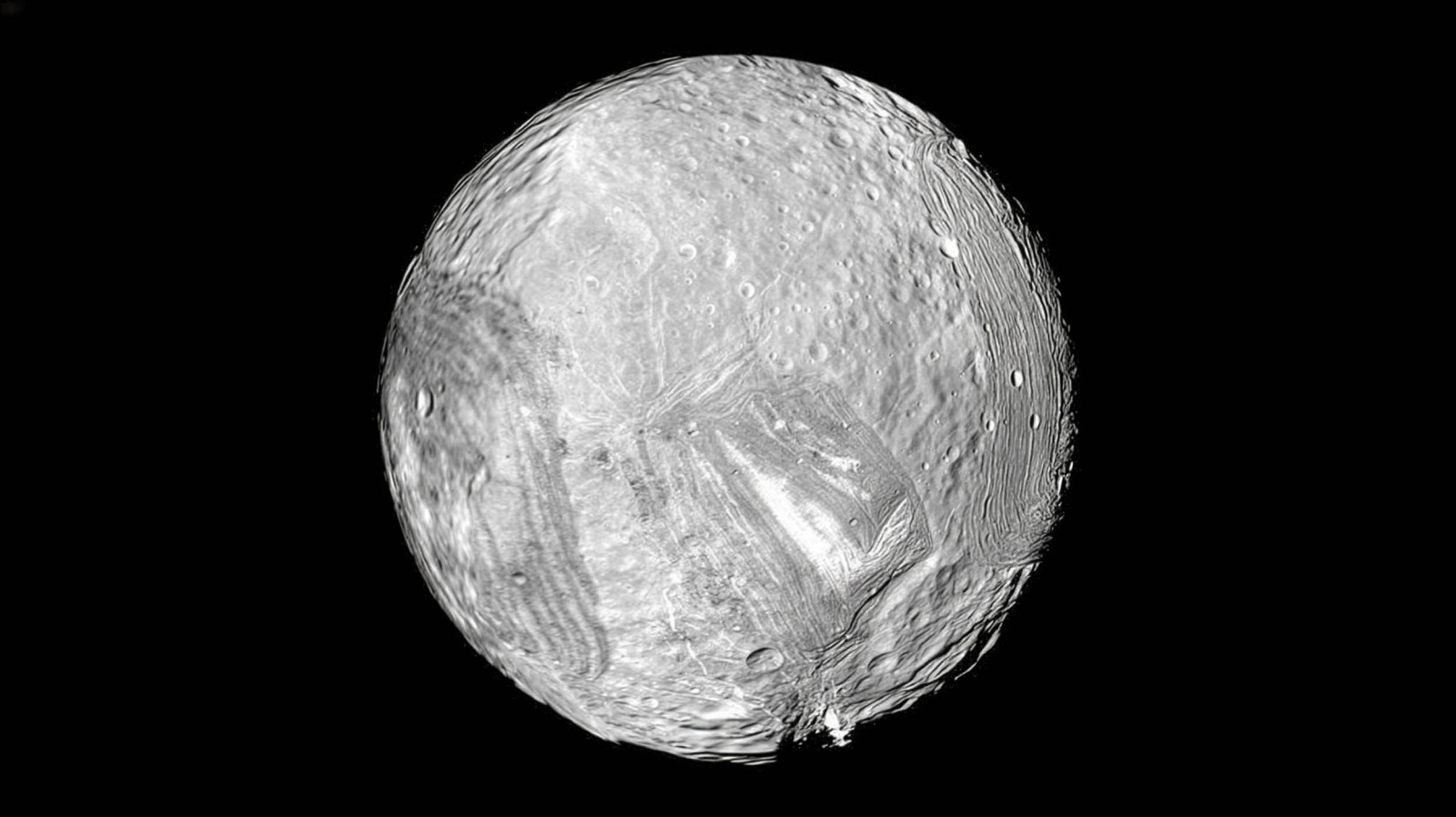
Uranus’ moon Miranda has fascinated scientists ever since Voyager 2’s flyby in 1986 revealed its rugged and mysterious terrain. The moon’s landscape, marked by deep canyons, towering escarpments, and oddly shaped regions, has long puzzled researchers. The latest study introduces a remarkable possibility: Miranda might host an ocean underneath its surface. Planetary scientist Tom Nordheim, a co-author of the study, stated, “Discovering signs of an ocean within a small celestial body like Miranda is truly astonishing.” This finding contradicts previous assumptions that such small, distant moons would be too frigid to maintain internal liquid water.
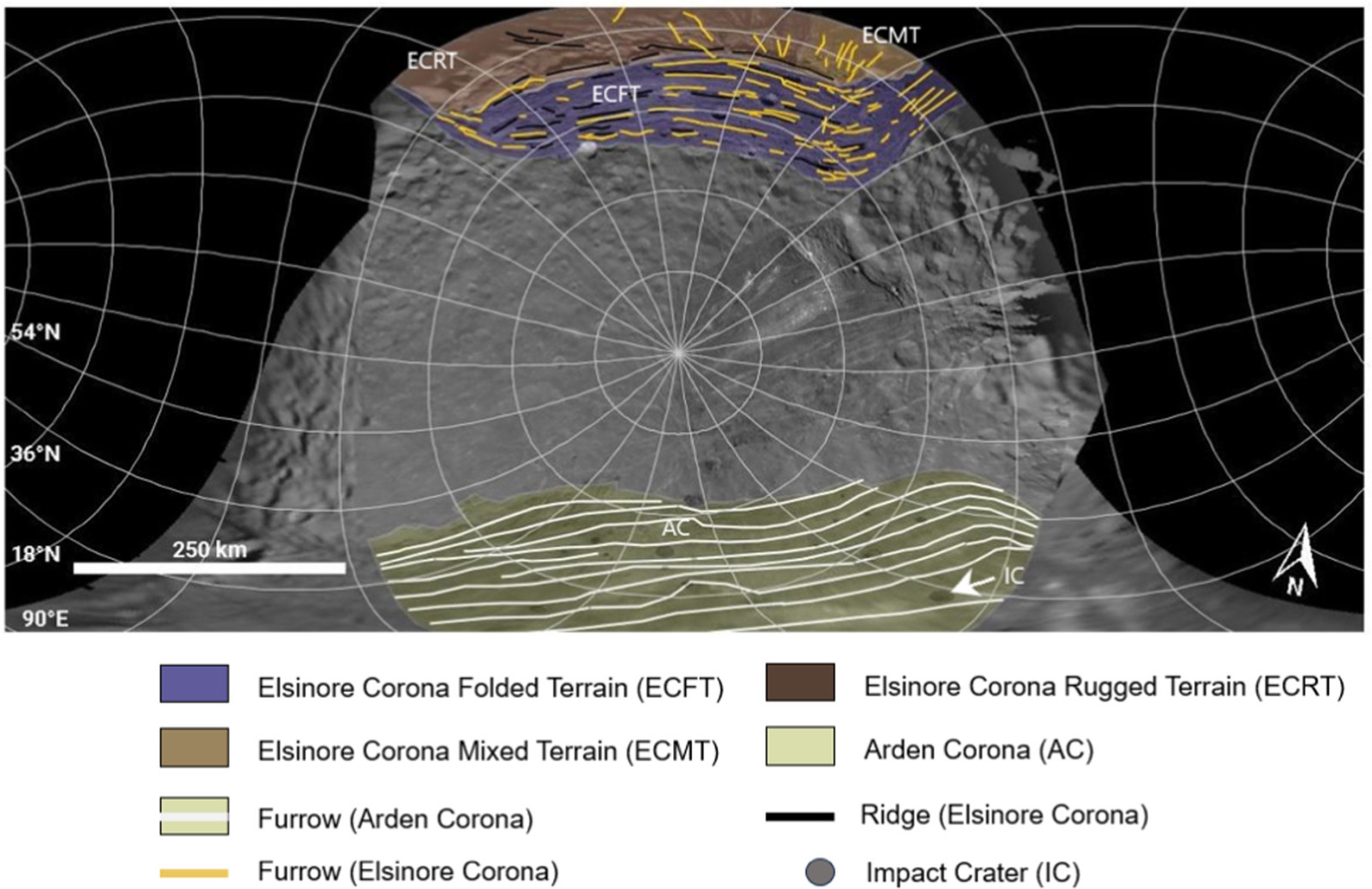
By applying advanced computational models to reexamine the Voyager 2 imagery of Miranda, researchers simulated various geological scenarios. Their analyses indicate that Miranda could have housed an ocean as recently as 100 to 500 million years ago, with depths reaching up to 62 miles beneath a relatively thin icy crust estimated to be less than 19 miles thick. This theory aligns with geological signs of internal activity on the moon and sheds new light on its evolution and potential to harbor life.

How Gravitational Forces Keep Miranda’s Ocean from Freezing
One of the most fascinating aspects of this discovery is understanding how Miranda’s ocean might remain liquid despite the moon’s extreme distance from the Sun. The answer lies in the complex gravitational interplay, known as orbital resonance, between Miranda and Uranus’ other moons. This gravitational tugging generates internal friction, producing heat within Miranda’s subsurface layer. Similar heat generation has been observed on other icy moons, including Saturn’s Enceladus, which boasts subsurface oceans and occasional water vapor plumes. The implication that a small, distant moon like Miranda could sustain liquid water broadens the scope of potentially life-supporting environments.
Caleb Strom, a graduate researcher at the University of North Dakota involved in the study, remarked, “We were quite surprised by this outcome.” The findings challenge prior expectations that Miranda’s size and location relative to the Sun would prohibit such a substantial subsurface body of liquid. This insight prompts scientists to reevaluate other similarly sized moons as potential reservoirs of life-supporting oceans.
Miranda’s Habitability: Could It Still Support Life?
The team's results, detailed in The Planetary Science Journal, also ignite ongoing debates about whether Miranda’s hidden ocean endures today. Strom noted, “We suspect Miranda hasn’t completely frozen internally because certain geological features expected from a fully frozen interior are absent.” This indicates that internal heating processes may continue, potentially sustaining a thinner liquid layer beneath the surface. Nonetheless, definitive proof of a subsurface ocean, let alone life, remains elusive, demanding further exploratory missions.
Scientists continue to analyze Voyager 2’s invaluable data, maximizing the insights drawn from its flyby decades ago. As Nordheim stated, “We are extracting every last bit of knowledge from Voyager 2's images.” Despite this progress, new missions specifically targeting Uranus and its moons are crucial for unlocking a more thorough understanding of Miranda’s environment and its potential habitability.
- Categories:
- Science




0 comments
Sign in to Comment