
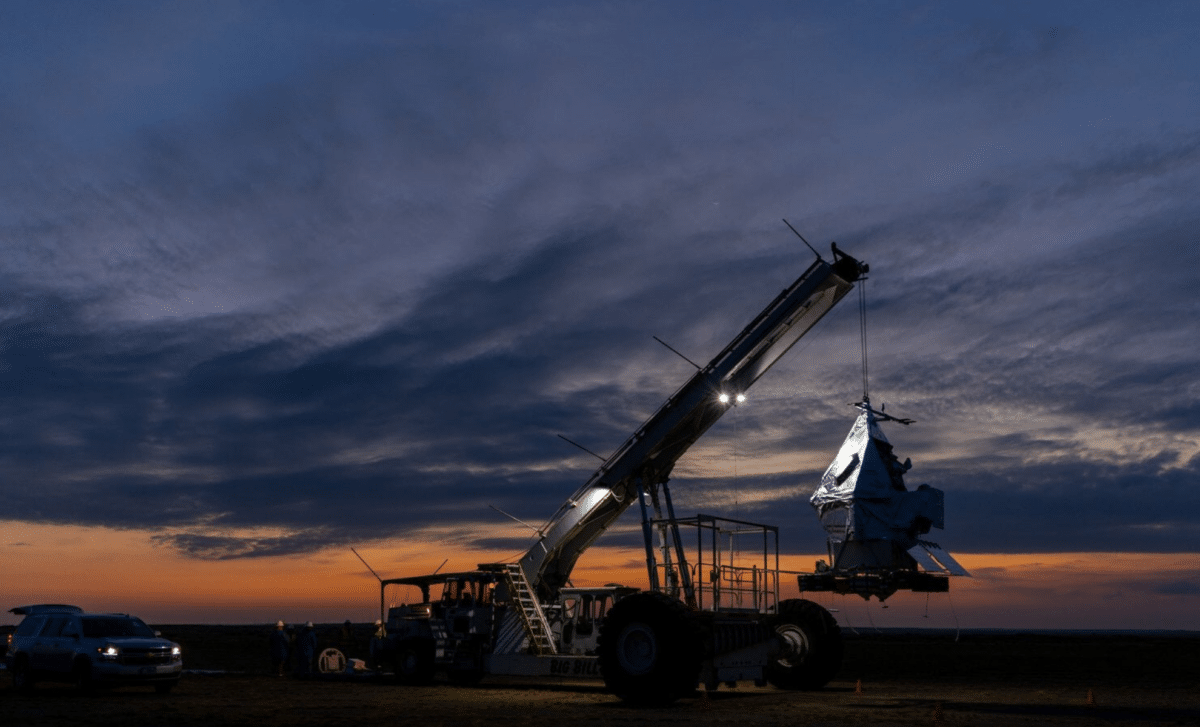
The study of planets beyond our solar system is entering a new era with the introduction of the EXCITE mission, an innovative project aimed at deepening insights into exoplanet atmospheres. Unlike costly space observatories such as the James Webb Space Telescope (JWST), EXCITE takes a novel, budget-friendly approach by employing a balloon-borne telescope that operates in the stratosphere, enabling prolonged, detailed observation of distant worlds.
EXCITE: Pioneering Balloon-Based Astronomy for Exoplanets
The EXCITE (EXoplanet Climate Infrared TElescope) project represents a cutting-edge advancement in exoplanetary research. Rather than orbiting Earth, EXCITE ascends to about 40 kilometers aboard a balloon gondola, soaring well above 99.5% of our atmosphere’s disruptive effects. This elevated vantage permits extended, uninterrupted monitoring sessions spanning several days, making it possible to obtain data that surpasses the limited snapshots from traditional space-based observatories.
This high-altitude balloon system offers distinct advantages over space telescopes like Hubble and JWST, which encounter challenges such as thermal fluctuations and sensor saturation from bright stars. By flying in the stratosphere, EXCITE mitigates these issues and achieves more efficient data acquisition. Concentrating on exoplanets such as hot Jupiters, which have intense surface temperatures due to their proximity to host stars, EXCITE’s capability to continuously observe phase curves enables creation of three-dimensional atmospheric models that are far richer than conventional transit or eclipse analyses.

Exploring Phase Curves: Insights into Alien Weather Patterns
A cornerstone of EXCITE’s scientific strength is its proficiency in capturing phase curves. These curves are instrumental for crafting 3D visualizations of atmospheric dynamics, revealing how temperature and weather vary across an exoplanet over time. According to research published on arXiv, phase curve analysis is especially valuable for hot Jupiters, gas giants locked in synchronous rotation, constantly showing one hemisphere to their star and the other to darkness.
As these planets orbit their stars, the terminator line—the boundary separating day and night—moves across their surfaces. By tracking this progression over multiple days, researchers can assemble longitudinal atmospheric maps that reveal the warmest regions, prevailing weather trends, and even atmospheric pressure variations at different altitudes. EXCITE’s ability to detect light across varied wavelengths also allows the identification of atmospheric gases by their absorption patterns, offering an unprecedented glimpse into exoplanetary composition. This depth of observation is critical for advancing the search for potentially habitable worlds.
Cutting-Edge Technology Fuels EXCITE’s Ambitions
The EXCITE mission marks a major technological stride with its array of advanced instruments. Featuring highly sensitive infrared sensors and precision optics, the balloon platform can stabilize and aim with sub-arcsecond accuracy—essential for examining faint signals from distant exoplanets. Cryogenic cooling systems maintain the detectors at ultra-low temperatures, minimizing thermal noise that could obscure critical data.
Flight trials conducted in August 2024 over New Mexico demonstrated the system’s remarkable pointing stability despite encountering certain setbacks such as a GPS malfunction and mechanical difficulties with the gondola housing. Engineers are actively addressing these concerns ahead of a planned extended mission over Antarctica scheduled for 2026-2027. Success would potentially double the number of phase curve studies, revolutionizing our knowledge of exoplanet atmospheres.
EXCITE Challenges Space Titans: Complementing Hubble and JWST
While JWST and Hubble have significantly advanced exoplanet observations, both face inherent constraints. For example, JWST’s PRISM mode is often too sensitive for very bright stars, risking sensor saturation, whereas Hubble’s low Earth orbit causes frequent thermal disturbances as it moves through Earth’s shadow, leading to interrupted data collection. These obstacles limit continuous monitoring necessary for long-term phenomena like phase curves.
By operating on a balloon-borne platform high above the atmosphere, EXCITE can maintain lengthy, uninterrupted observation periods across several days. Its substantially lower cost compared to flagship space telescopes means more frequent deployments, paving the way for ongoing progress in decoding exoplanet climates and advancing the hunt for life beyond Earth.
- Categories:
- Science








0 comments
Sign in to Comment