
A collaborative team from the Austrian Academy of Sciences and the University of Vienna has developed a method to reverse time within a quantum system with exceptional accuracy, achieving an average fidelity exceeding 95%. Detailed in Optica, their findings demonstrate the ability to restore a quantum particle to a previous state without any prior knowledge of its internal behavior, a breakthrough that could transform error management in quantum computing.
Implementing Time Reversal Without Prior Insights
While classical physics mandates one-way progression of time dictated by thermodynamic principles, quantum mechanics permits reversible time dynamics under certain controls.
The Austrian researchers, spearheaded by Miguel Navascués and Philip Walther, exploited the non-commuting properties of quantum operations to establish a "time reversal" technique. This approach utilizes a quantum switch, enabling a photon’s evolution to proceed in two distinct sequences simultaneously.

Navascués illustrated this concept to El País, comparing it to a movie player: unlike classical physics where a film only plays forward, quantum physics allows remote manipulation, permitting rewind or fast-forward controls.
Details of the Experiment
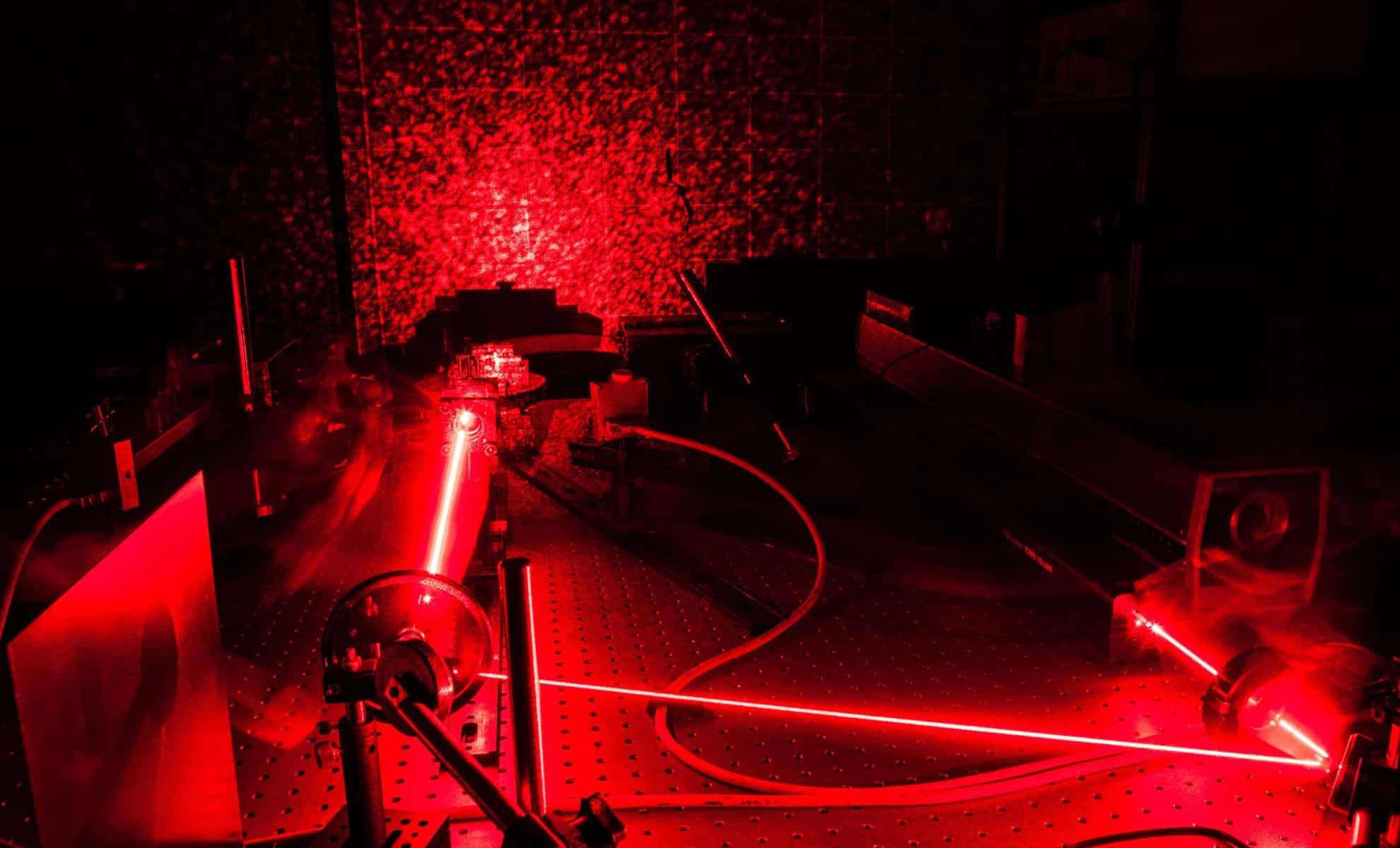
The team encoded information within a single photon’s polarization, passing it through a Sagnac interferometer. Here, the photon underwent two possible transformation paths, termed U and V, arranged in a quantum superposition of sequences. By finely tuning interference effects between these pathways, the experiment achieved the inverse of the photon’s evolution, resetting it to its origin.
Importantly, this reversal required no specific data about U, V, or the initial quantum state. Over 50 distinct path combinations, four separate initial states, and three durations (n = 1, 2, 3), the experiment ran 1,800 times across three weeks, consistently achieving fidelities above 93% and up to 97%. This performance vastly surpasses classical reversal methods.
Beyond a Physics Curiosity
This experiment does not imply conventional time travel, as reversing a single second of quantum data in a human brain would span millions of years. Instead, the immediate implications focus on quantum error correction.
Quantum processors are prone to data corruption from environmental influences. A dependable rewind mechanism could revert the system to a prior, error-free state without detailed insight into the disturbances. Navascués described this ability as a quantum machine’s "rewind button," preventing errors from escalating.
Notably, their method reverses quantum evolution in real time—rewinding one second takes exactly that duration—contrasting previous models requiring three times longer and achieving lower success.
Future Directions
Though photons were employed here, the technique is adaptable to other quantum media, such as cold atoms or trapped ions. The authors anticipate that progress in integrated quantum photonics will enable compact, more precise versions with improved fidelity.
Upcoming studies might explore applying this protocol to more intricate systems or pursue quantum "fast-forwarding," an effect theorized by the team. Their ultimate aim is to embed such quantum time management in functional quantum computers, elevating this laboratory breakthrough to practical technology.
This research unites theoretical insight with exact experimentation, expanding the horizons of quantum control by harnessing physics’ fundamental principles rather than bypassing them.











0 comments
Sign in to Comment