
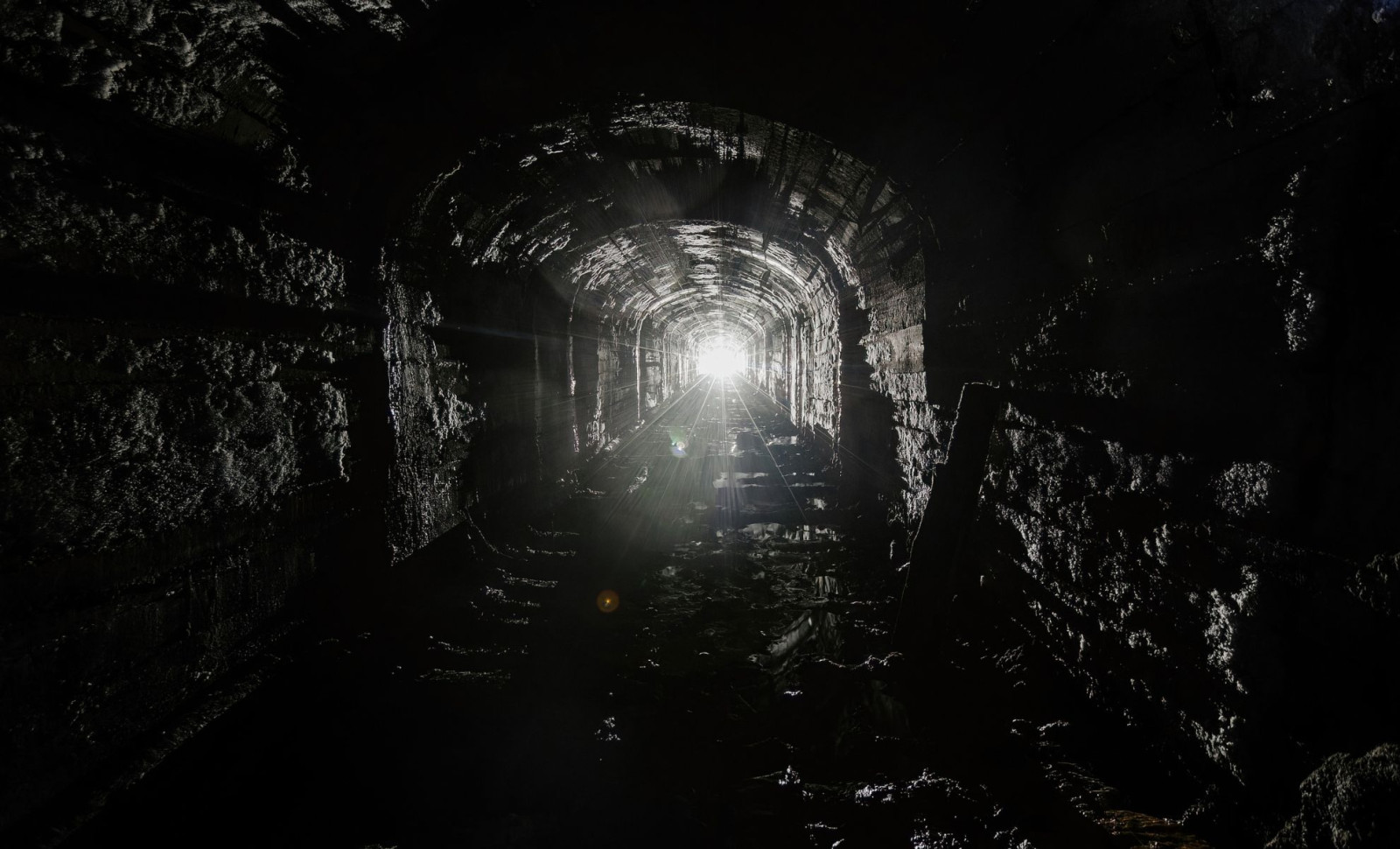
In Cumberland, British Columbia, submerged old coal mines are being explored as the basis for a comprehensive geothermal heating and cooling network. Researchers and community leaders aim to utilize the water pooled underground to create an eco-friendly, low-carbon climate control system for the entire town.
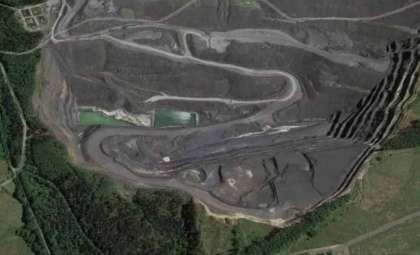
Cumberland’s identity was shaped by coal mining for over 80 years. Starting in 1888, around 16 million tonnes of bituminous coal were mined in the Comox Valley, supplying power for steamships and export markets. When mining ended in the late 1960s, it left an extensive web of tunnels beneath the town.
Currently, the Cumberland District Energy project, in partnership with the University of Victoria's Accelerating Community Energy Transformation (ACET) initiative, investigates the feasibility of using this flooded mine water as a sustainable geothermal source.

Harnessing Consistent Temperatures Underground
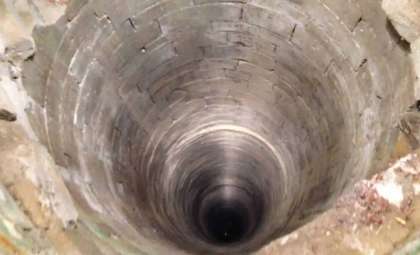
The concept relies on the natural thermal stability of water trapped in abandoned mine shafts. As Zachary Gould, project lead and community energy planner for ACET, notes, the water stays cooler than surface air in summer and warmer during winter months. Heat pumps can leverage this steady temperature to heat and cool buildings efficiently and with minimal carbon output.
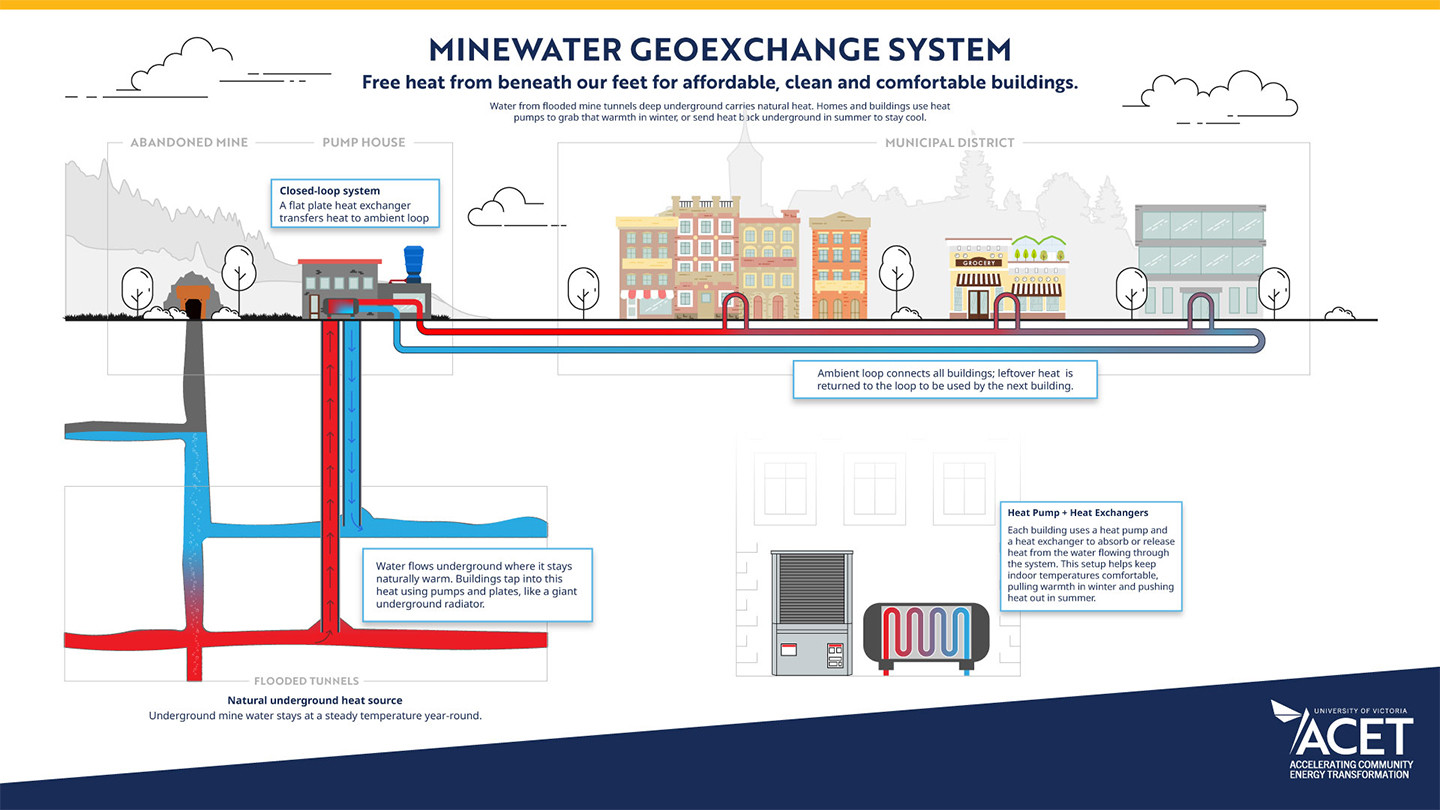
Emily Smejkal, a geothermal specialist with the Cascade Institute, compares the system to an enormous ground-source heat exchanger. Unlike traditional deep geothermal plants that require extensive drilling, Cumberland makes use of shallow flooded mines to moderate seasonal temperature shifts. Geologists have thoroughly mapped the tunnels to evaluate their long-term viability for energy use.
Boosting Sustainable Urban Development
A University of Victoria press release outlines plans that may include heating and cooling community buildings, municipal facilities, affordable housing projects, and adjacent industrial zones near Comox Lake. As Gould states:
“It’s an opportunity to look at resource extraction in a new way in a village that was built on extractive principles. This project could turn those ruins of extraction, so to speak, into an opportunity and a shared community asset.”
With approximately 4,800 residents and limited in-house engineering expertise, the village depends on ACET for conducting technical and economic feasibility studies. Mayor Vickey Brown calls the project a way to transform “the waste of that old resource” into a cornerstone of sustainable energy.
Redefining a Mining Heritage
Coal mining brought prosperity but also serious challenges. According to Dawn Copeman from the Cumberland Museum and Archives, miners faced hazardous conditions with many injuries and fatalities, while burning coal contributed to climate change.
Local geologist Cory MacNeill explained that early conversations centered on methane escaped from abandoned mines before shifting toward tapping the thermal energy stored in mine water.
“We haven’t always worked very well with natural systems,” Brown stated. “But I think this is a model of using the tools and resources you have in place to look after the needs of your community. And I think that’s far more resilient than the way we’ve done it in the past.”
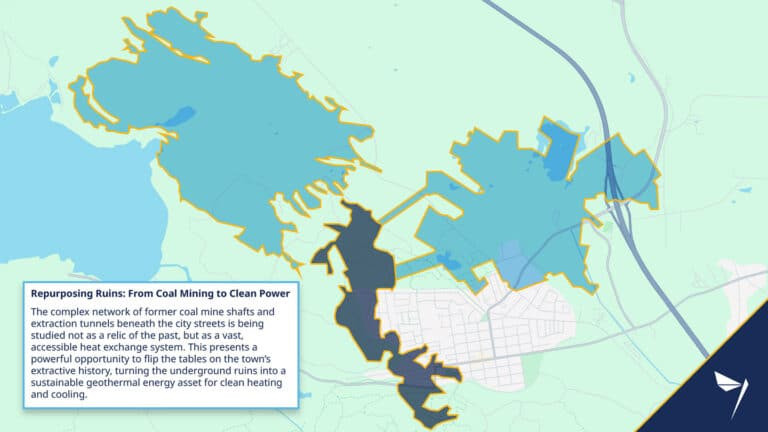
The intricate subterranean network that once fueled coal extraction is now envisioned as an invaluable asset for green, community-shared energy.
- Categories:
- News




0 comments
Sign in to Comment